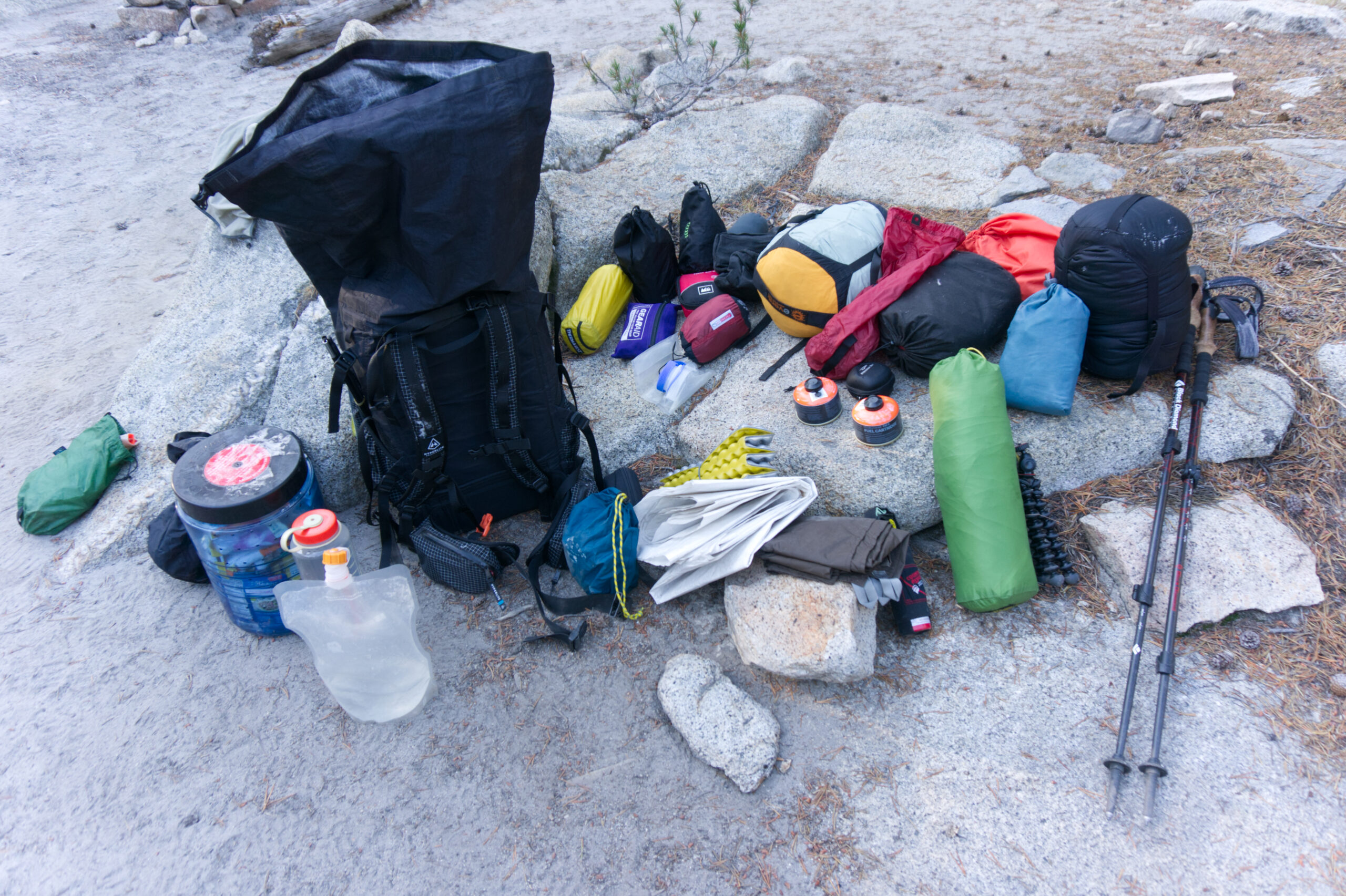
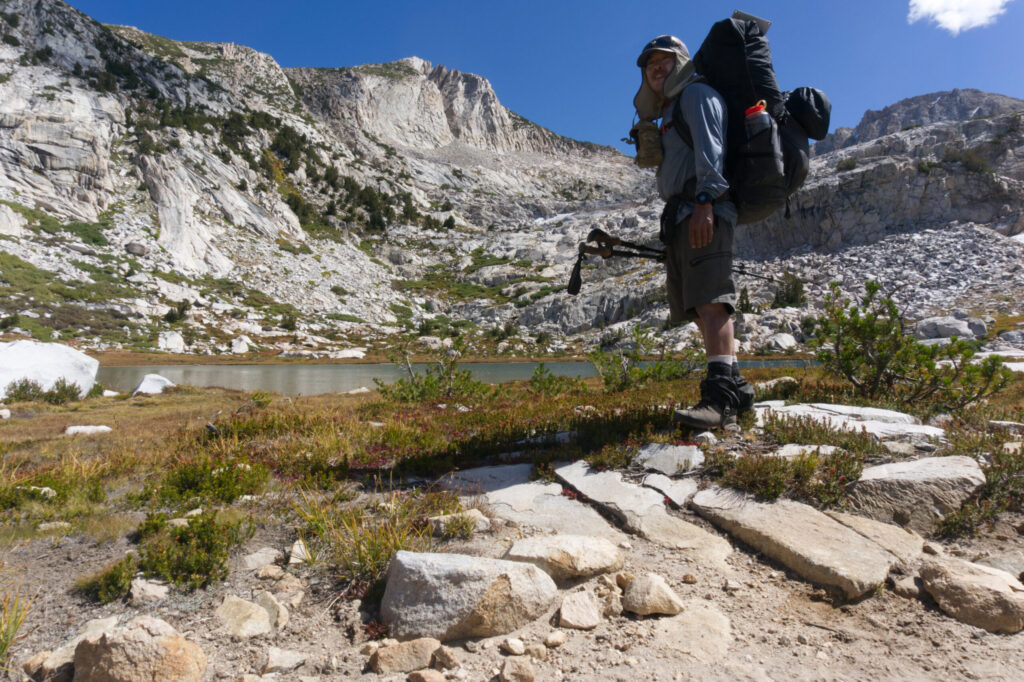
In the autumn of 2019, at the age of 46, I left the company I had been working for and stood at the Yosemite trailhead.
For me at the time, thru-hiking the John Muir Trail (JMT) over 21 days was not just a challenge of a long trail; it was a “rite of passage” to reset a life that had been entirely centered around work. For years, I had deeply wished to go but could never make it happen. Yet in 2019, as if pushed by an invisible hand, I began preparing without even realizing it. Everything fell into place with surprising smoothness, and before I knew it, I was standing at the trailhead.
Even now, with some time having passed since completing the JMT, reflecting on the memories of those 21 days instantly brings back the scent of the cool Sierra wind and the exact sensation of my mind and body being drastically reconstructed. Since then, every single year when I head out backpacking in the Sierra, I am powerfully reminded of that intense experience on the JMT.
To be completely honest, after returning home from the journey, I couldn’t bring myself to organize these records for a long time. While my photos and journals were safely tucked away, the laptop containing the videos I had shot with my mirrorless camera was stolen later on, and the data could never be recovered. I had forgotten to back them up to the cloud. It was a massive shock to lose all the footage I had passionately recorded along the way, but just looking at the photos remaining in my hands instantly brings the memories back to life, as vivid as ever.
1. Beyond Physical Limits: The Awakening of “Hiker’s Legs”
“Can I really make it all the way with this level of physical strength?”
That was the weakness that crossed my mind early in the trip, and again when leaving Muir Trail Ranch (MTR), the midpoint resupply station. On top of my accumulated fatigue, my pack had ballooned to a staggering 47 pounds (approx. 21 kg) with ten days of food plus backup rations. Along the way, I saw several hikers quit due to altitude sickness or knee pain, so I had coldly decided, “I won’t push myself too far; if necessary, I will drop out at any time.” Yet, somehow, I managed to keep putting one foot in front of the other until the very end.
The Sierra in late September was as freezing as expected, and there were several nights when my water bottles froze completely solid. The sleeping bag I brought was at its absolute limit for the Sierra shoulder season temperatures. Amidst the relentless exhaustion, crossing consecutive passes over 12,000 feet from MTR all the way to Forester Pass was incredibly punishing. It was undoubtedly the greatest physical trial of my entire life, where every single step literally felt like “the labor of shaving away my own life.”
Yet, just beyond the point where I felt my body had reached its absolute limit—around the time I reached Kings Canyon—a mysterious purification of the mind occurred. A sort of “hiker’s high” washed over me. There were moments when the surrounding scenery looked beautifully divine, far beyond reality. It was a moment that made me shiver from the bottom of my heart, thinking, “I am so profoundly glad I came here.”
And then came the final day. On October 4th, when I cached my heavy expedition pack for the final ascent up Mount Whitney and stepped onto the trail with just a tiny summit sack, I was struck by an absolute “miracle” occurring within my body. The moment the crushing ballast vanished from my back, my feet felt so weightless it seemed as though I could literally fly. I had never experienced such a surreal sensation in my entire life.
After walking over 200 miles of rugged mountain trails, my entire body should have been completely spent, yet my legs alone had become perfectly adapted to trekking. I understood through firsthand experience exactly how “Hiker’s legs”—a term I had heard from veteran hikers—are forged.
One must never underestimate nature. However, I realized deeply that the human body, when hammered and shaped by the wilderness, is far tougher and more beautifully resilient than we think.
2. The Trail as a “Mirror of the Soul”
While I was continuously moved by the sheer majesty of the wilderness along the JMT, I also felt that the mountains were a terrifyingly accurate mirror reflecting “exactly who I am.”
There were days when I walked through pristine forests wrapped in a blissful, “walking meditation” state of happiness. Yet, there were also days when the deep-seated sediments of my life and long-held complexes would bubble to the surface, plunging me into severe mental slumps. I caught glimpses of a similar introspective vibe in a few of the PCT hikers I met along the way, and it made me realize that a thru-hike is, ultimately, a journey of spiritual cleansing.
I thought I was escaping into the backcountry to shed the titles of the secular world, but packed tightly at the very bottom of my pack were my own tiny ego, insecurities, and anxieties. However, as I repeated the grueling pass crossings in the latter half of the trip, I began to accept even those internal conflicts as “an essential part of this grand adventure.” Just as my rations dwindled and finally fit cleanly inside my bear canister, the unnecessary baggage in my mind was being chipped away piece by piece toward the end of the trail.
3. Silent Solitude and Deep Relief at the Sacred Summit
The moment I passed the junction for Onion Valley—the final escape route—a quiet, immovable resolve took root deep inside my gut: “There is no turning back now. I am walking this to the end.” My body was incredibly tired, but deciding “I’ve come this far, there’s no choice but to go” actually triggered a sudden surge of latent power, allowing me to walk even stronger. It seems entirely true that when a person makes a definitive choice, they are moved by an unseen force—perhaps a principle similar to “hysterical strength.”
And then came Day 21. I finally stepped onto the 14,505-foot summit of Mount Whitney. Before the trip, I had imagined I might burst into tears from pure emotion. Yet, standing before the 360-degree panorama with the vast expanse of Death Valley baked far below, my mind was incredibly still. There was no dramatic outburst, only a massive wave of relief and a profoundly deep sense of fulfillment that I had done it.
Throughout the journey, I met, talked with, and encouraged many JMT hikers. Most of them were wonderful, highly principled individuals who made me realize how incredible the hiking community is. Because my pace was set on the slower side, everyone had pushed ahead of me, leaving me as the only JMT thru-hiker on the summit that day. It led me to estimate that I was likely one of the very last JMT hikers of the entire season.
It wasn’t a loud, crowded finale where I embraced fellow hikers to celebrate, nor was I able to take a photo holding the famous wooden summit sign. What waited for me there was simply an overwhelming “solitude” wrapped in a “monumental sense of relief.” Yet, savoring that ultimate triumph in absolute silence without exchanging a single word with anyone might have been exactly what I truly needed from this journey all along.
Because the snowpack from January that year had been historically massive, many PCT hikers had abandoned the traditional Northbound (NOBO) route to avoid the late-season drifts remaining in June and July, opting for a Southbound (SOBO) flip instead. Thanks to that, it was a precious experience to encounter so many PCT thru-hikers even in late September.
It was striking to see that most of them walked solo, and because they had been traversing a mind-boggling 2,650 miles over several months, there were times you could feel they were genuinely starving for human conversation, which left a deep impression on me. I felt a profound respect and a strong longing for the incredible journey they were undertaking. Talking with them, I noticed a certain air of detachment, as if they had achieved a broader perspective on life. Some hikers seemed to be fiercely pushing through the trail to cleanse a massive personal struggle, and I imagined that an ultimate long-distance thru-hike is perhaps the most perfect crucible for doing exactly that.
I found myself wishing deeply that someday, before I grow too old and if time permits, I would love to attempt a major thru-hike like the PCT, AT, or CDT.
Looking Back: My Thoughts Today
A 214-mile track connected entirely by my own two feet, stretching from Yosemite to Whitney.
For a while after stepping off the trail, I experienced a mild bout of “post-trail depression.” Since leaving MTR—the last point of supply—I had spent about ten consecutive days without seeing a single building, car, or piece of modern civilization. Just seeing them upon stepping off the trail threw me into a bizarre state of sensory shock, which in hindsight was a valuable experience. However, when I returned to Los Angeles and re-entered daily life, I felt a strong sense of disconnect from the city and the people around me. It was proof of just how intense, pure, and profound those 21 days had been in my life. It is a well-known phenomenon that PCT hikers face a heavy slump after completing their journeys, and having felt it myself just from the JMT, I now understand their mindset completely.
Completing the JMT did not magically solve all of life’s problems. I am still the same clumsy person, carrying my usual complexes here today. However, the certain, indelible memory of continuously overcoming those rugged Sierra passes is permanently engraved into my legs.
“No matter what happens, if you take it one step at a time, you will eventually stand at the finish line.”
That simple truth, carved deeply into my physical being, continues to push my back today—quietly, yet with immense power. After completing this journey, I have come to realize that I want to tackle my next thru-hike somewhere else in the world.
This JMT hike was a rigorous physical challenge, but more than that, it became a profoundly deep “journey of internal reflection.” I am filled with deep gratitude, knowing that this experience has become a lifelong treasure that I will carry for the rest of my days.

コメント