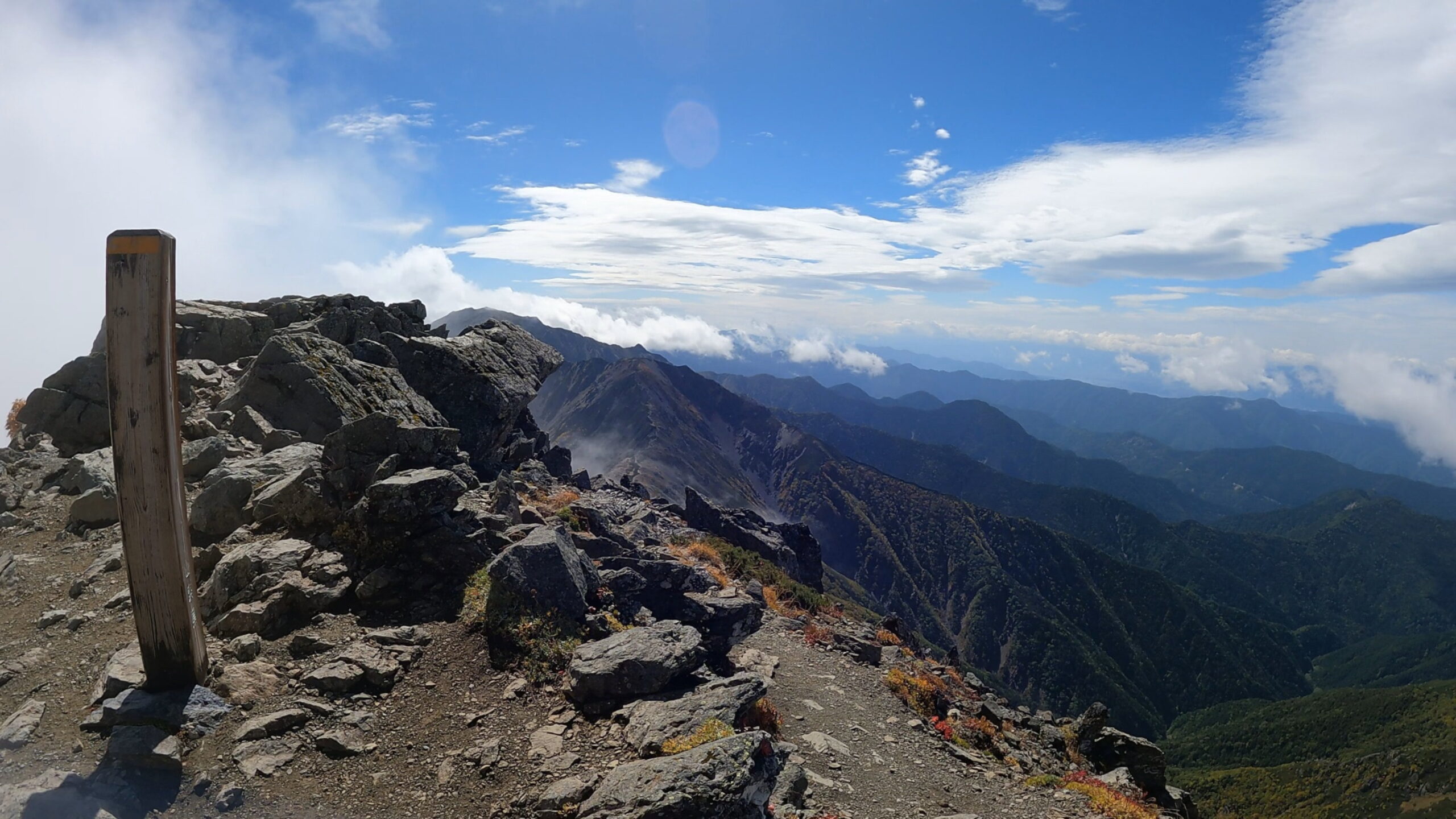
Late September.
For my second major outing in the Southern Alps, I chose to traverse one of its true core routes: the Shirane Sanzan.Baptized by rain and wind, hit by steep climbs and rocky sections, and rewarded with brief, precious moments of clear skies—
this journey reminded me once again of the harsh beauty of the Japanese Alps.Mount Kita, Mount Ainodake, Mount Notoridake—
here, I record every moment I encountered along this magnificent ridgeline.
Day 1: Through the Silent Forest
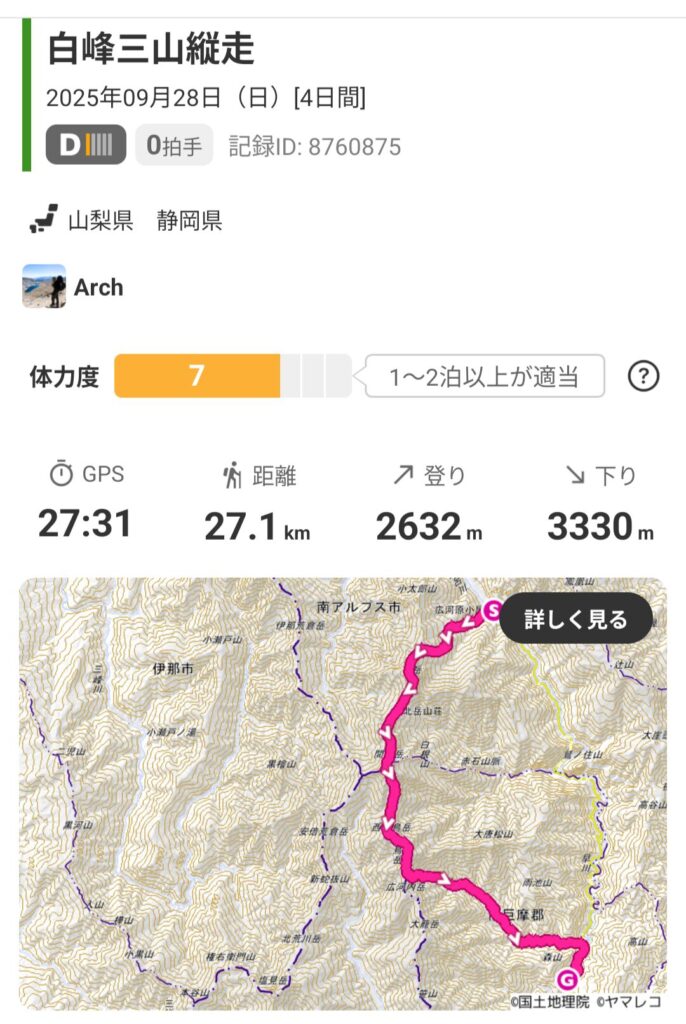
The Shirane Sanzan traverse is a well-known route that runs from Hirogawara, through Shirane Oike Lodge and Kitadake Mountain Hut, over to Notori Hut, and finally descends to Narada.
Originally, I thought that if I could enter Hirogawara early in the morning, I would be able to reach Kata-no-Koya on the first day.
However, since weekday bus services are limited, I decided not to push myself and planned a relaxed four-day, three-night itinerary.
In the end, I ended up starting on a Sunday, which allowed me to catch the early morning bus.
Even so, my legs and lower back weren’t in perfect condition, so I stuck to the original plan and kept it to three nights.
I would enter the mountains on September 28 and descend on October 1—a schedule that was supposed to be comfortable and unhurried.
From Kofu Station, I took the mountain bus and arrived in Hirogawara after about two hours.
Surprisingly, about 70% of the passengers were foreign hikers.
It was a clear reminder of just how popular Mt. Kita—the second highest peak in Japan—has become.
Into the Quiet Forest: Hirogawara to Shirane-Oike Hut
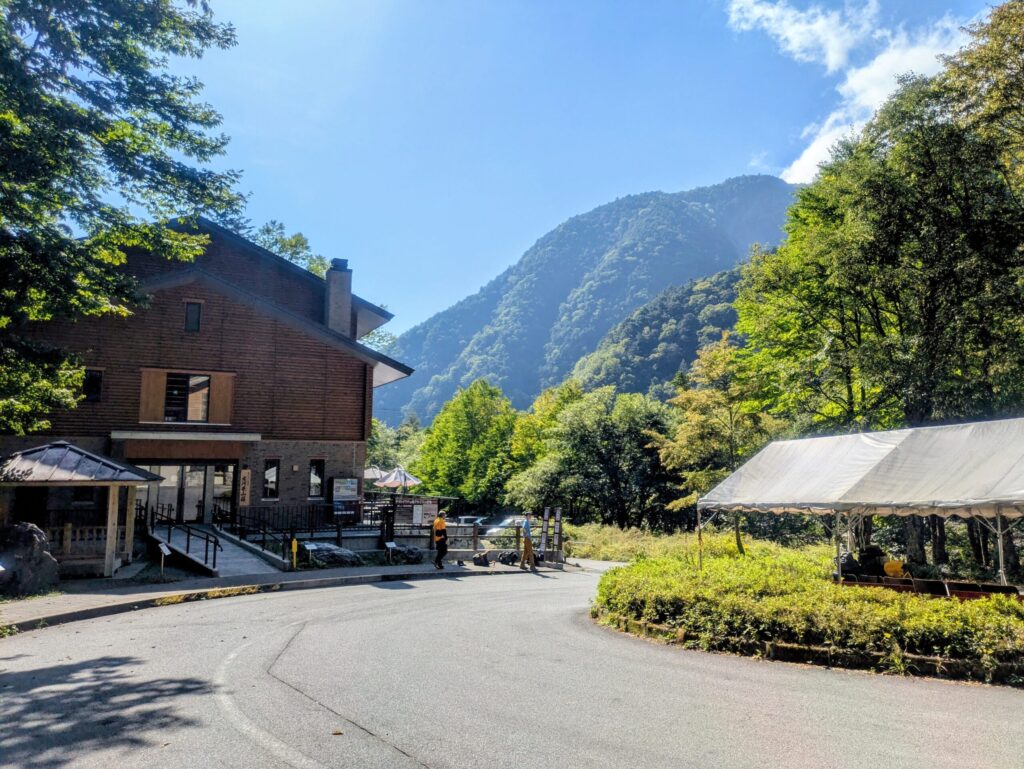
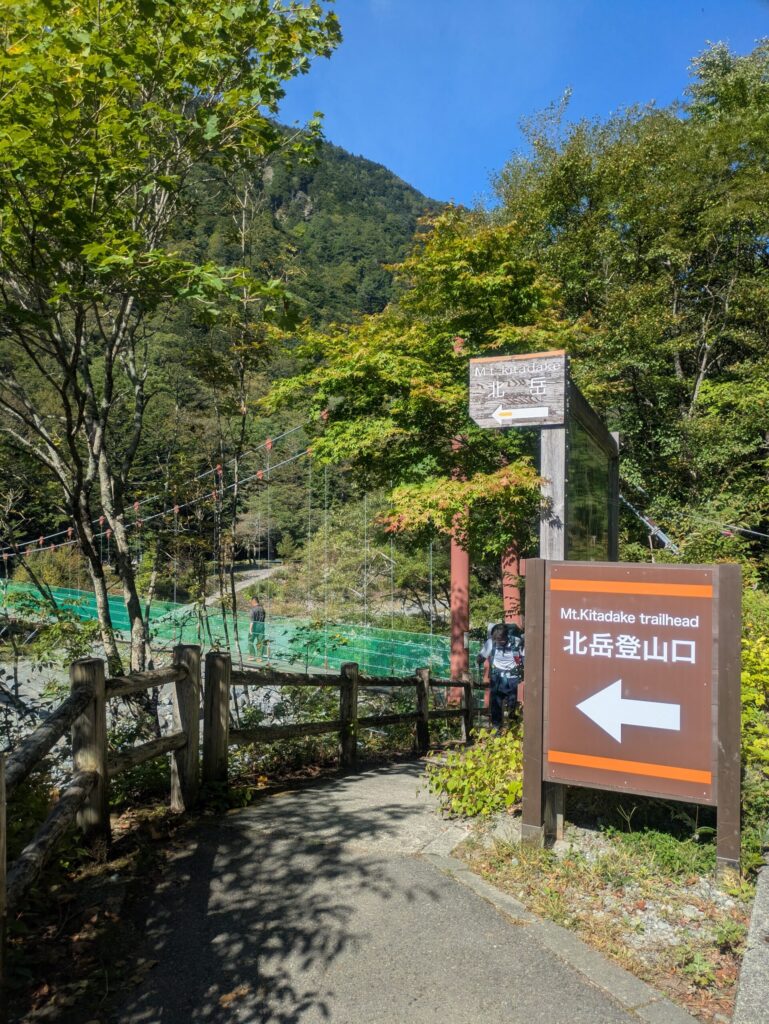
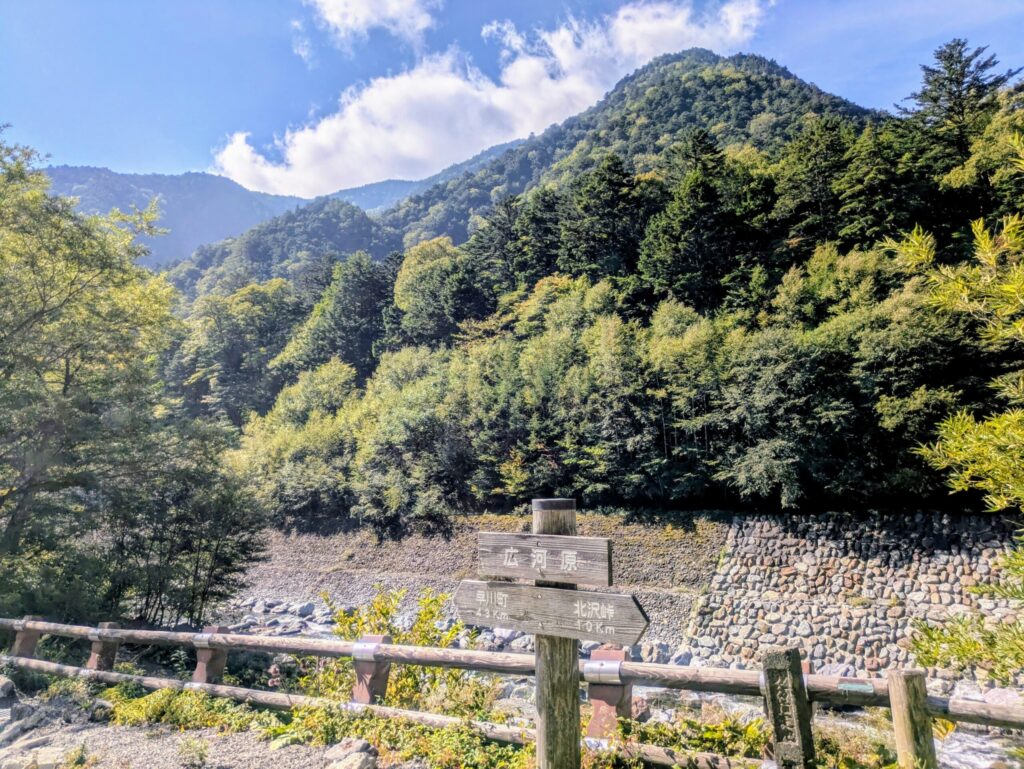
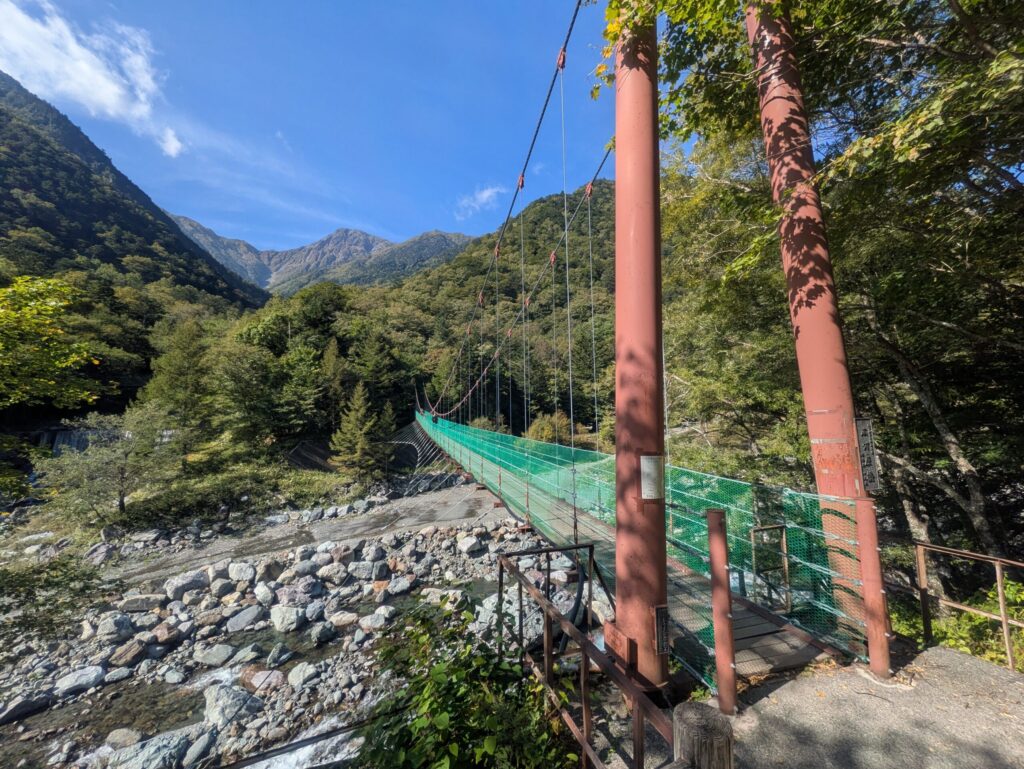
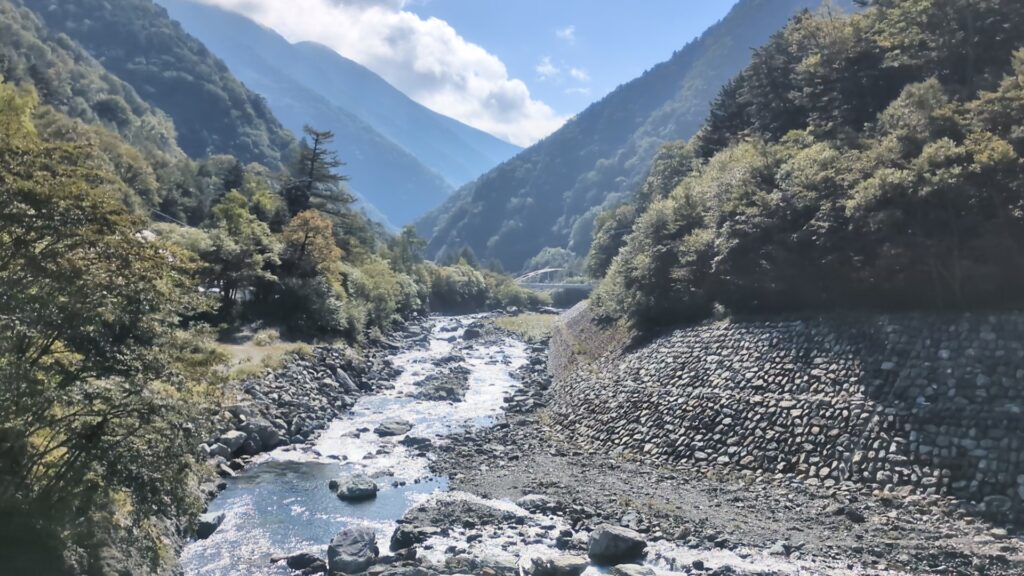
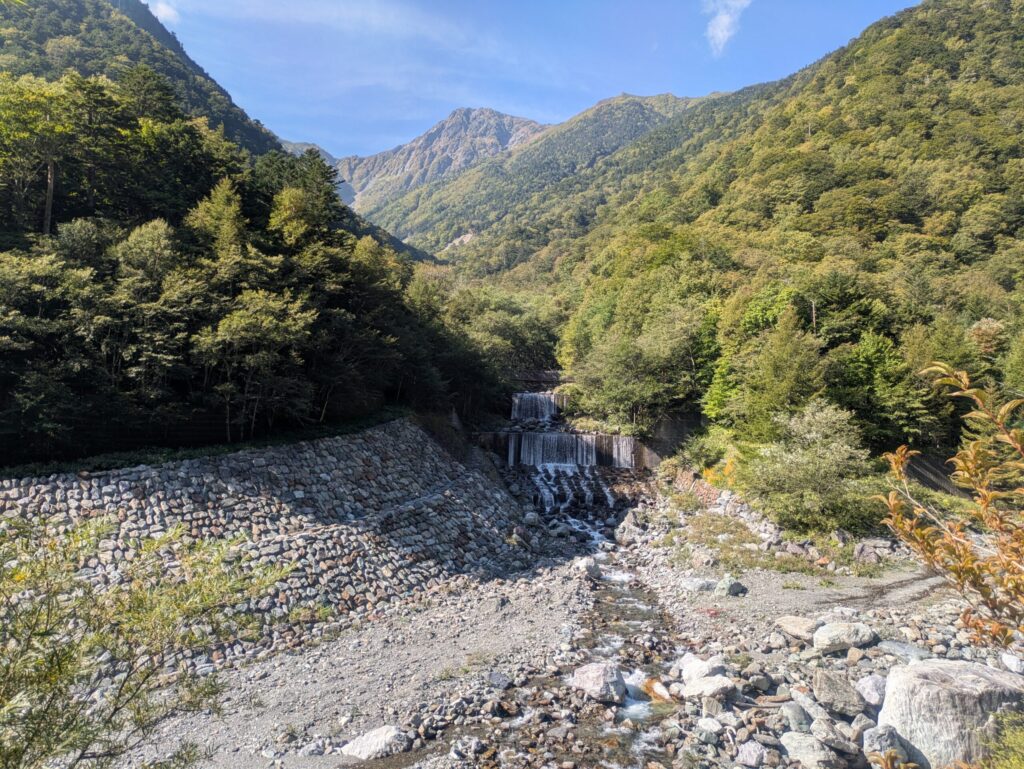
Crossing the suspension bridge over the Norogawa River, I set off under calm skies and favorable weather.
Heading toward Shirane Oike Lodge, I entered the deep forest, where the leaves were just beginning to show hints of autumn colors.
There weren’t many hikers on the trail, though I did notice a number of younger trekkers and foreign visitors.
Carrying all my food for the trip, my pack felt undeniably heavy on the first day.
Even so, my base weight plus food came to around 13 kilograms—light enough that I couldn’t help but appreciate how far modern backpacking gear has come in recent years.
There’s always a moment, when I find myself standing alone in a quiet forest, when I feel my cells begin to heal from within.
I was reminded of something James Redfield wrote in The Celestine Prophecy—that ancient forests hold a restorative power capable of healing us at a cellular level.
Walking through a woods filled with the scent of ages past, I felt exactly that—pure, gentle healing.
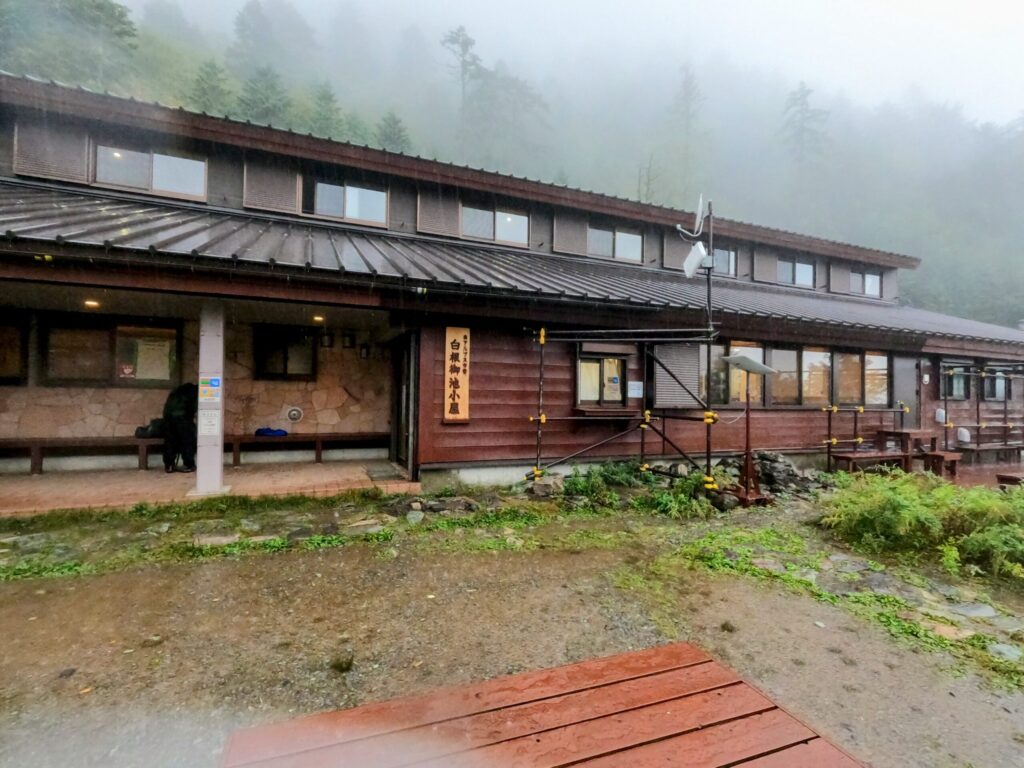
As expected, I reached Shirane Oike Lodge in about three hours.
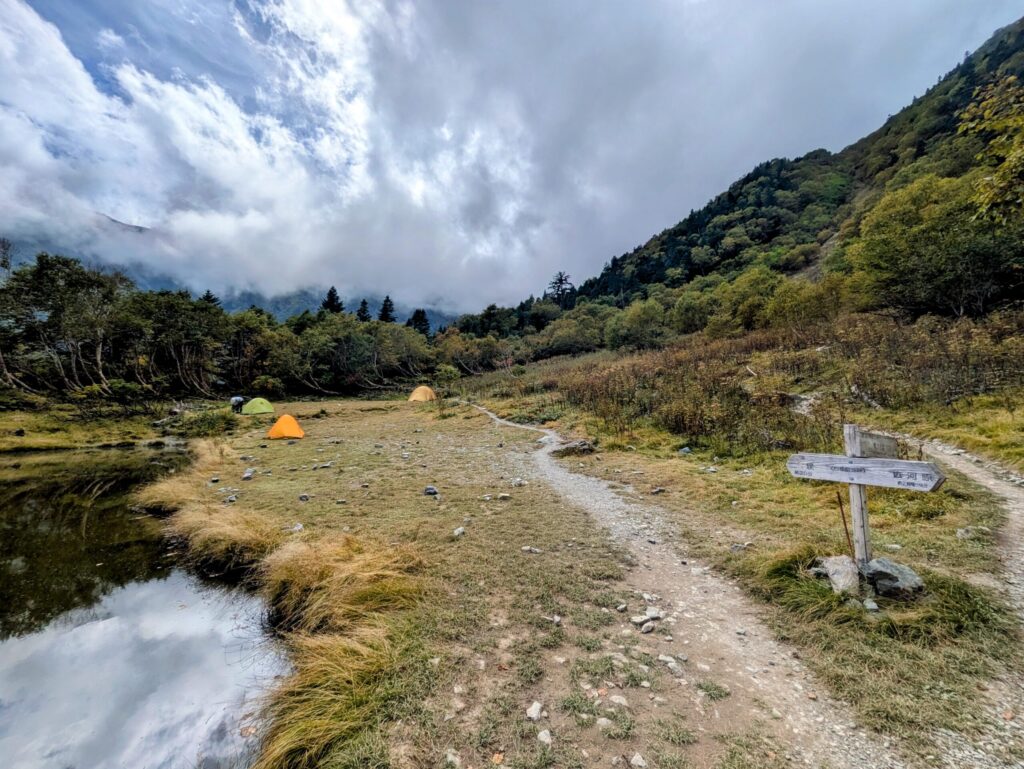
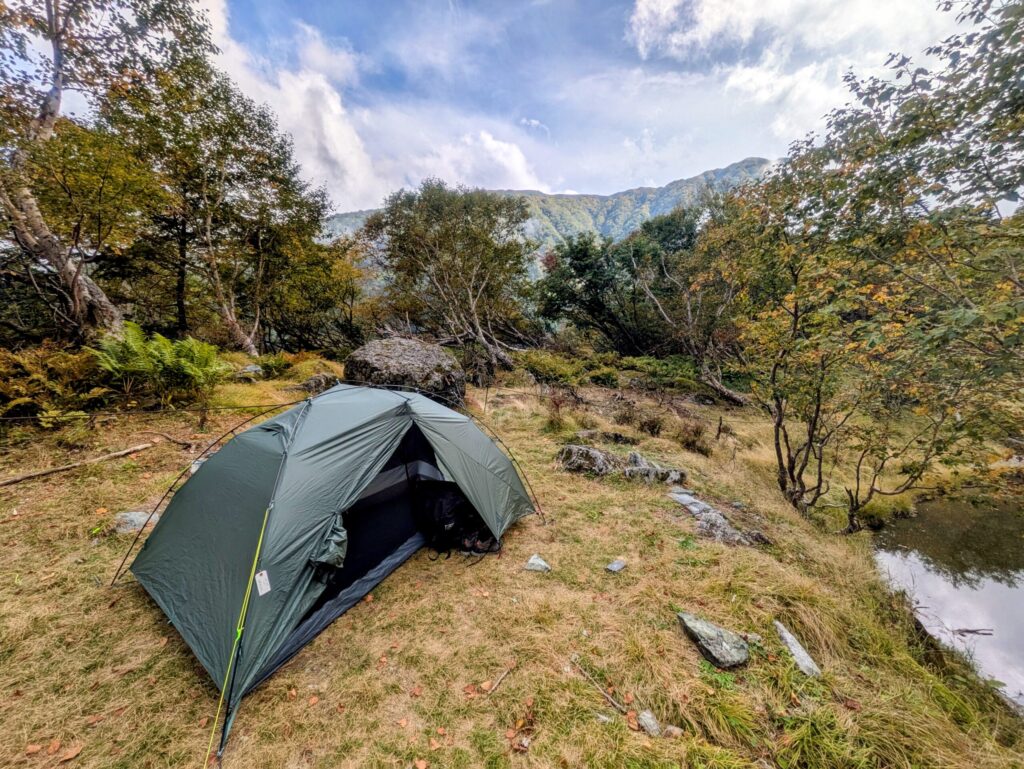
The campsite was uncrowded, and since I had reserved in advance, the check-in process was smooth.
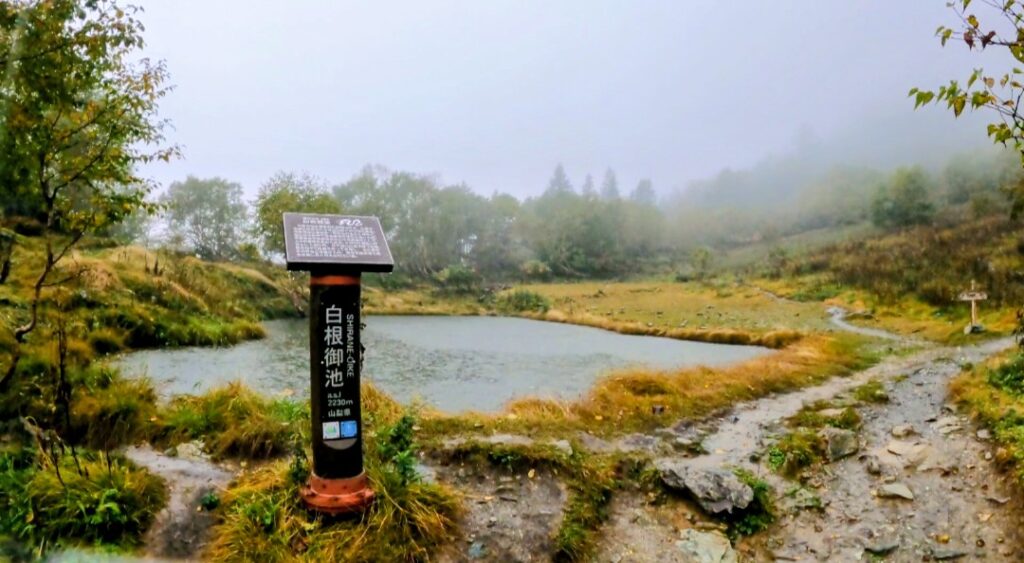
Shirane Oike itself was small and slightly murky, but the trees reflected behind it created a beautifully serene scene.
By afternoon, a mist settled over the area and the temperature dropped, so I retreated to my tent early to rest.
Day 2: Rain, Wind, and Light
(Shirane Oike Lodge → Mt. Kita → Kitadake Mountain Hut)
Storm and Light: Climbing Toward Mt. Kitadake
I woke at 4:30 a.m.
Outside, the rain was already falling—just as the forecast had predicted.
The day’s plan was a short one—only about 5.4 km to Kitadake Mountain Hut—
but the trail was relentlessly steep.
I set out at 6:00 a.m.
The rain grew heavier by the minute, and the trail quickly turned into something like a flowing stream.
I’d experienced hiking in the rain during backpacking trips in the U.S.,
but I realized this was the first time I’d climbed such a steep mountain trail in a downpour while carrying a full-sized pack.
For this trip, I debuted my new Patagonia Granite Crest Jacket.
With its pit zips and high breathability, it kept me surprisingly comfortable despite the weather.
Once again, I was reminded: Japan’s mountains truly do get a lot of rain.
Even after leaving the forest, the rain didn’t let up.
And by the time I reached the ridgeline, a fierce wind had begun to roar.
A wind so strong it felt like it could lift me off the ground—
the most powerful I’ve ever experienced.
It was a visceral lesson:
never underestimate the mountains.
Just before reaching Kata-no-Koya, I encountered three raichō—rock ptarmigans—walking calmly along the trail.
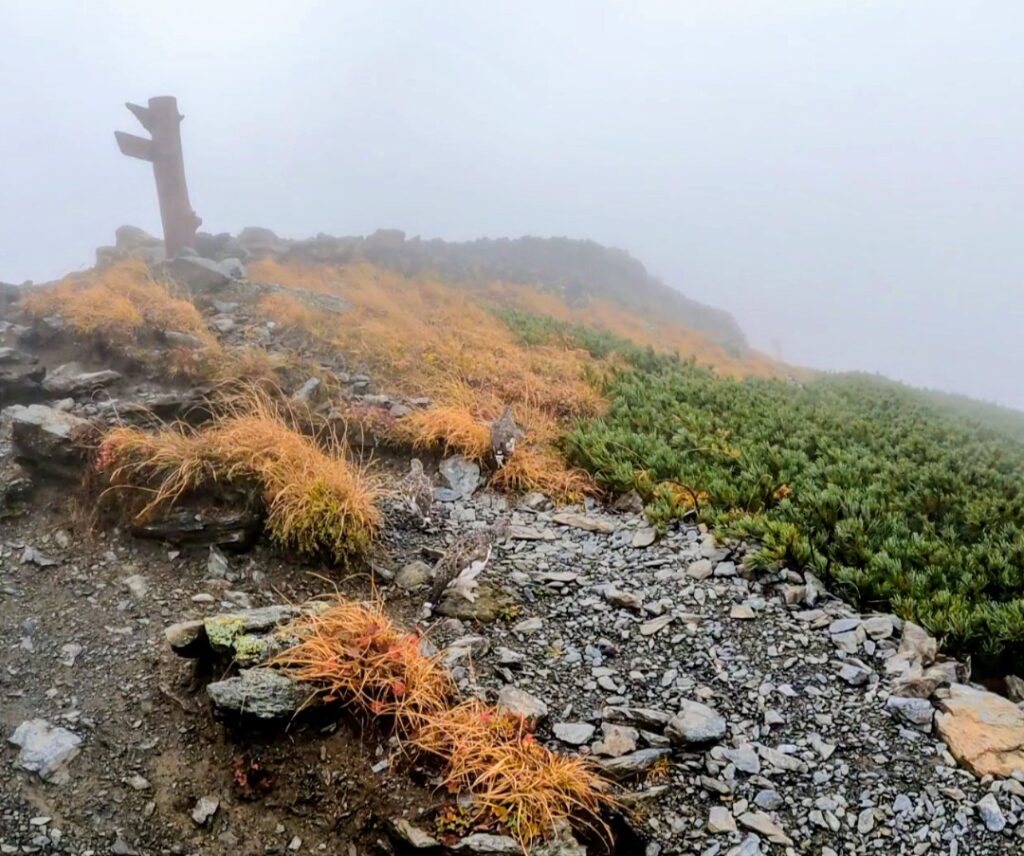
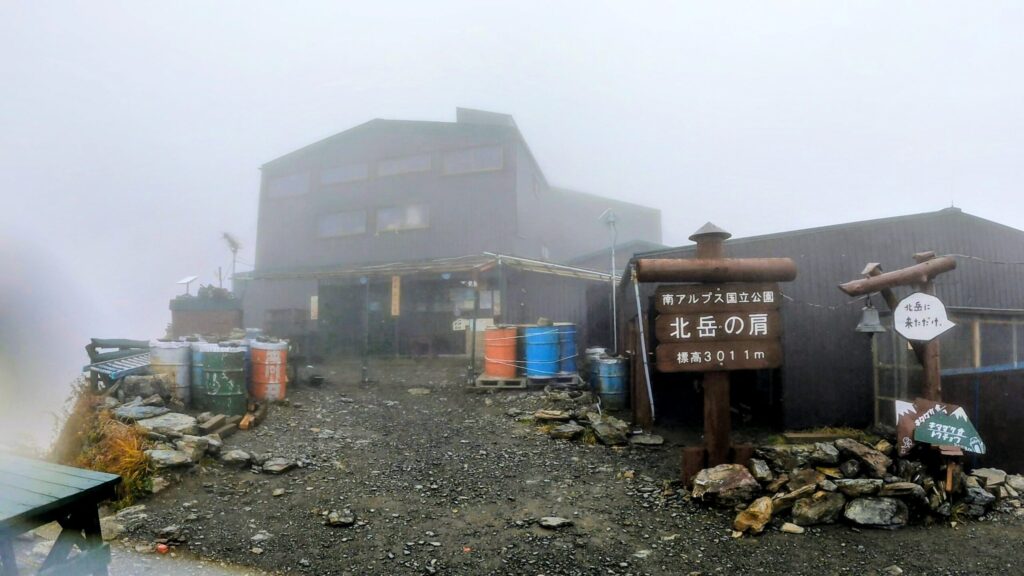
Some of the hikers heading toward Kitadake Mountain Hut turned back at this point, worried about the fierce wind.
I chose to continue, trusting that the wind would ease by afternoon, just as the forecast suggested.
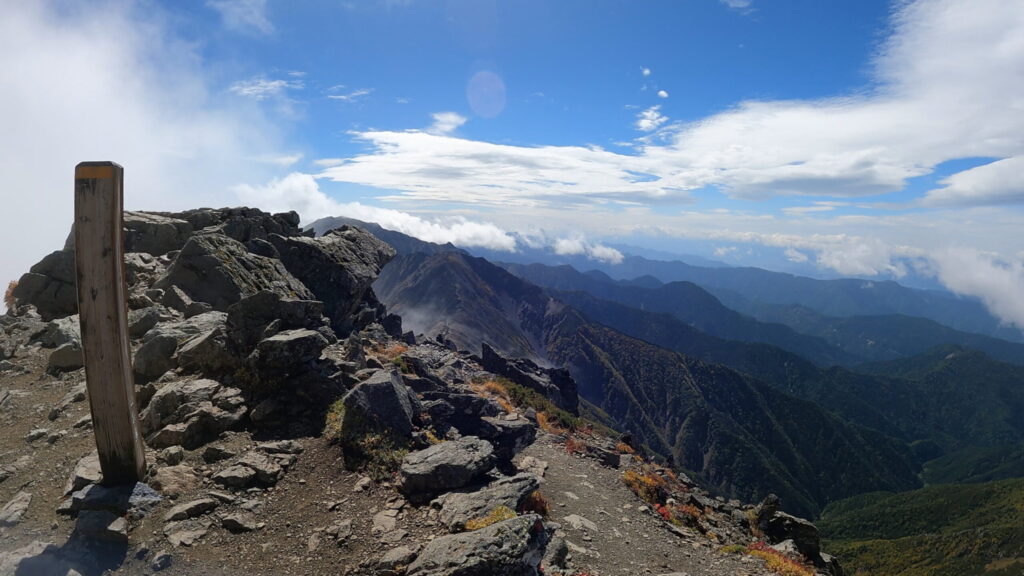
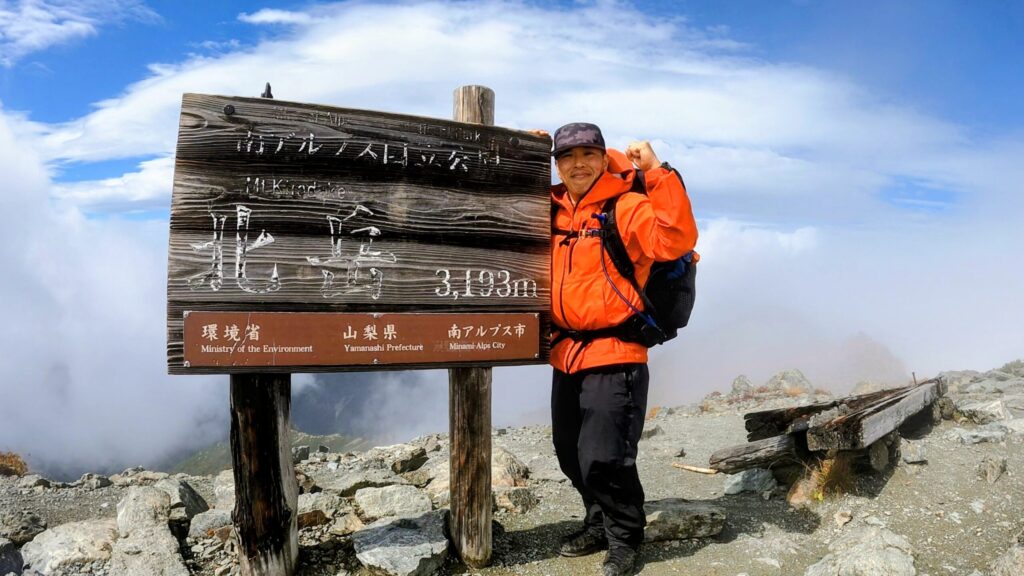
When I reached the summit of Mt. Kita, the wind was still howling and the ridge was shrouded in thick clouds.
But within twenty minutes, the sky began to clear at astonishing speed.
The clouds split open, and a beam of sunlight poured through—
and in that instant, the entire world turned gold.
In that shimmering light, I felt it deeply and unmistakably:
I was glad I had climbed all the way here.
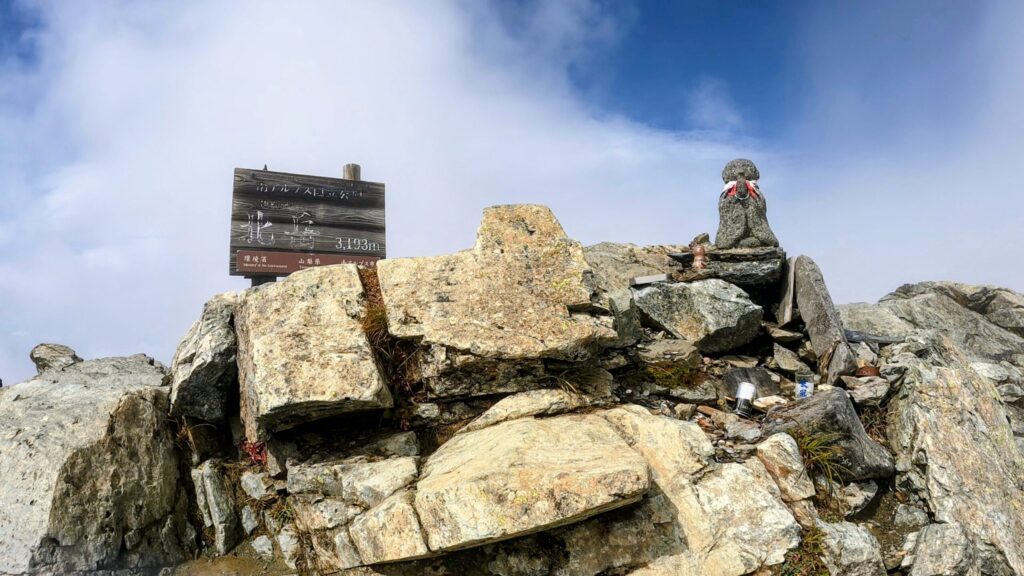
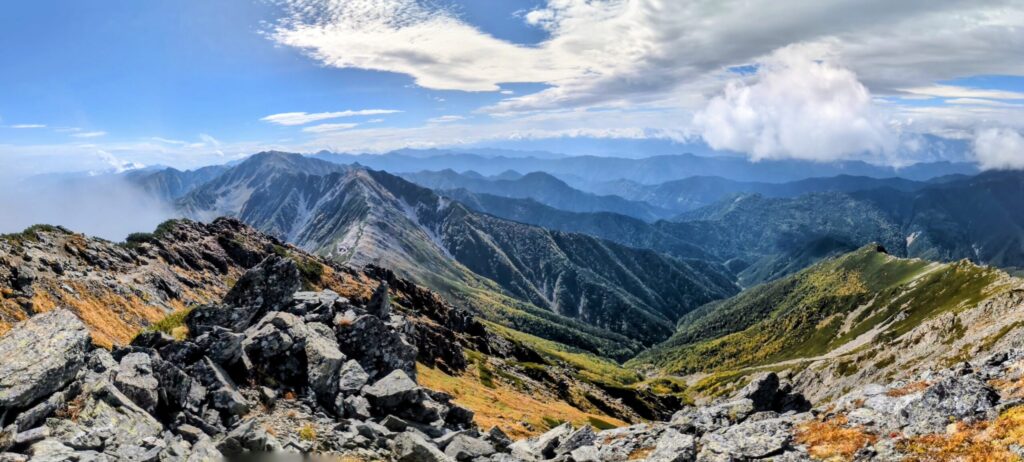
On the descent, Mt. Fuji suddenly emerged from the clouds,
and the view opened up as if nature were offering a reward from the heavens.
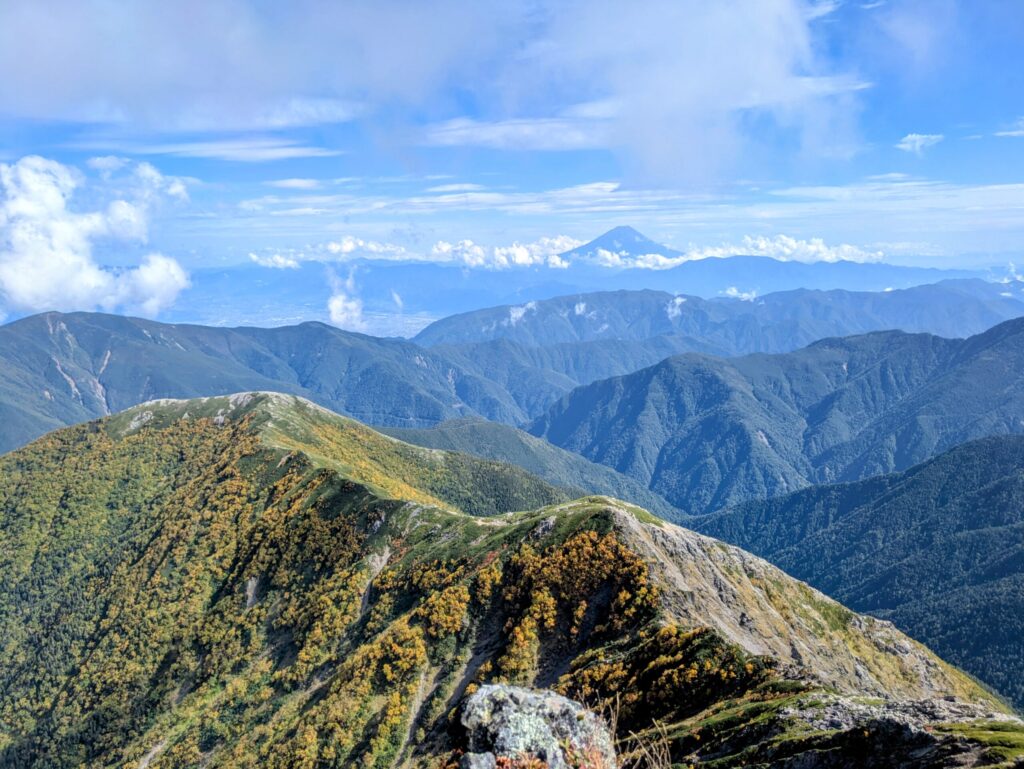
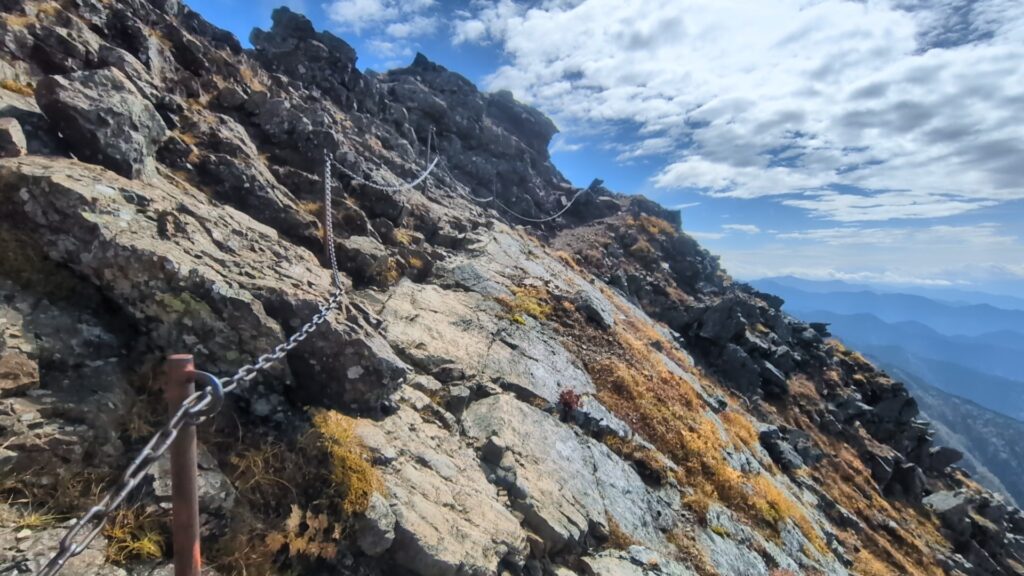
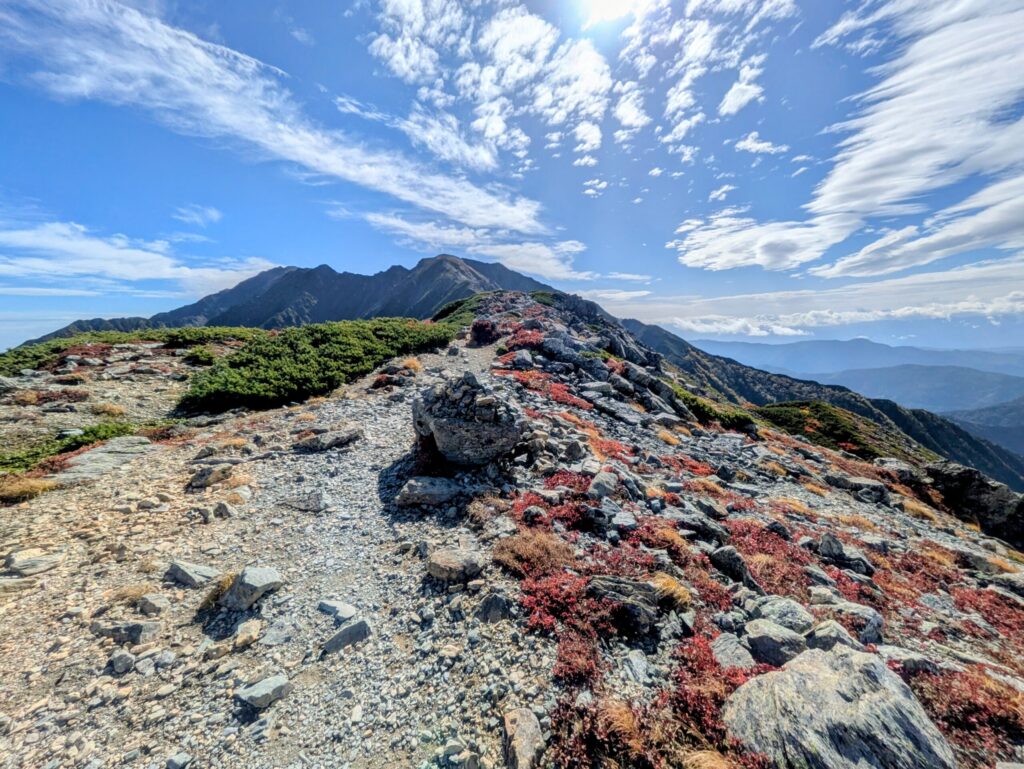
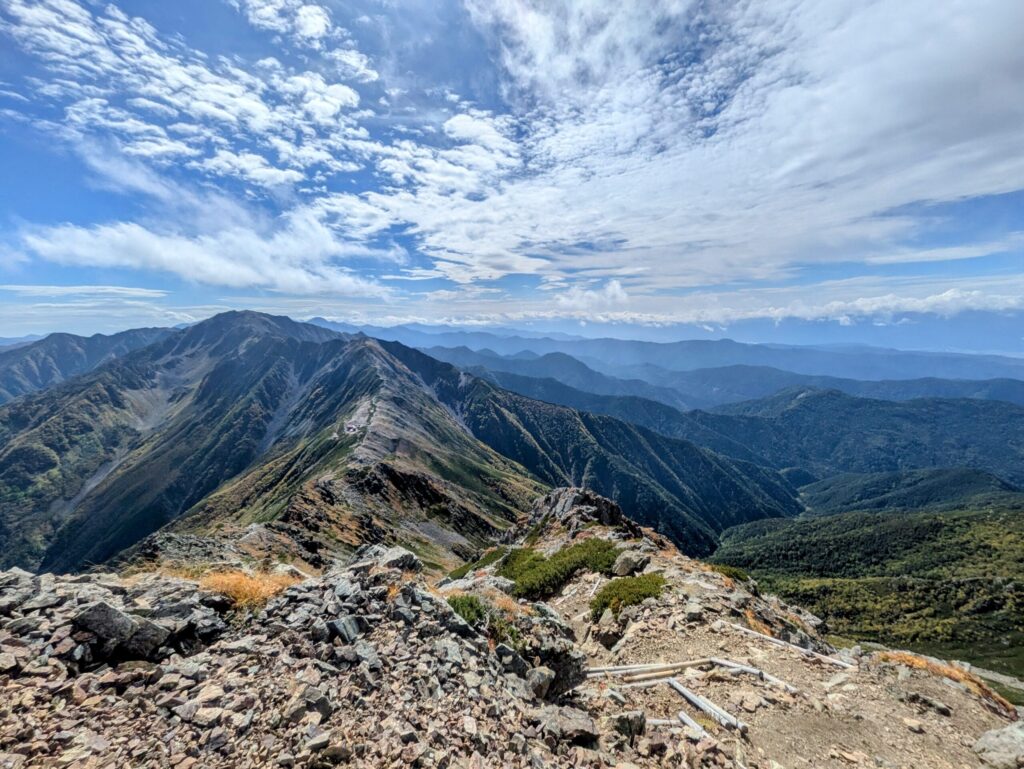
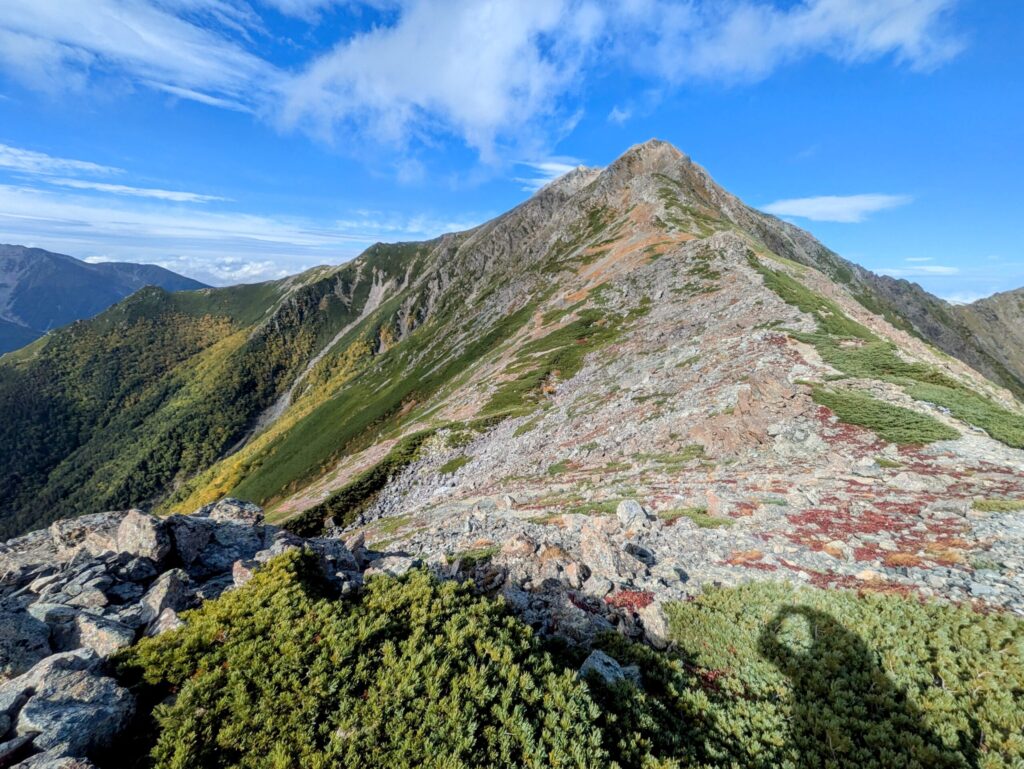
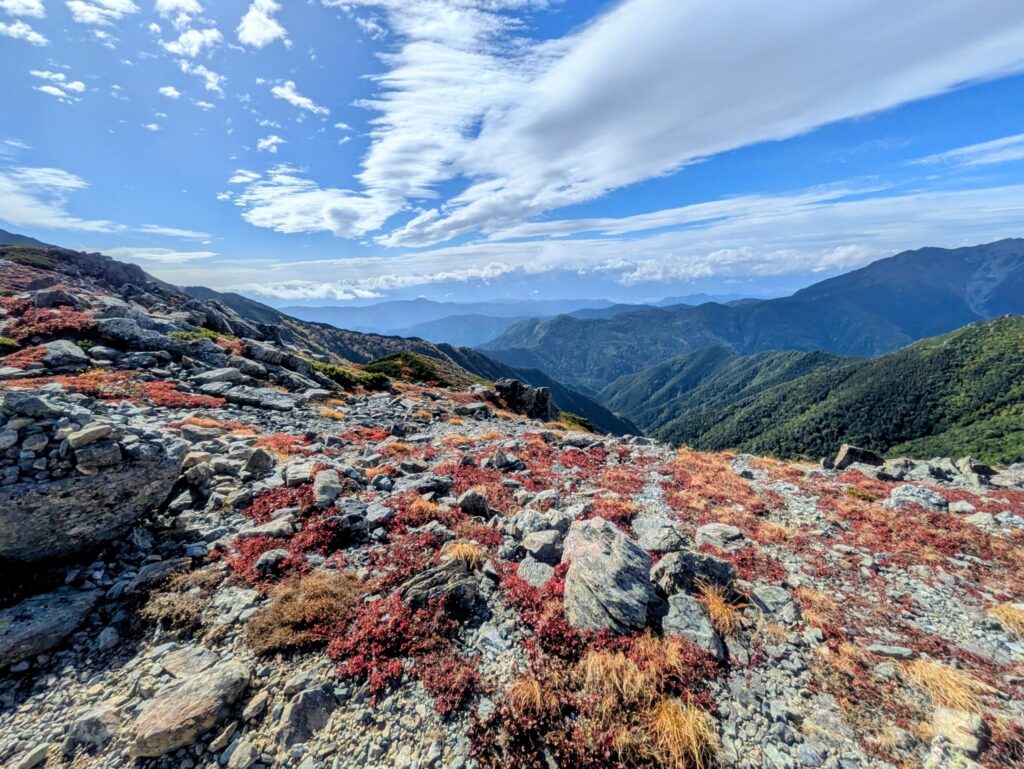
I arrived at Kitadake Mountain Hut around 2:00 p.m.
The wind had vanished as if it had all been a lie, leaving the ridgeline calm and peaceful.
There was only one other tent in the campsite that night.
As the mist drifted in once again, the entire ridge fell into a deep, almost sacred silence.
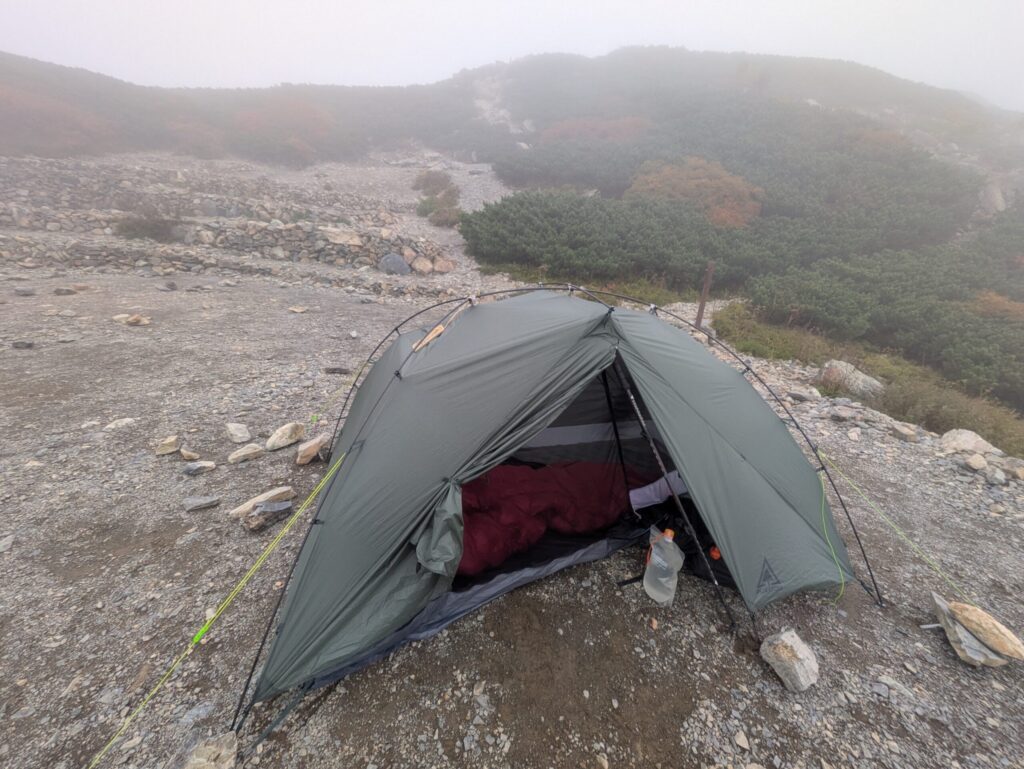
At night, I could see the faint glow of city lights far below on the Minami-Alps side.
As darkness deepened, the wind began to rise again.
Still, my Durston X-Dome 1 held firm through the night winds.
The next day, I would cross the very heart of the Shirane Sanzan—
Aino-dake and Notori-dake.

コメント