鳳凰三山 ― 天と地を結ぶ山で感じた、再生の旅
Walking the Mountains of Rebirth: A Spiritual Journey across Mt. Houou
Introduction — My First Step into the Southern Alps
Since I had just moved to the foothills of the Southern Alps, I chose Mt. Hōō (Hōō-sanzan) as my first destination in this mountain range when September arrived.
Throughout Japan, mountains have long been objects of worship, and Hōō-sanzan is no exception.
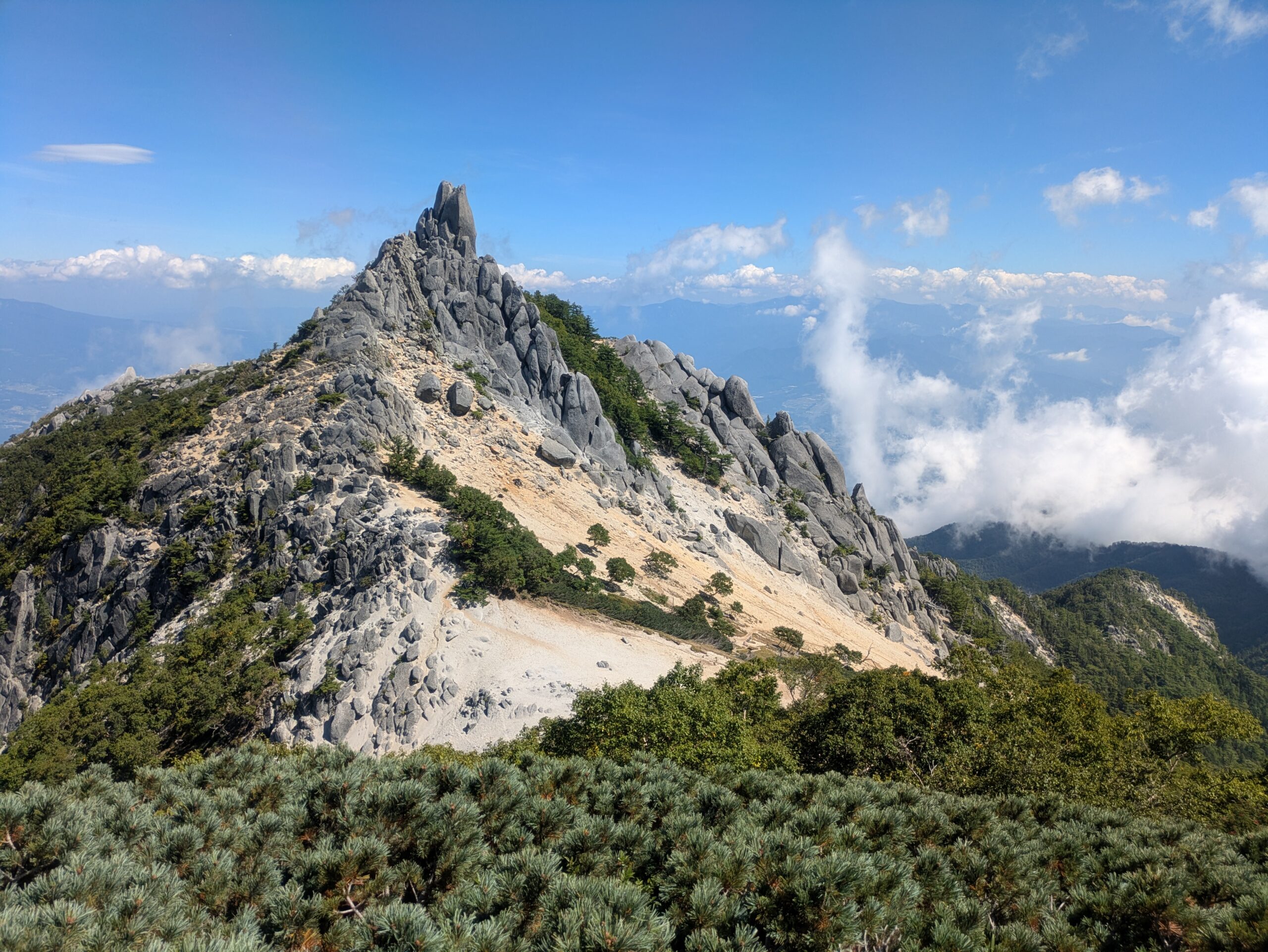
The images I had seen—the sharp obelisk-like spire and the line of Jizō statues—left a strong impression on me. I had always wanted to see them with my own eyes. This climb became the starting point of a journey to trace the remnants of Japan’s mountain spirituality.
Base Camp — The Trail to Minami-Omuro Hut
The Quiet of the Forest and a Purification Through Sweat
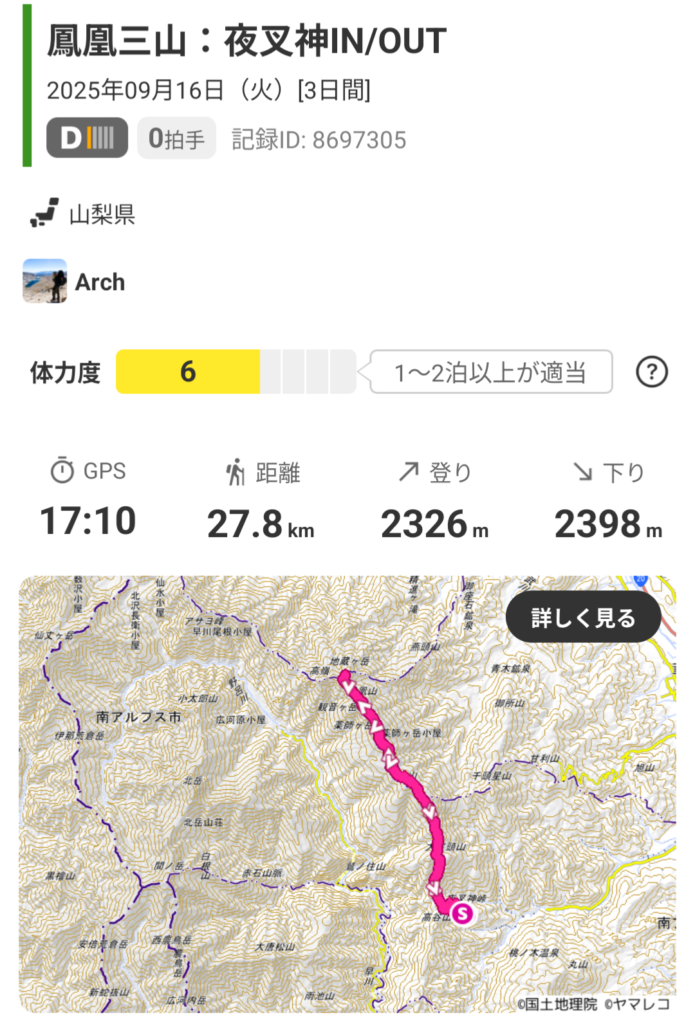
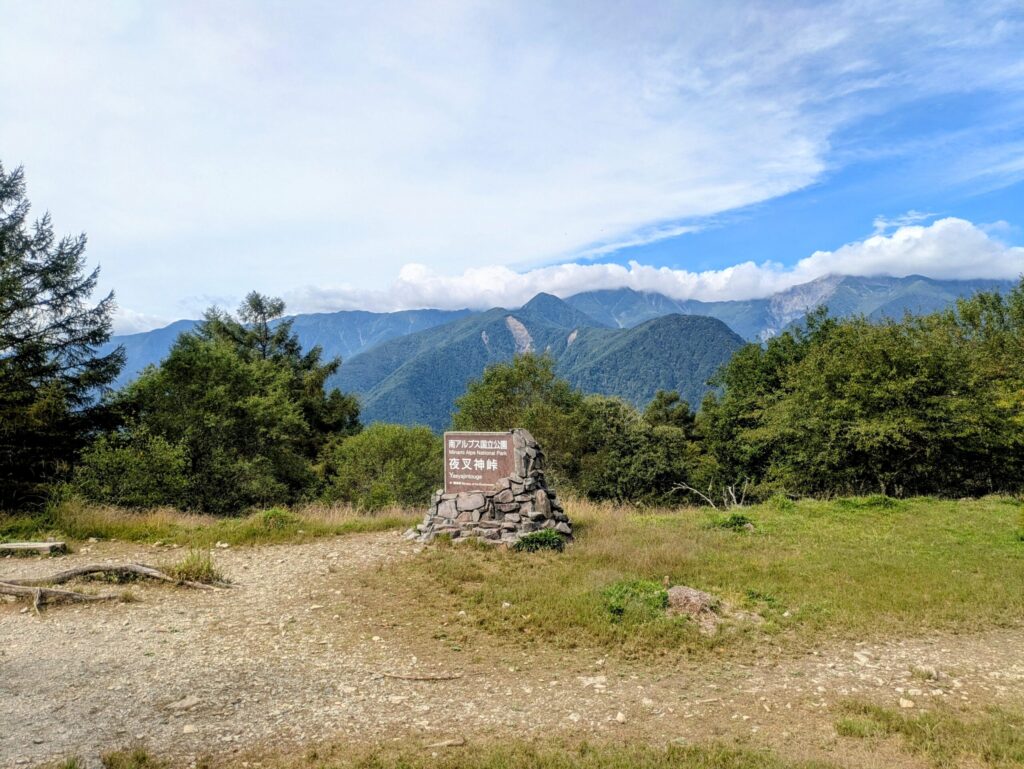
I started my hike from the Yakashintōge trailhead and planned a relaxed three-day, two-night itinerary, using Minami-Omuro Hut—about eight kilometers from the start—as my base camp.
On the first day, I would climb up to the hut. The second day would be dedicated entirely to traversing the Hōō-sanzan ridge. It was a schedule with plenty of breathing room.
The trail begins with a long, steady ascent through a dense forest. The humidity was high, and within minutes my shirt was drenched in sweat.
Each time my breath grew heavy, I felt my own “attachments” and “impatience” rising to the surface—only to be released again with every step.
Reaching a summit and taking in the vast landscape before me…
In that moment, everything is washed clean.
A mountain journey is nothing more—and nothing less—than the repetition of this cycle.
Night at the camp — Silence in the Heart of the Forest
Two Mountain Cultures — Japan and the United States
I reached Minami-Omuro Hut a little after 3 p.m.
Because it was a weekday, the area was quiet, with only a handful of tents scattered around the campsite.
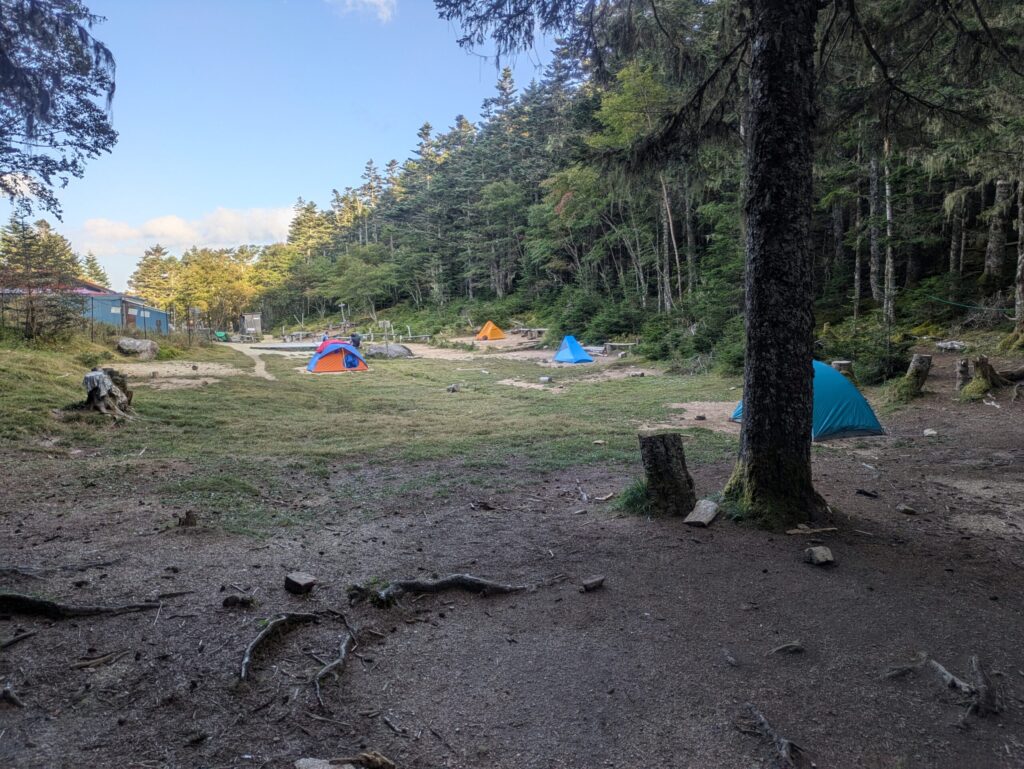
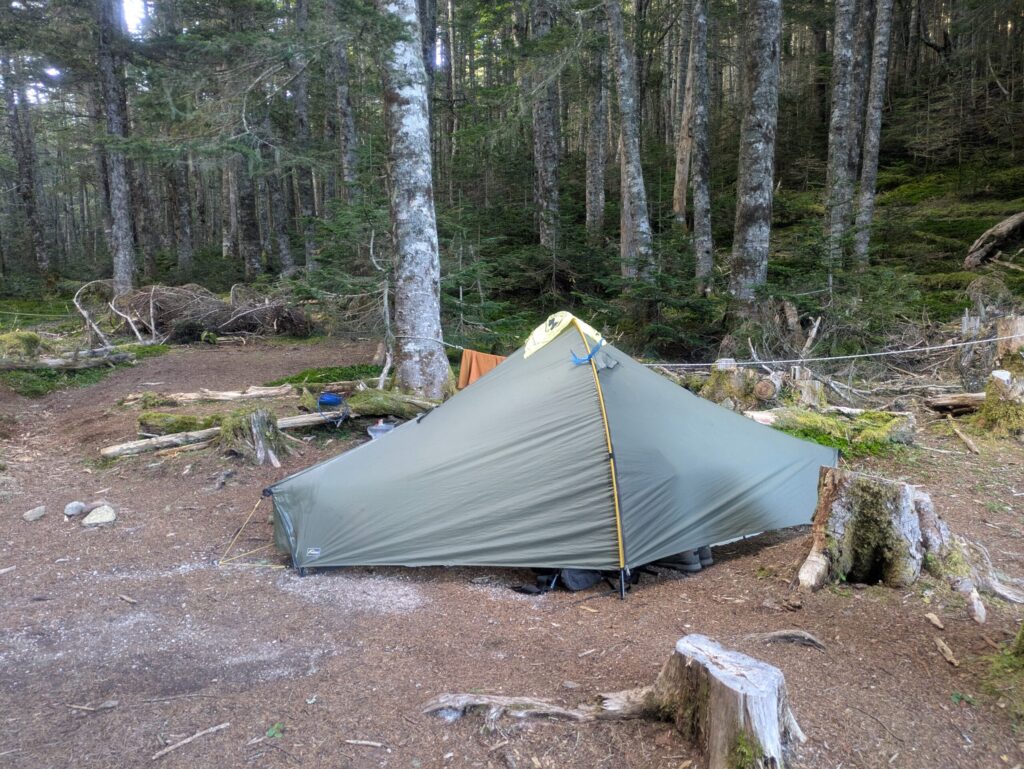
I pitched my tent in a quiet spot tucked back in the shade of the trees.
In the Sierra Nevada of the United States, solo camping was the norm—even in summer, you could go days without seeing another tent.
Compared to that, the density of tents at Japanese campsites initially came as a surprise.
That’s why I’ve grown to choose weekdays, seeking out the quieter moments in the mountains.
That night, I fell asleep wrapped in the sound of insects and the scent of the forest.
The Sky-High Ridgeline — Traversing the Hōō-sanzan Peaks
The Obelisk and the Sacred Sands — A Mystical Landscape
On the second day, I left the hut at 6 a.m.
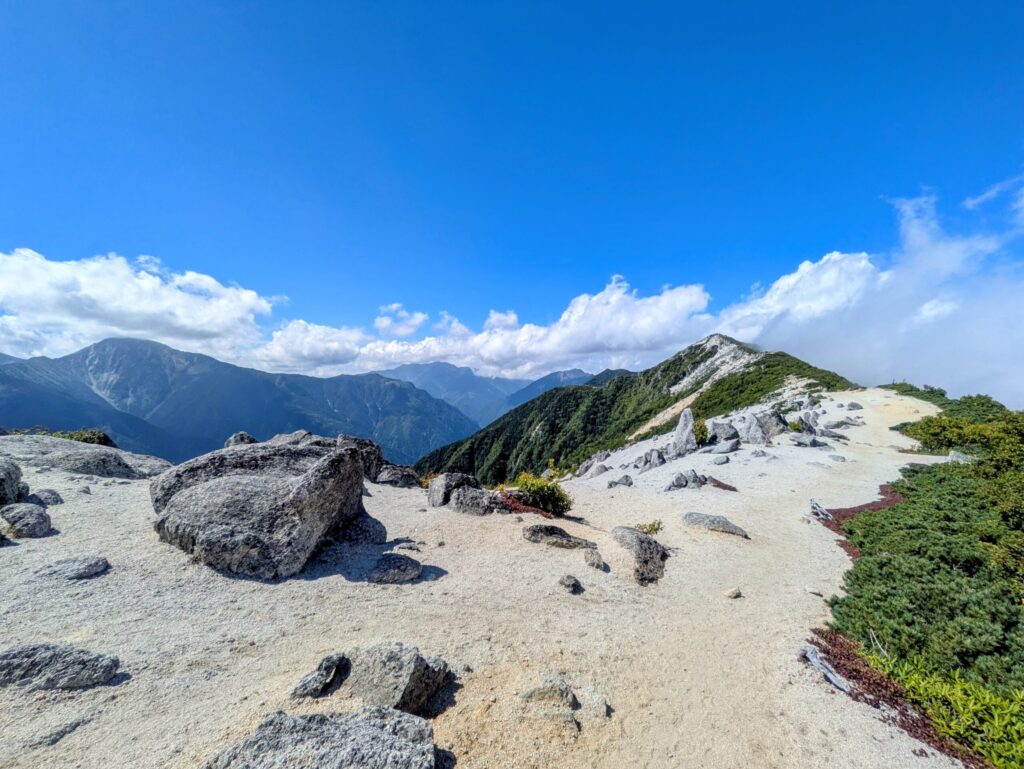
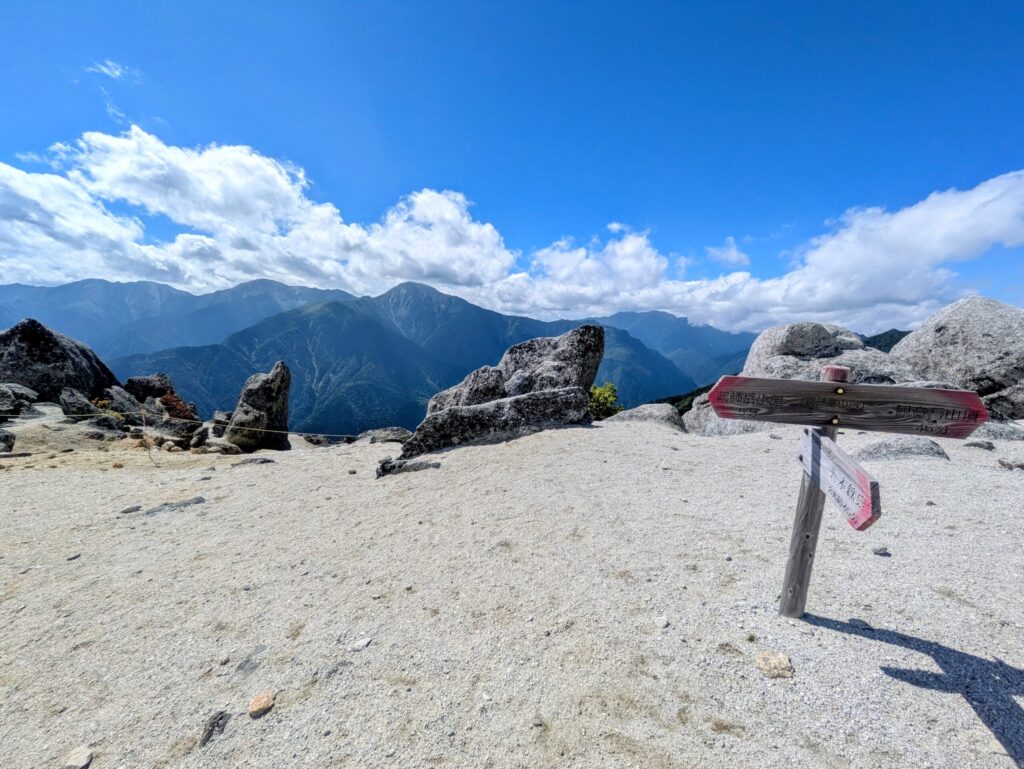
Before long, I emerged from the forest, and to my left appeared the giants of the Southern Alps—Mt. Kitadake and Mt. Ainodake.
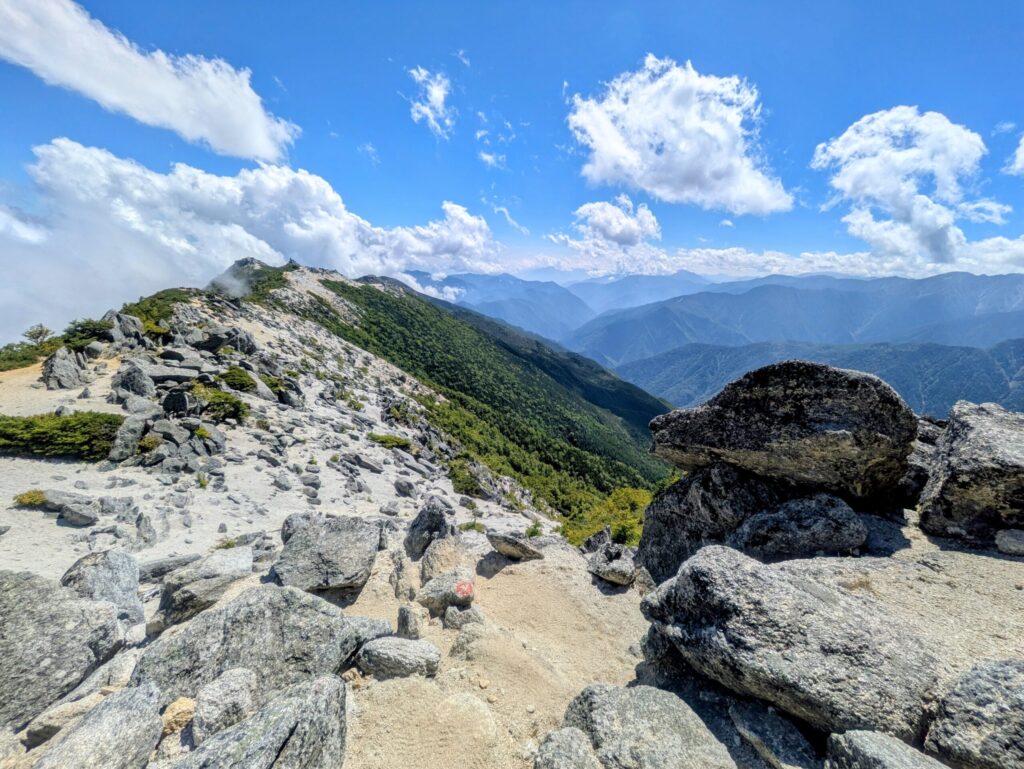
The ridgeline stretching toward Yakushi-dake, Kannon-dake, and Jizō-dake truly felt like a “path in the sky.”
The morning started out mostly cloudy, but just before reaching Yakushi-dake, I was lucky enough to catch a glimpse of Mt. Fuji.
No matter how many times I see it from afar, Fuji is always stunningly beautiful.
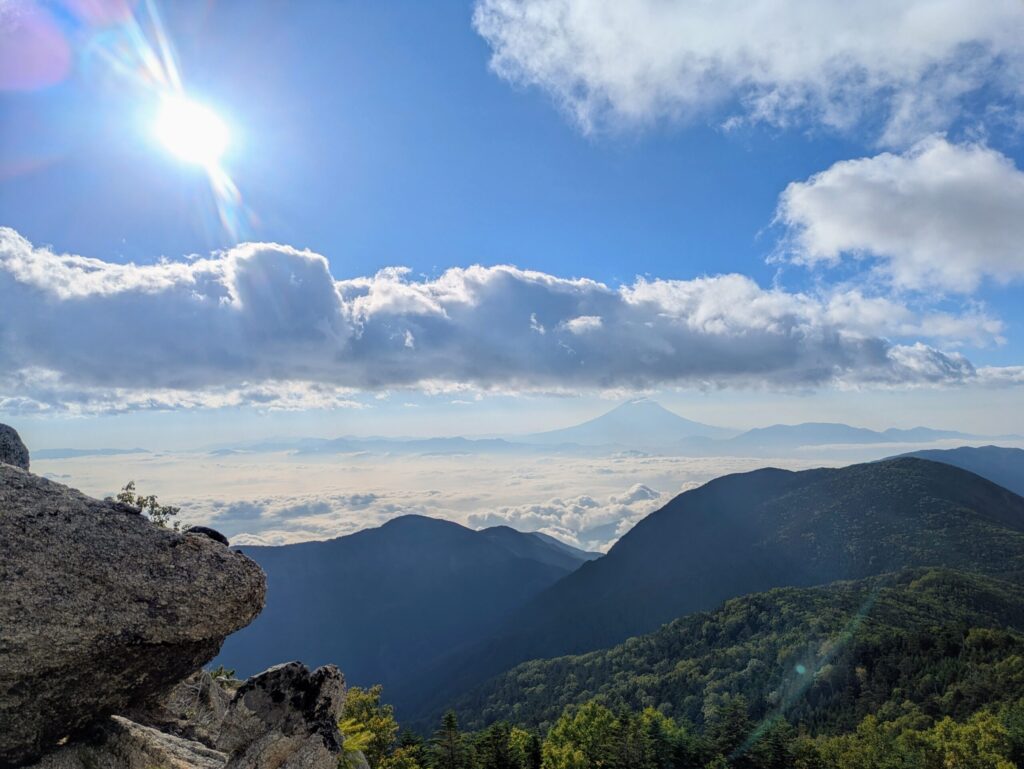
As I made my way toward Jizō-dake later in the morning, the clouds grew thicker and the sky dimmed.
For a moment, it felt as if I were walking toward the underworld itself.
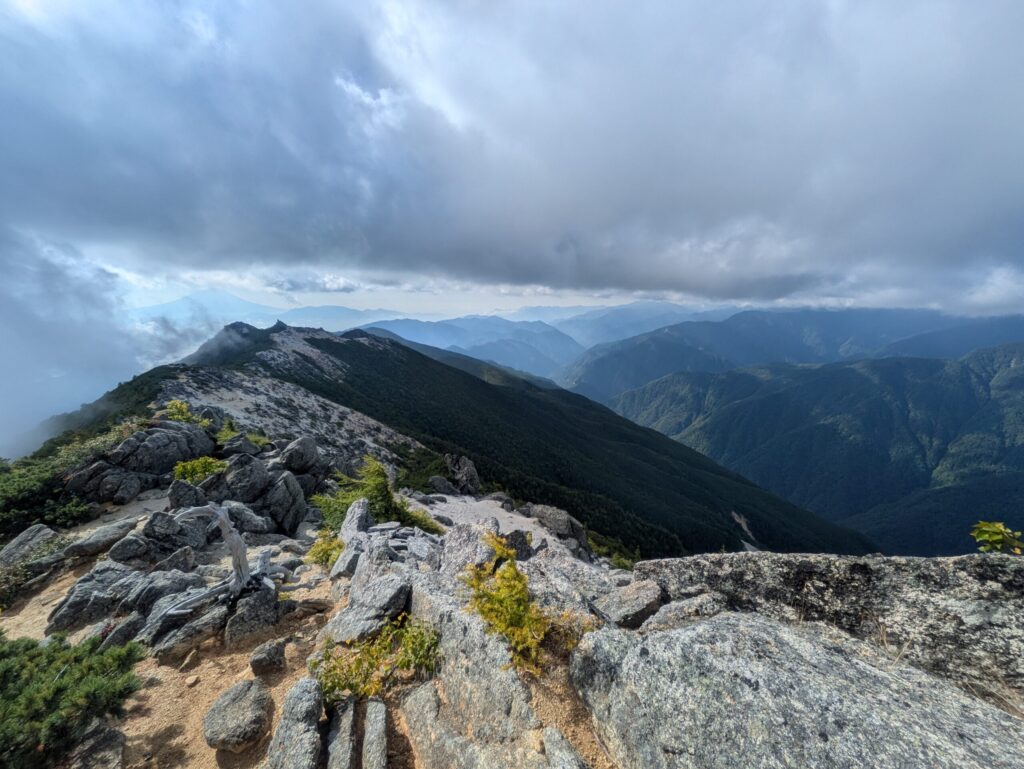
After about four hours, I reached the area around Jizō-dake.
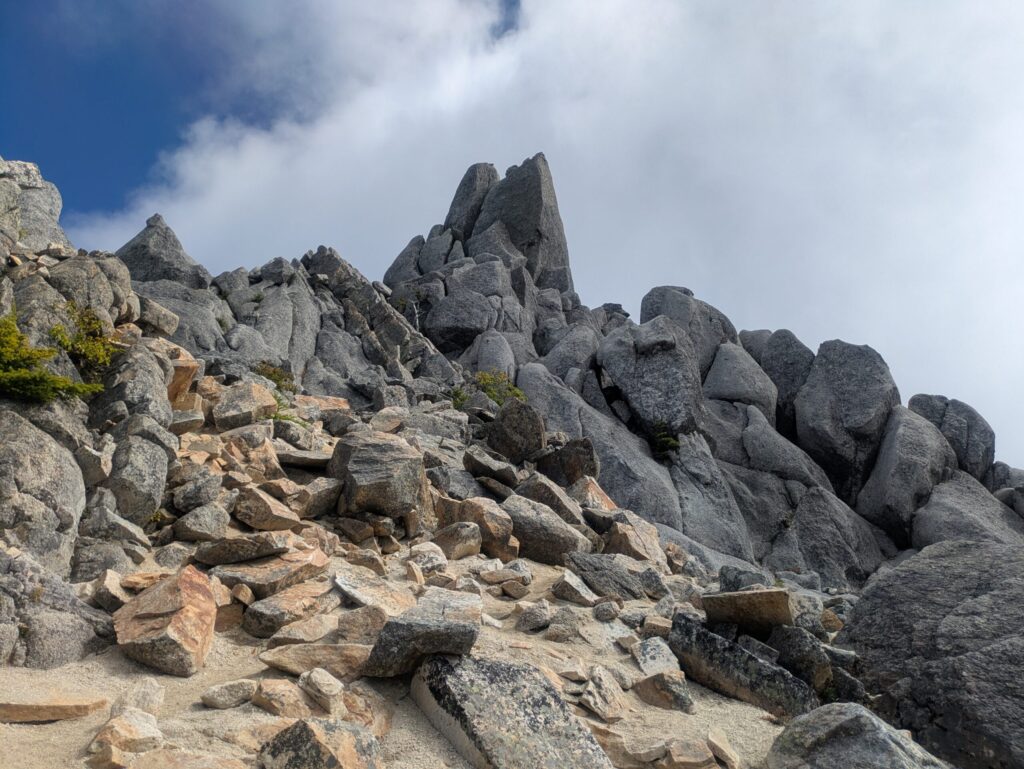
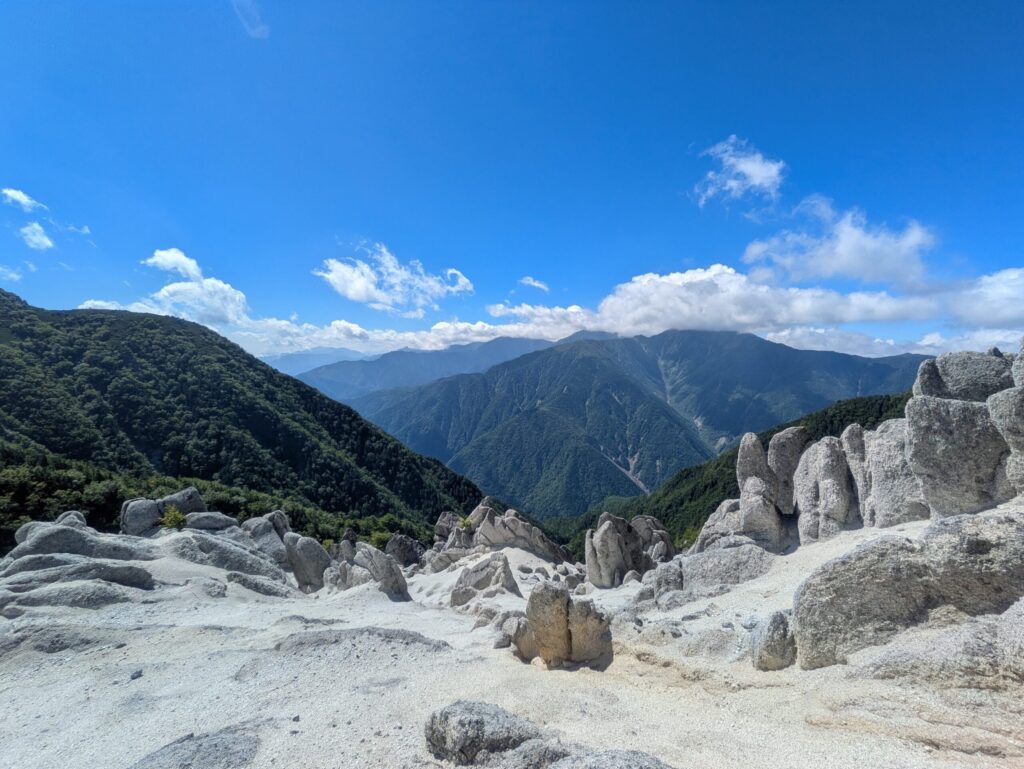
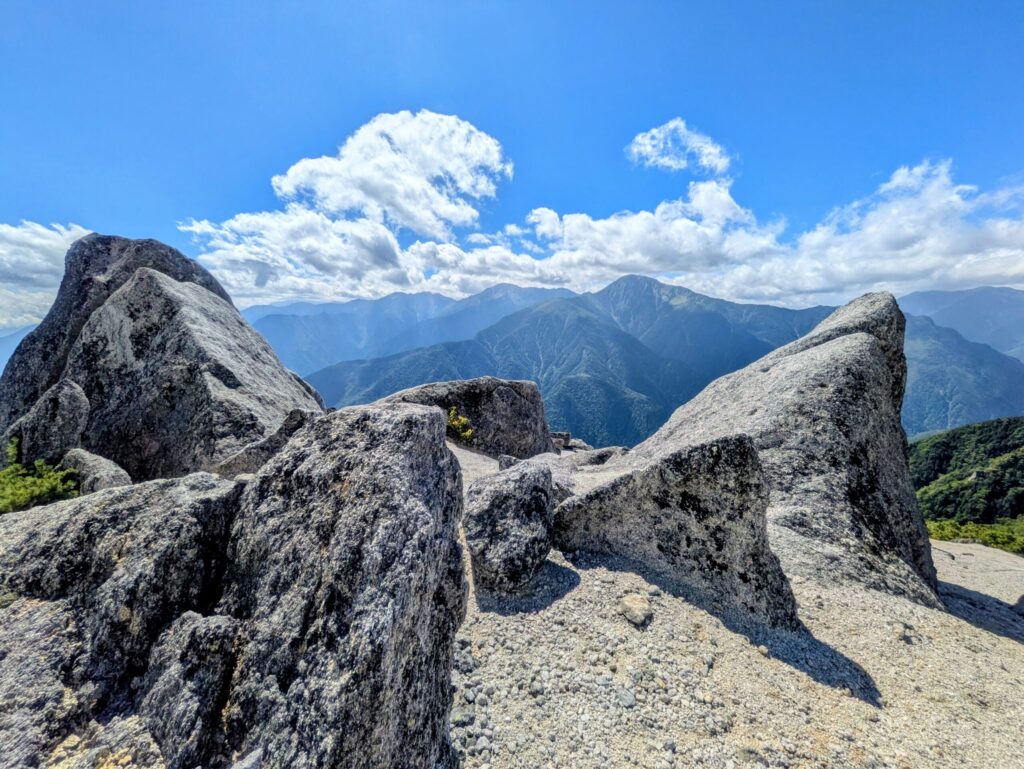
The moment I saw the peak’s iconic obelisk, I caught my breath.
It looked like a pillar connecting heaven and earth, radiating a sacred presence.
Soon, I arrived at the sandy plateau known as Sai-no-Kawara, where a line of Jizō statues stood silently, their shapes floating in and out of the mist.
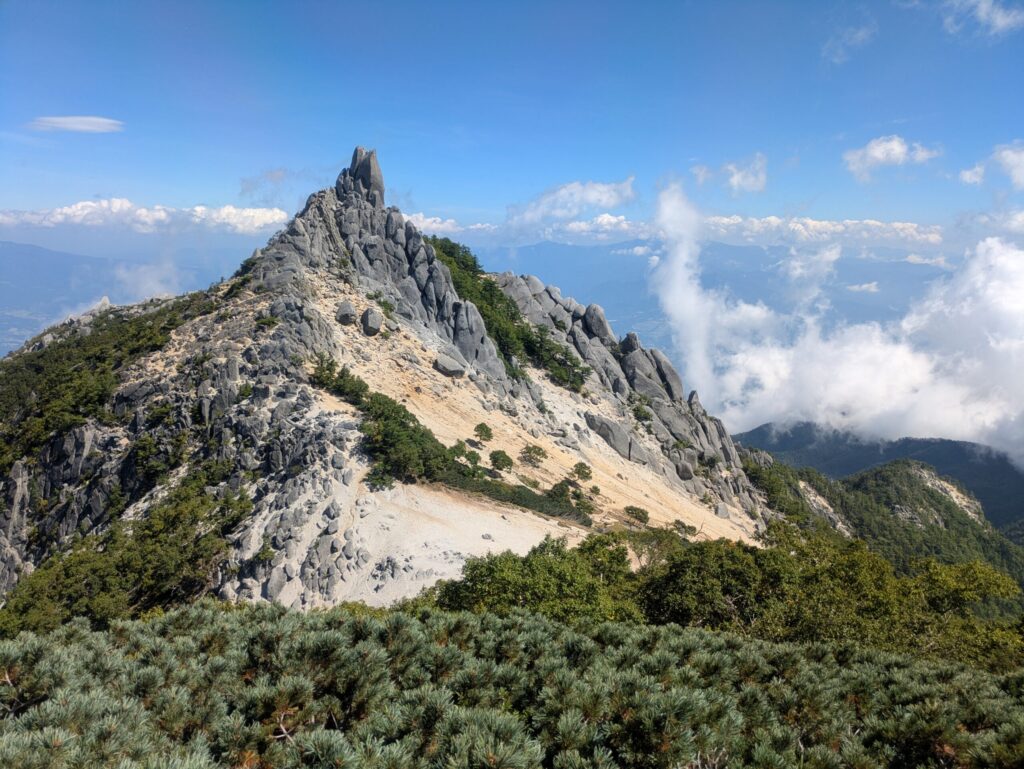
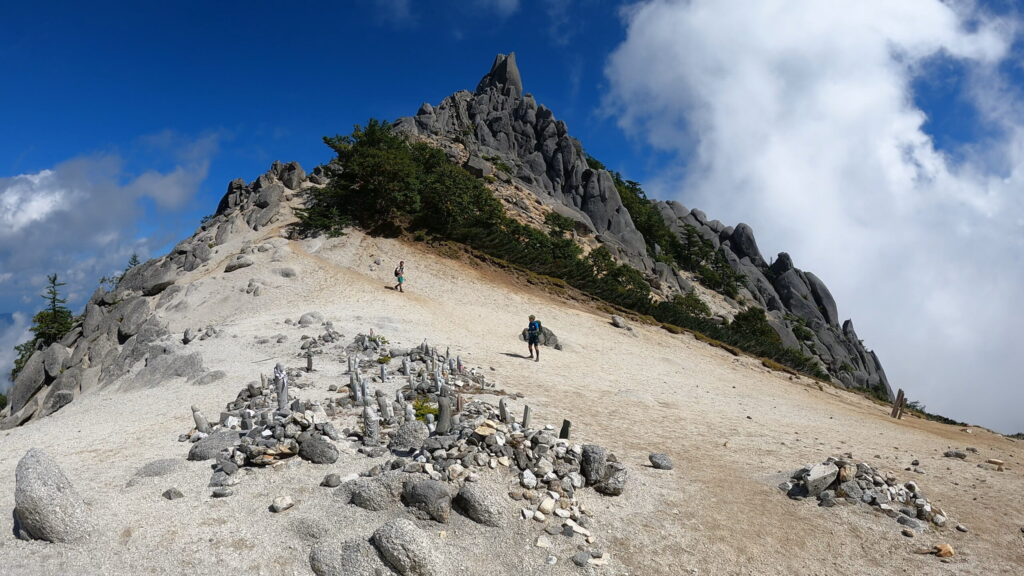
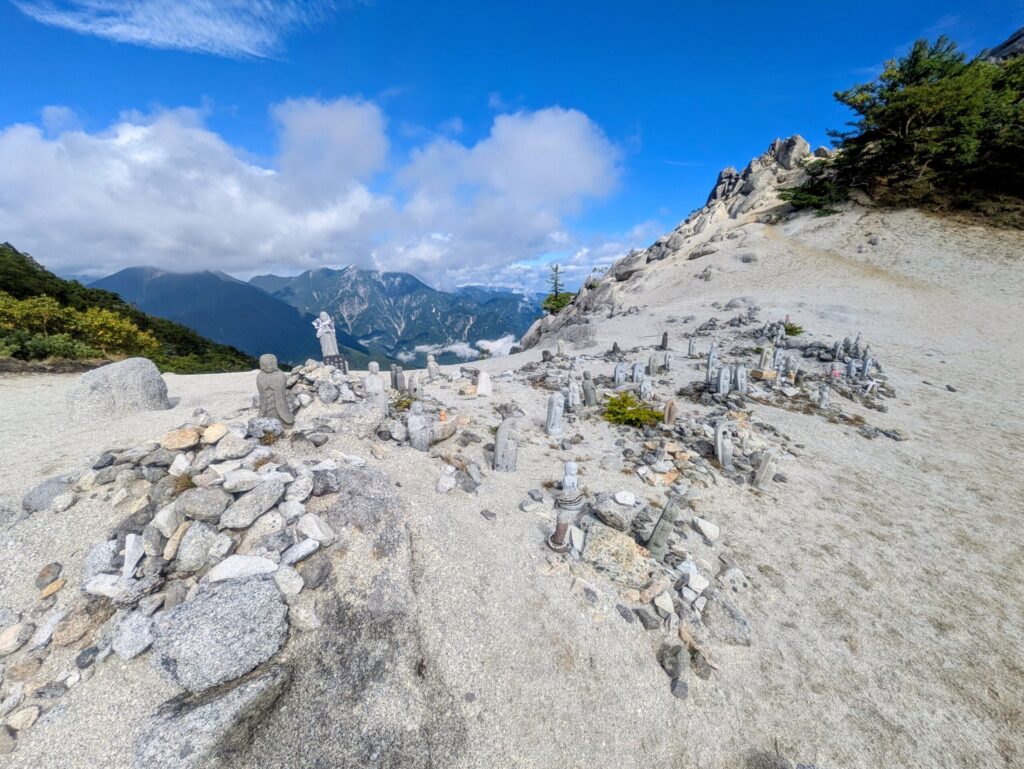
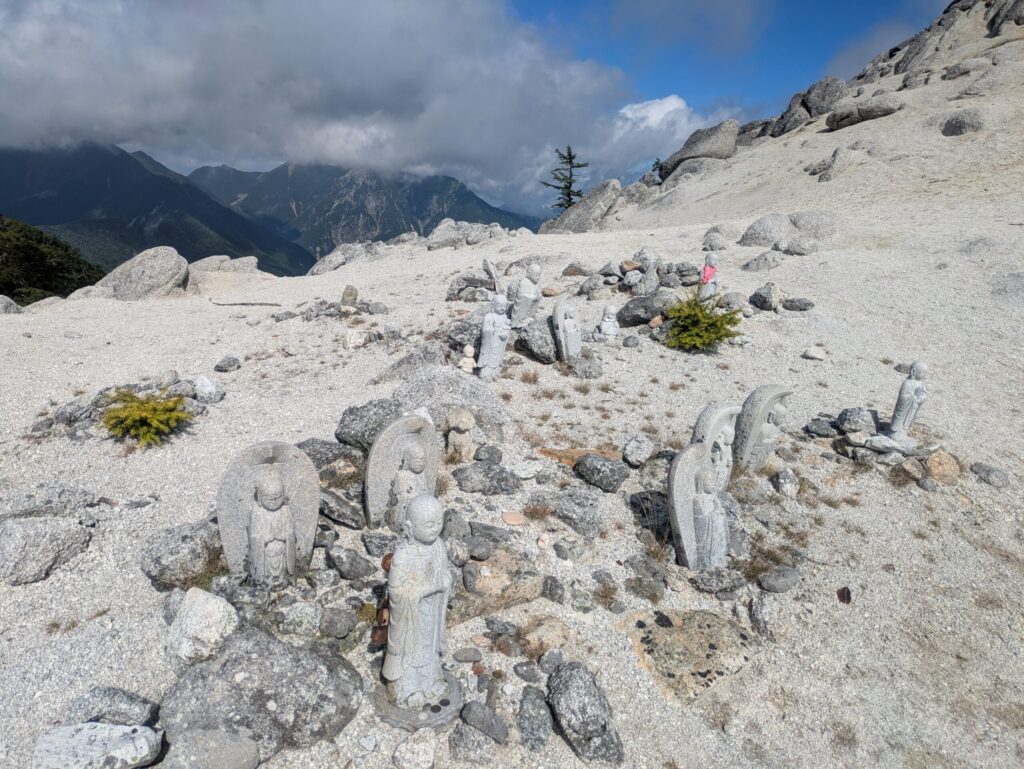
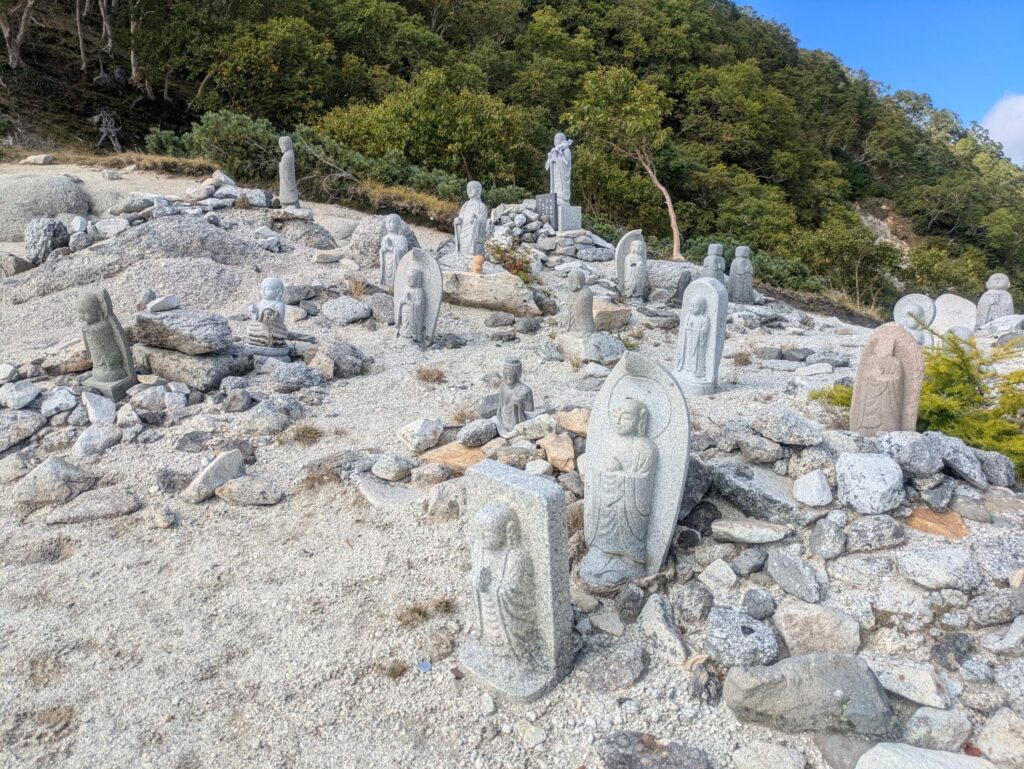
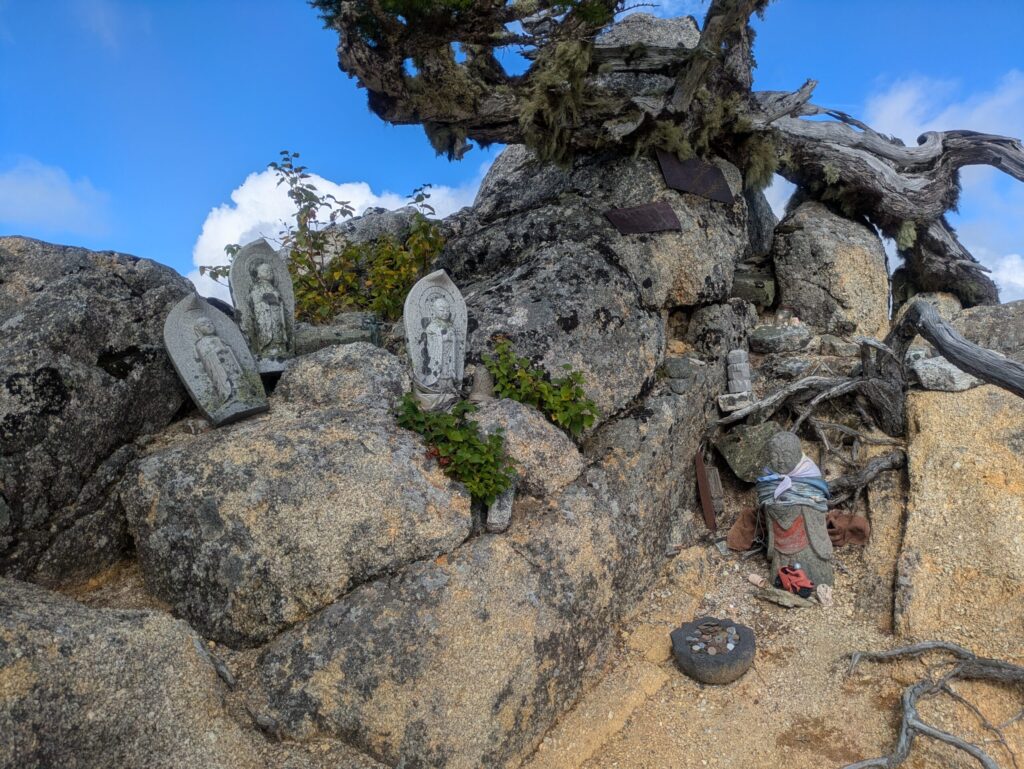
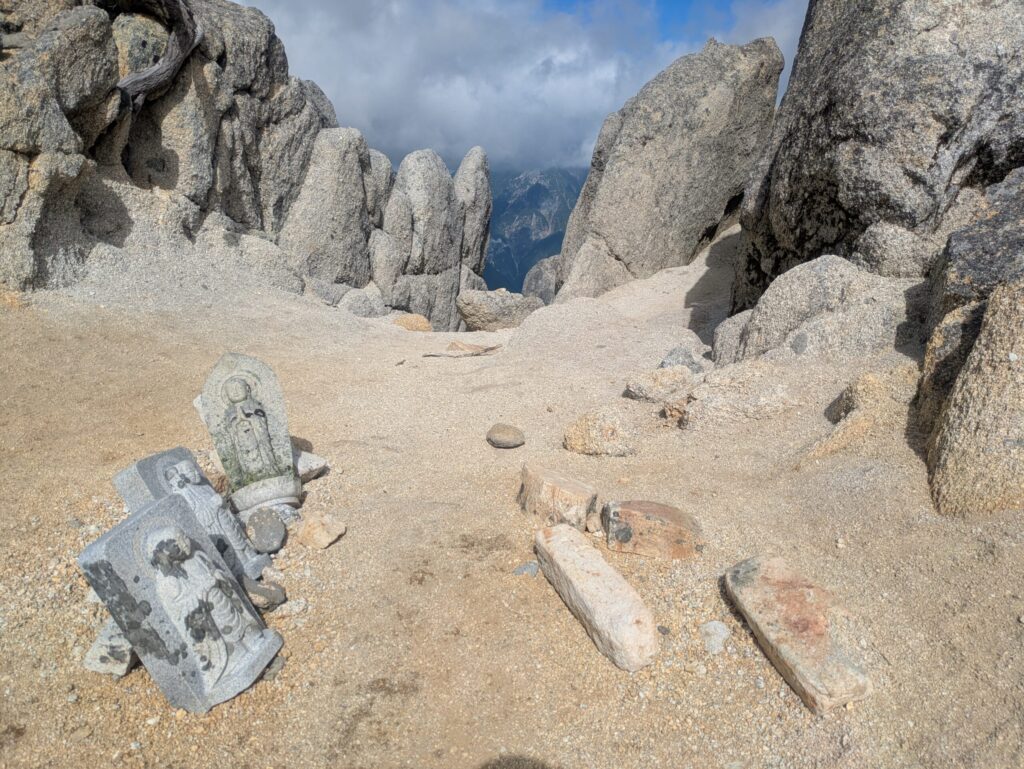
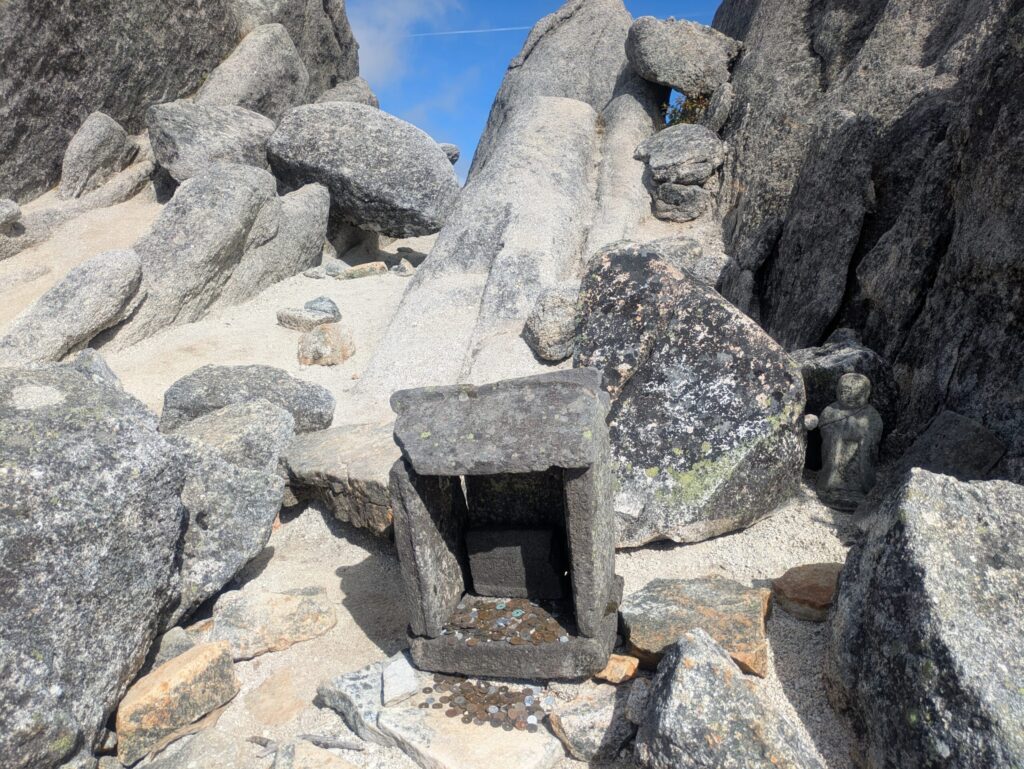
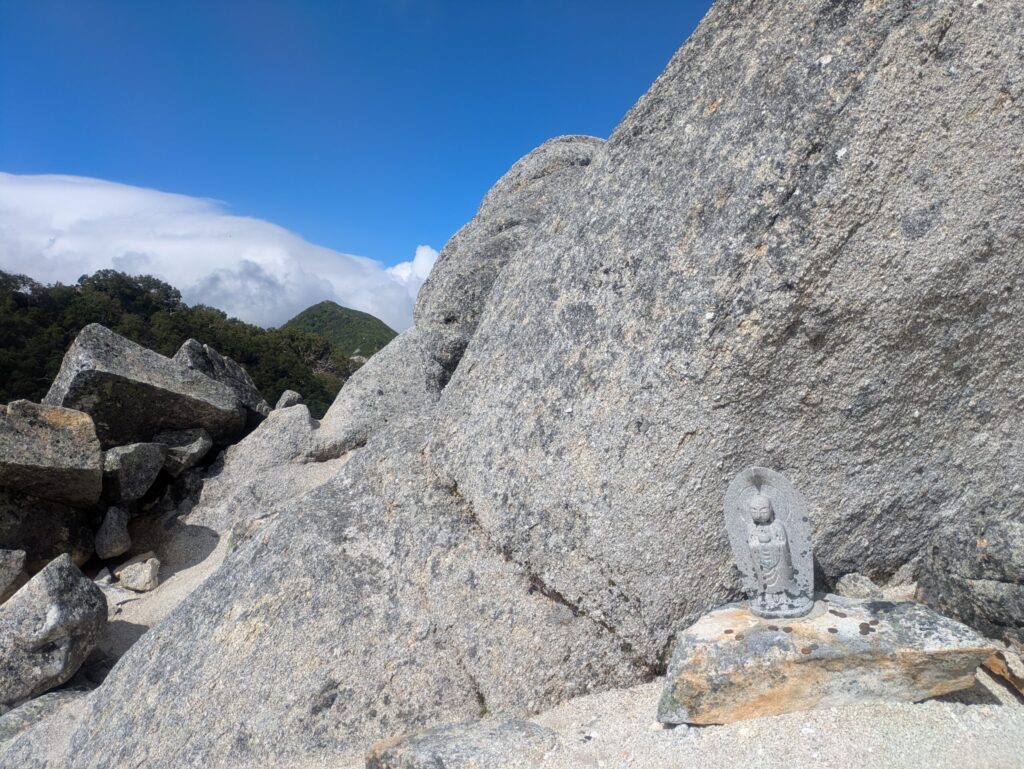
This place was once known as “Kozasuke-chi,” a sacred site where people prayed to be blessed with children.
As the mist thickened around me, I felt as if I had wandered alone into another realm.
Ancient Prayers and Human Devotion
Sai-no-Kawara is said to be the place where children who passed away before their parents stack stones, only for demons to scatter them again—yet they continue to build, protected and saved by Jizō Bodhisattva.
Long ago, people from the villages below, praying for children of their own, carried heavy Jizō statues on their backs all the way up to this 2,800-meter plateau.
The sincerity of those prayers still lingers in the air today.
When the mist finally lifted, a refreshing wind swept across the ridge.
It felt as though I had returned from another realm, my heart quietly cleansed.
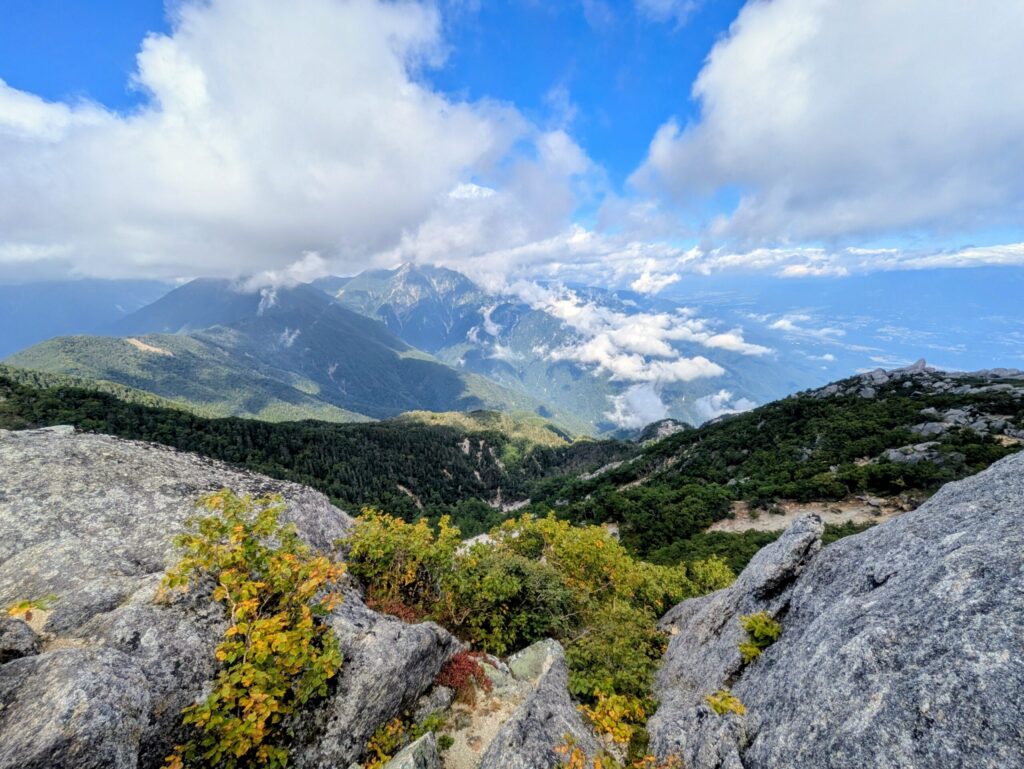
The Wind of Kannon, the Light of Yakushi
When I stood on the summit of Kannon-dake, a gentle wind pressed softly against my back.
In that moment, I felt as if Kannon Bodhisattva was watching over me.
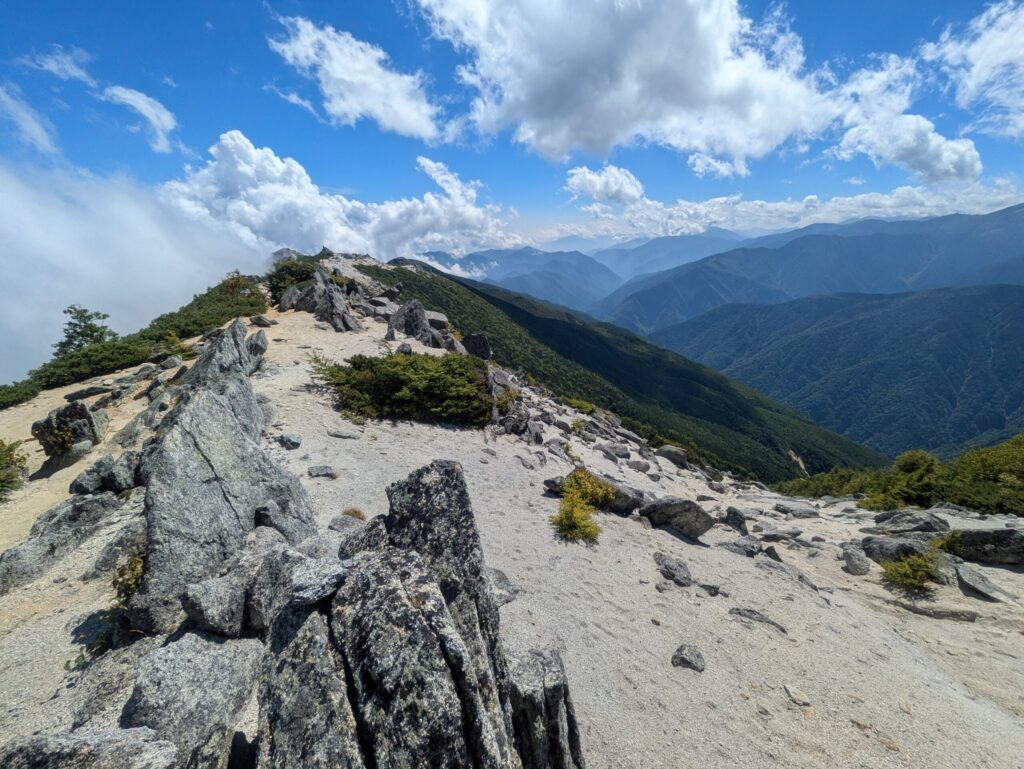
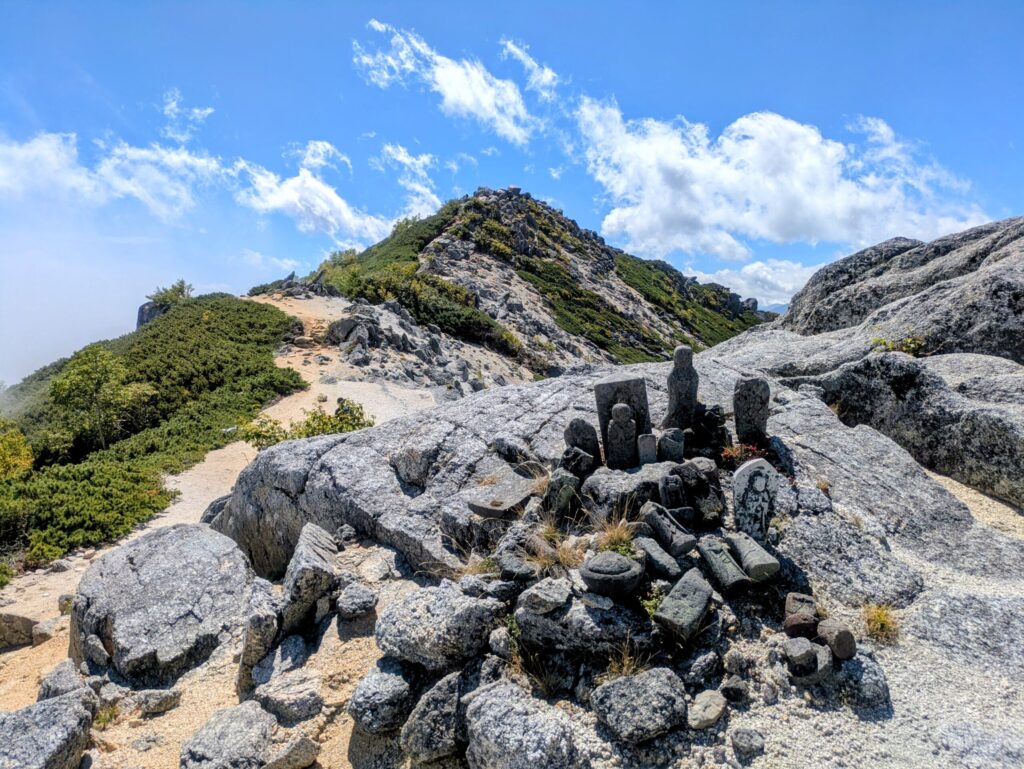
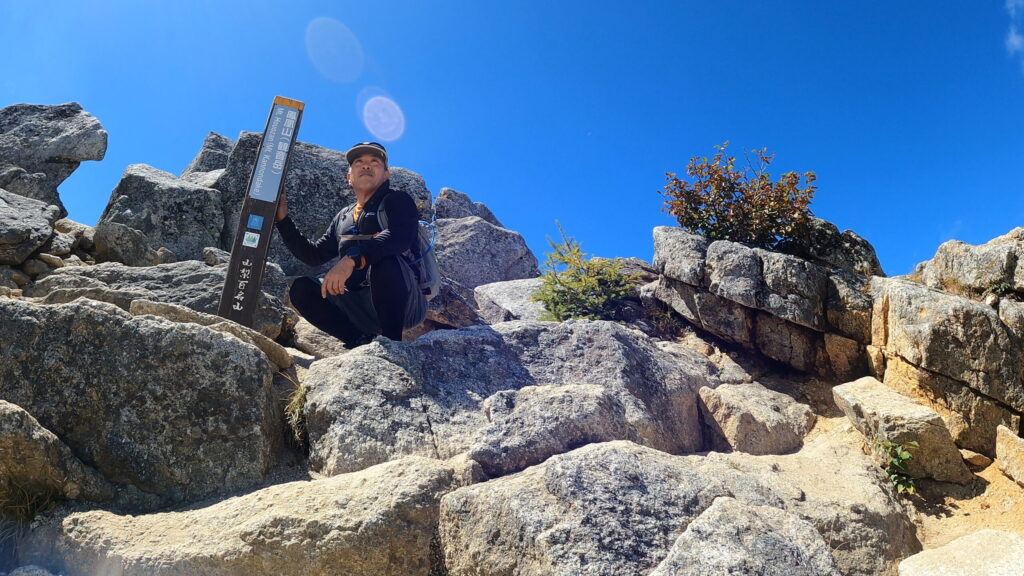
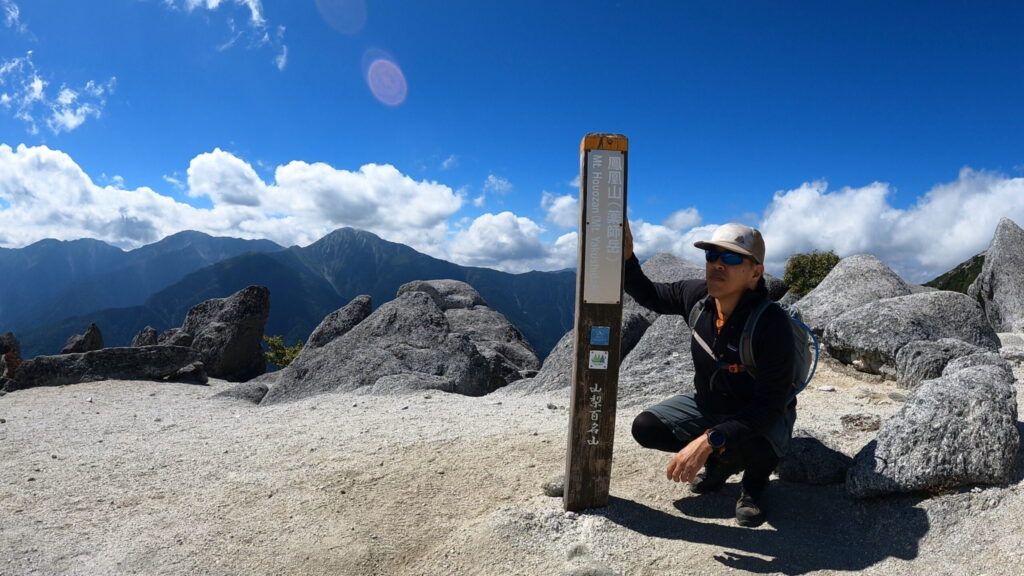
On Yakushi-dake, I felt an energy of healing and renewal.
The place was extraordinarily beautiful, and there was something quietly powerful about it—I couldn’t bring myself to leave for a while.
On a clear day, the air above the tree line feels pure and almost divine.
Mountains Are Mirrors of the Heart
What a Dialogue with Nature Teaches You
As I walk through the mountains, thoughts rise and fall, appearing only to fade again.
But in certain moments—when I turn my attention to the wind or the light—I feel as though nature is sending me a message.
The sight of a ptarmigan, the call of a monkey, the rustling of trees—each one resonates within me, almost like a synchronicity.
After returning to Japan for the first time in thirty years, I’ve begun exploring these mountains again.
Perhaps because Hōō-sanzan is considered a sacred range, the 28-kilometer traverse felt at times like a form of physical training, a kind of spiritual practice that quietly purified my inner self.
Conclusion — Hōō, the Symbol of Rebirth
Hōō—
the mythical bird that symbolizes the cycle of death and rebirth.
True to the mountain’s name, I felt a kind of rebirth within myself as well.
Standing at a turning point in my life, it felt as if this mountain was quietly telling me that a “new beginning” was waiting ahead.

コメント