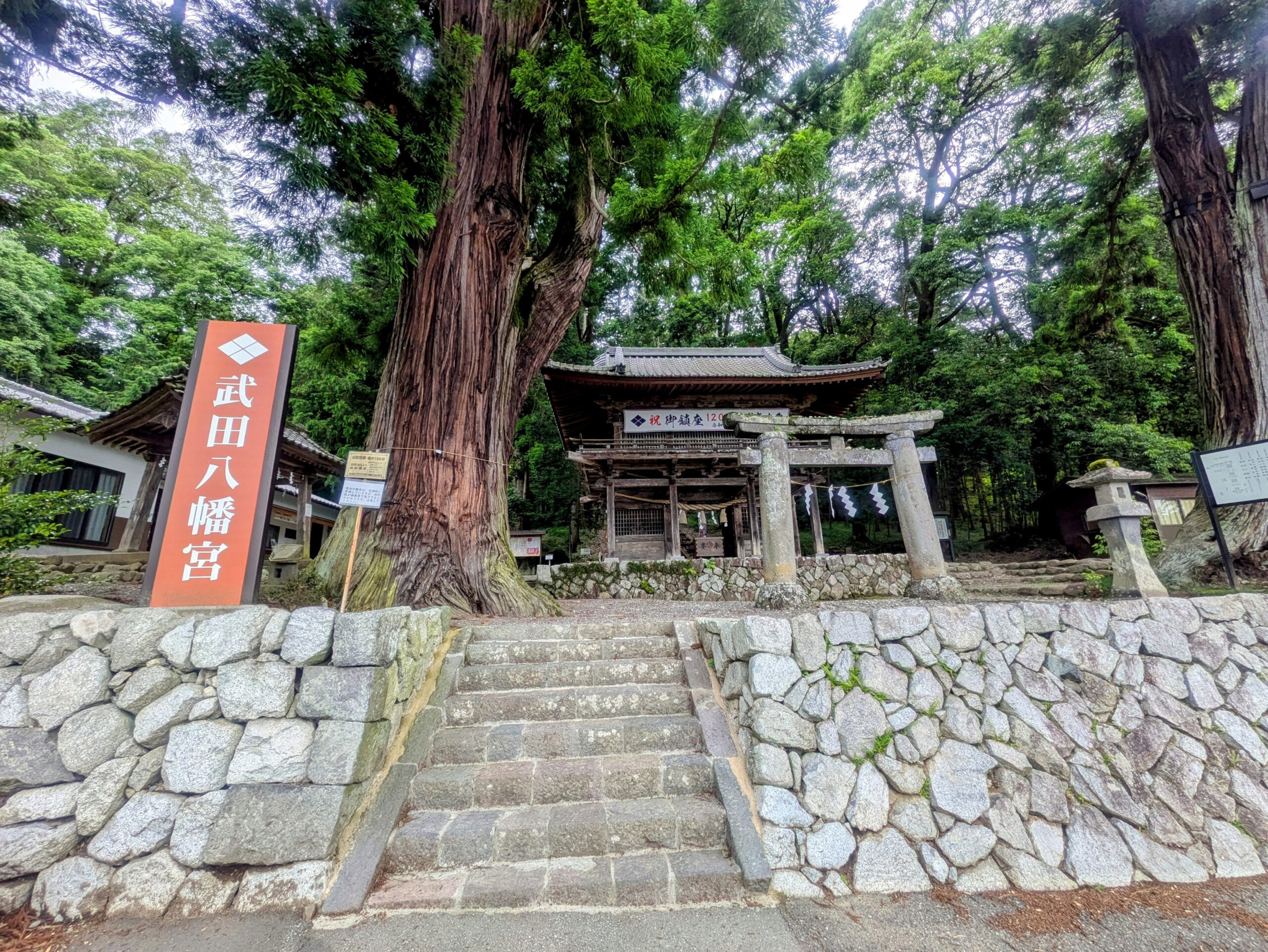
Takeda Hachimangū stands on a small rise on the western edge of the Kitamiyaji settlement in Kamiyama-chō, Nirasaki City.
Once ranked as a prefectural shrine, it is a place of long-standing tradition, and its main hall is still designated today as an Important Cultural Property of Japan.
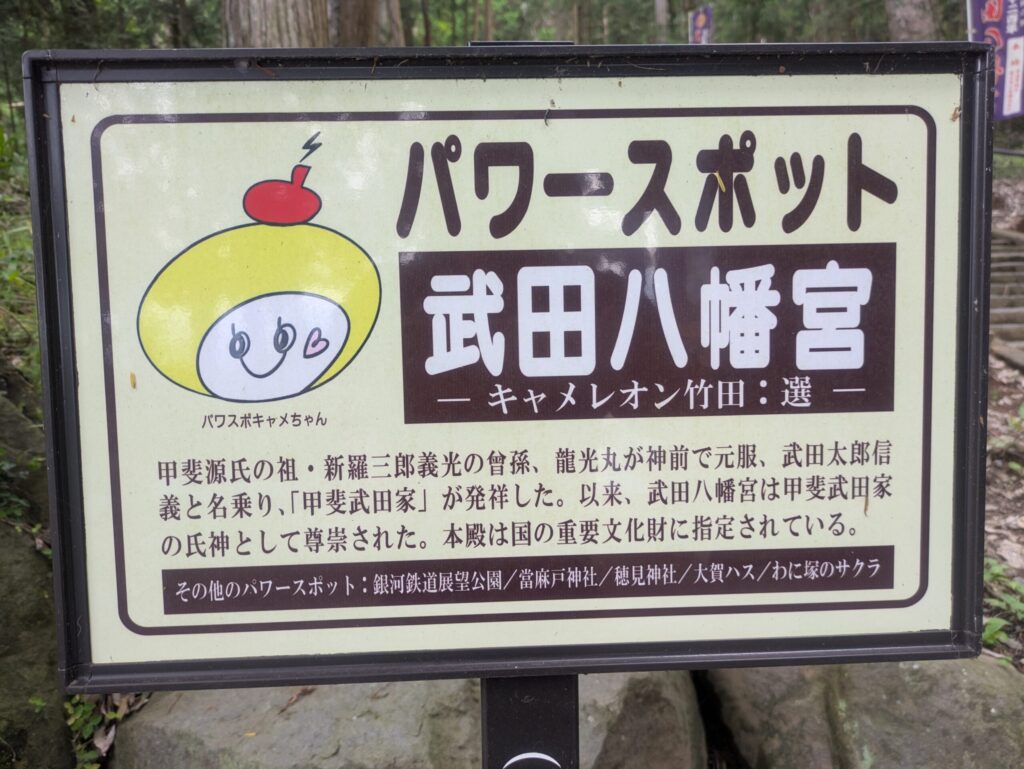
Since the time of Nobuyoshi, the first head of the Kai-Takeda clan, the shrine has been deeply revered and generously supported by successive generations of the Takeda family.
Unlike the bustling Takeda Shrine in Kōfu, Takeda Hachimangū has a calm, quiet atmosphere that invites visitors to slow down and reflect.
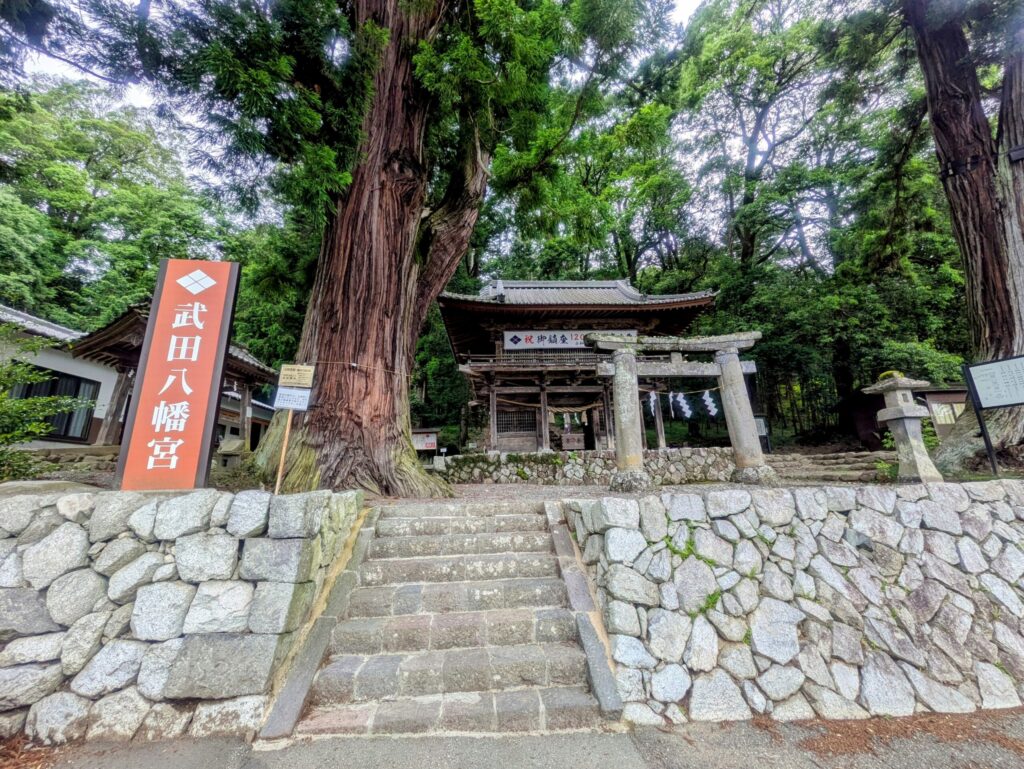
On the day I visited, it was a weekday, but there wasn’t a single other person around.
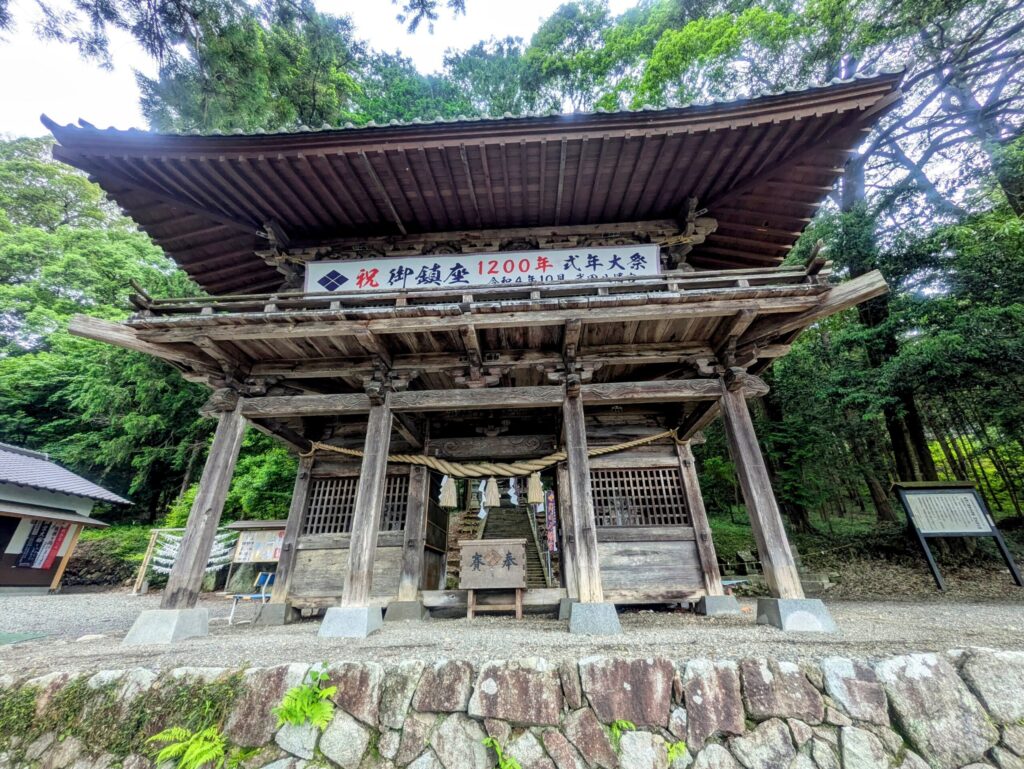
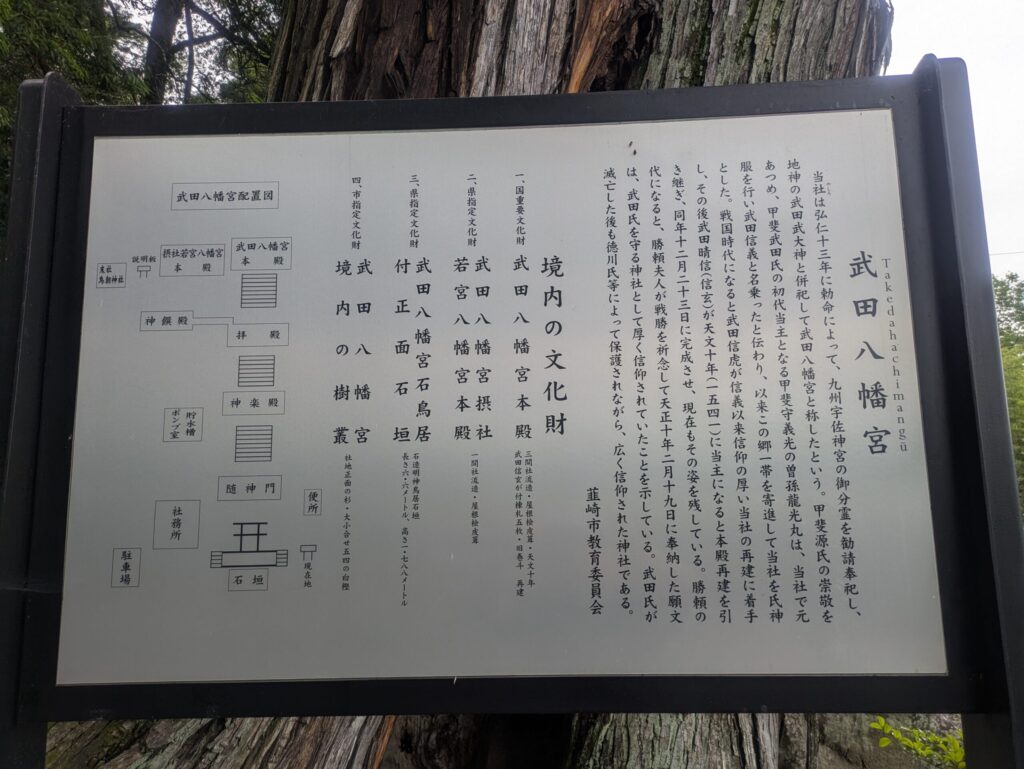
The shrine is said to have been founded in the early Heian period, in Kōnin 13 (822), when a divine spirit was transferred from either Usa Jingū or Iwashimizu Hachimangū by imperial decree. It was then given the name Takeda Hachimangū after the local place name, “Takeda.”
Another tradition holds that in the same year, 822, Hachiman Daibosatsu appeared in a dream to Kūkai, who then built a small shrine on this spot as the origin of the shrine.
There is also a legend that a prince named Takeda-ō, son of the hero Yamato Takeru, built his residence here, which gave the area the name “Takeda.” The small shrine that once stood to the northeast of his residence was later moved onto the grounds and enshrined, and this is said to be the beginning of the deity known as Takeda Take-no-Ōkami.
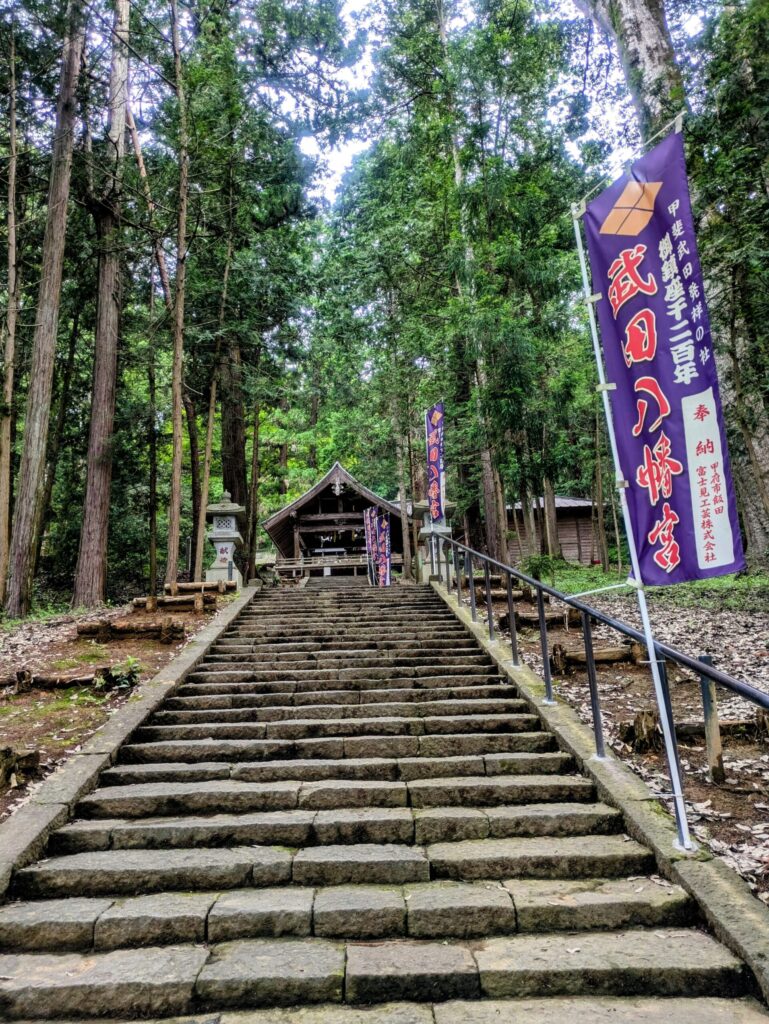
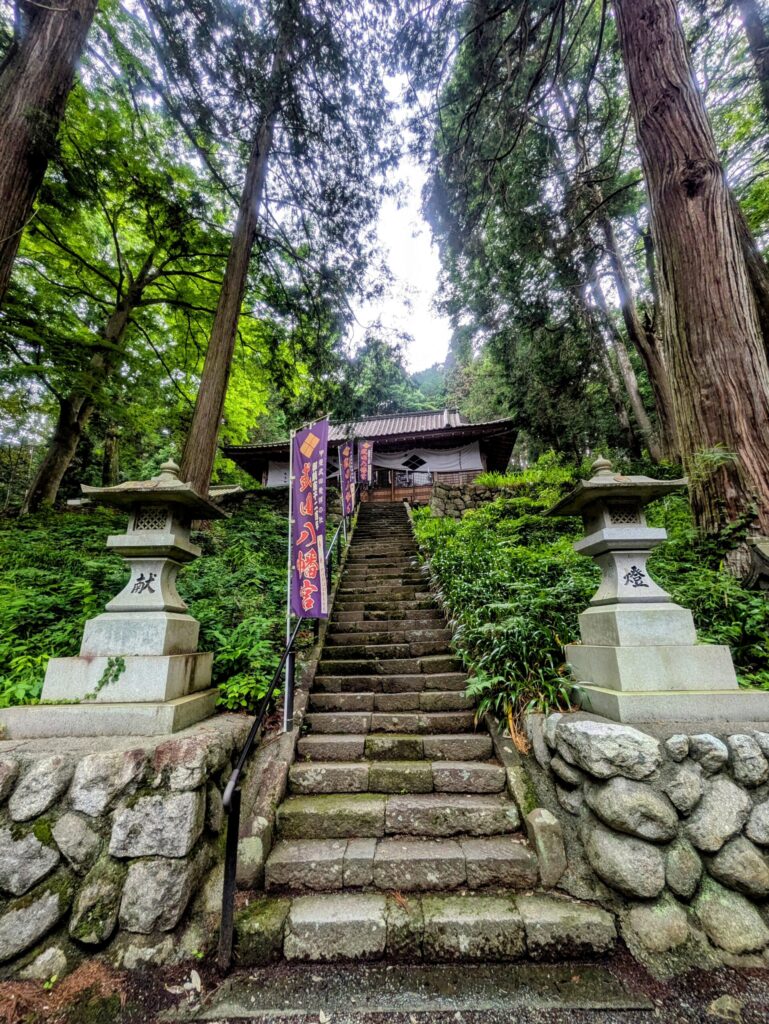
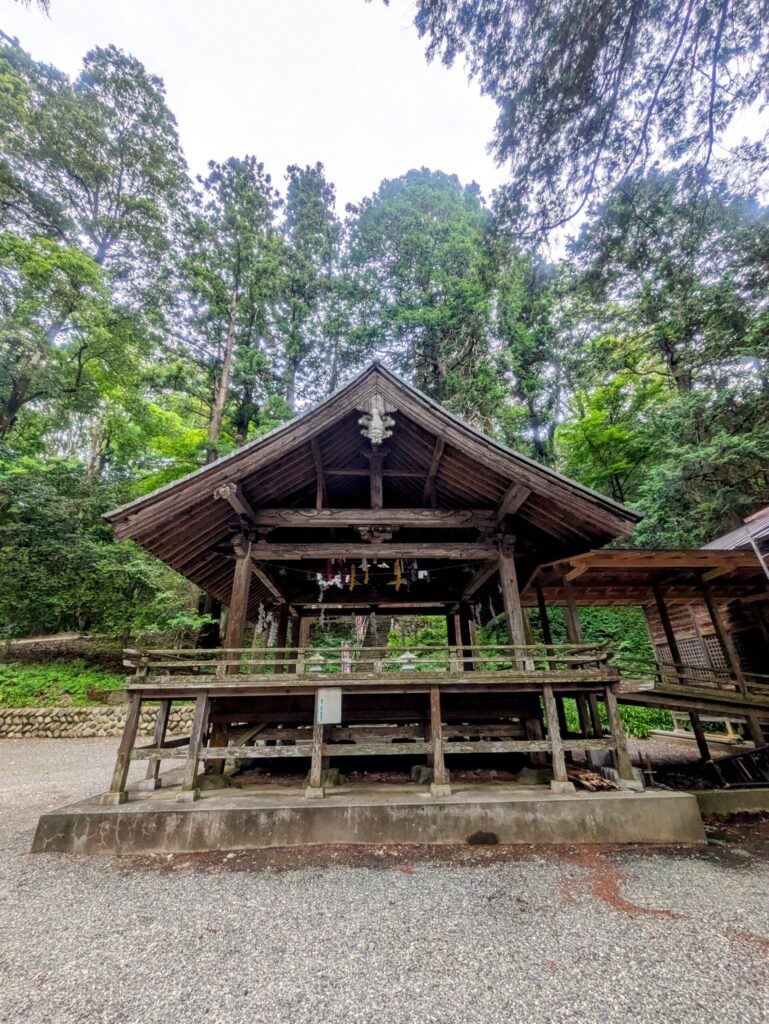
Across Kai Province there are many Hachiman shrines connected with the Takeda clan, such as Isawa Hachimangū and Kubo Hachiman Shrine, but among them Takeda Hachimangū is said to have the deepest historical ties to the Takeda family.
By the reign of Emperor Seiwa, offerings and land grants had already been made to the shrine, and later Nobuyoshi Takeda designated it as his clan shrine and oversaw the development of its buildings.
In the Sengoku period, the Kai shugo (military governor) Takeda Harunobu (later known as Shingen) carried out a major reconstruction in Tenbun 10 (1541–42). This project is regarded as his first large-scale undertaking after becoming the ruler of the province.
After the fall of the Takeda, the shrine continued to receive protection from successive lords, including Tokugawa Ieyasu, the Kōfu branch of the Tokugawa family, and Yanagisawa Yoshiyasu, with repeated repairs and confirmations of its lands.
The deities enshrined here are four in total: in the center Hondawake-no-Mikoto (identified with Emperor Ōjin), flanked by Ashinadzuchino-Mikoto and Okinagatarashi-hime-no-Mikoto, together with Takeda Take-no-Ōkami. They have long been revered as gods who safeguard the realm and bring peace to all people.
Records note that in the past, during the grand festival on August 14, the mikoshi (portable shrine) was carried in procession as far as Miyakubo, where kagura dances were performed. Throughout the year, a variety of rituals were held for bountiful harvests, protection from smallpox and measles, fire prevention, rainmaking, and more.
Within the grounds stand the main hall— a three-bay nagare-zukuri structure with a cypress-bark roof, designated a National Important Cultural Property—along with the main hall of the auxiliary Wakamiya Hachiman Shrine, a stone torii gate, a second torii with its name plaque and stone base, and a votive prayer scroll offered by Takeda Katsuyori’s wife, a lady of the Hōjō clan, praying for his military fortune. These items are all designated Tangible Cultural Properties of Yamanashi Prefecture.
This lady, a younger sister of Hōjō Ujimasa, is said to have written her prayer text as the combined forces of Oda and Tokugawa closed in on the Takeda. Yet her offering was in vain: fourteen days after the votive was dedicated, Katsuyori himself set fire to Shinpu Castle and fled, seeking refuge with the Oyamada clan in the Gunnai region. On the way, at Tano in present-day Kōshū City, he took his own life together with his wife and their son Nobukatsu.
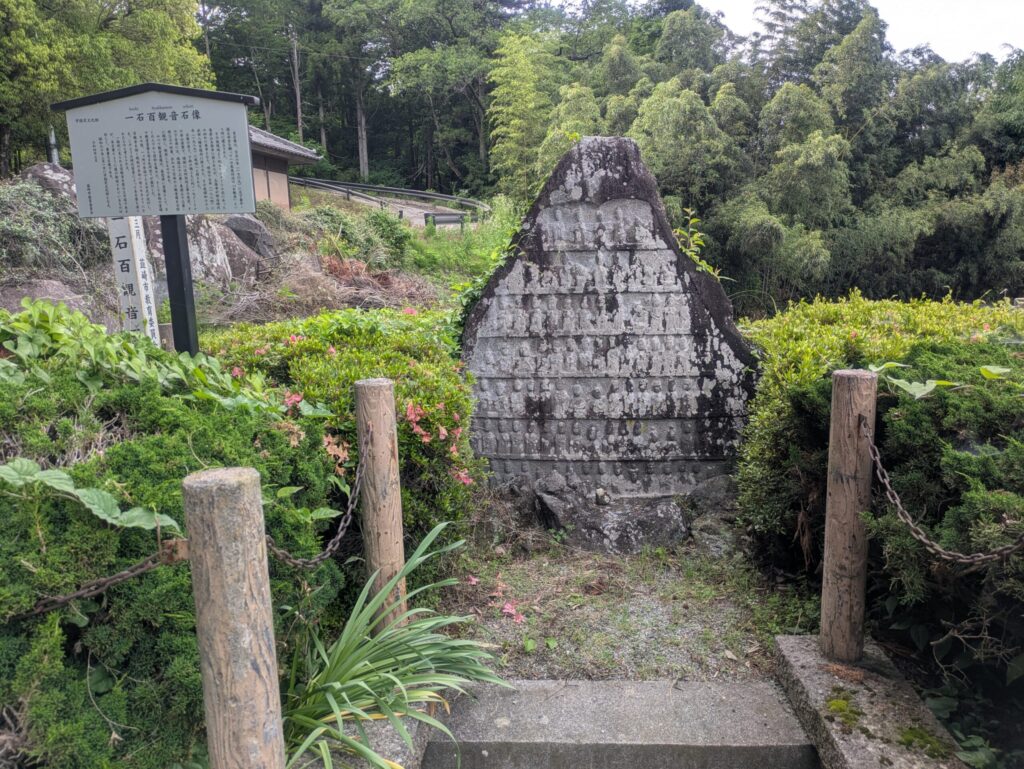
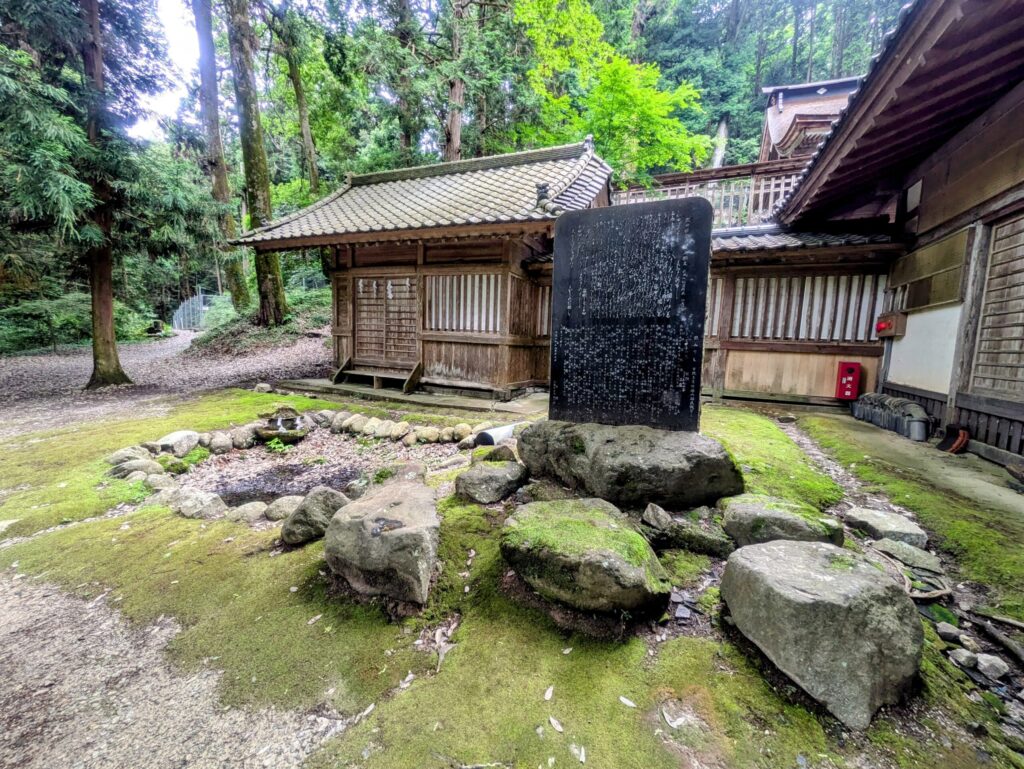
This place is also known as a kind of “power spot,” and in fact it did feel very calm and soothing—the atmosphere there just felt good.
From the time of the Takeda through the Tokugawa era, this shrine has reflected the very history of Kai itself. Simply standing in its quiet precincts, you can almost feel the flow of time from the Warring States period into the early modern age.


コメント