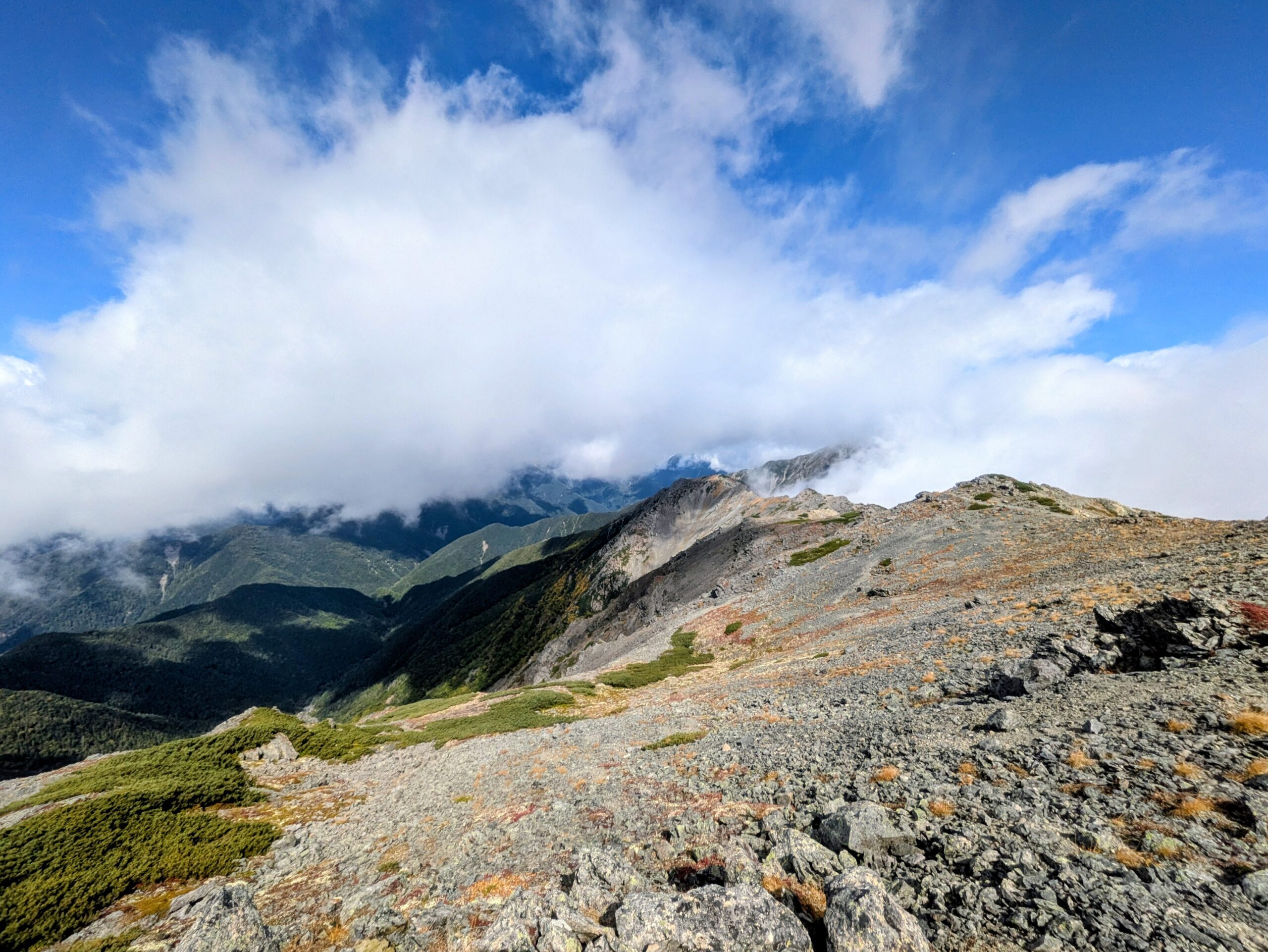
Day 3 – A Day Beneath the Clouds
This was supposed to be the true highlight of the ridgeline—
a day of walking through the very core of the mountains.
But the clear skies I had hoped for never came, and by afternoon the weather had turned overcast.
After leaving Kitadake Mountain Hut, the number of hikers dropped sharply,
and the trail became quiet and solitary once again.
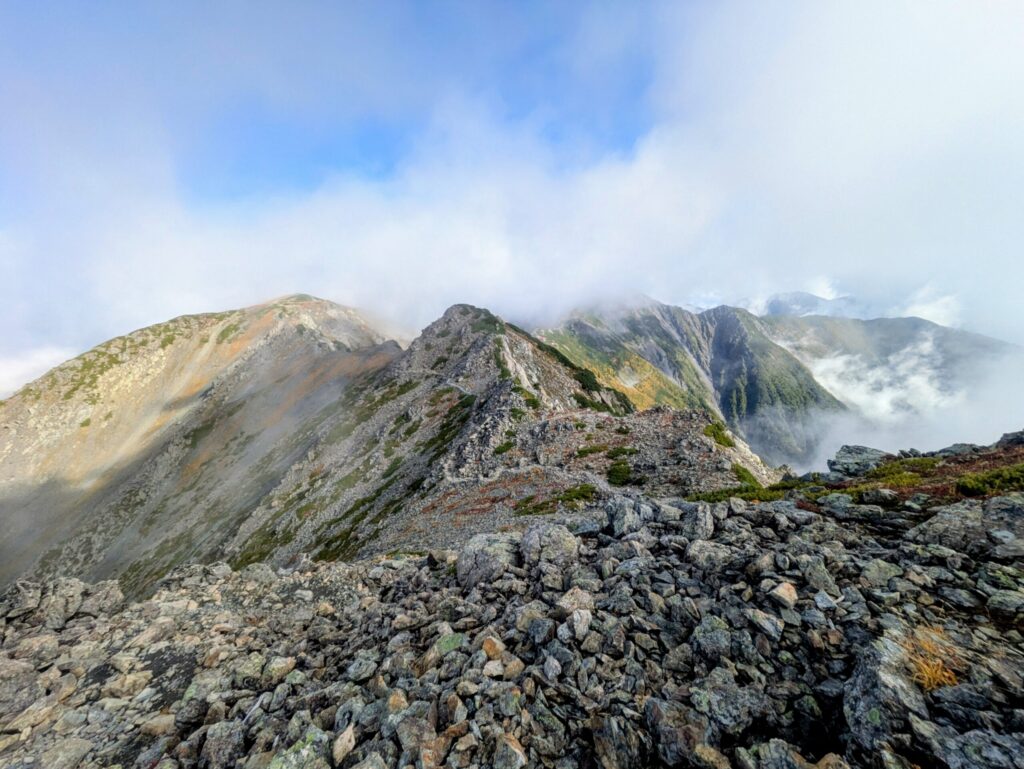
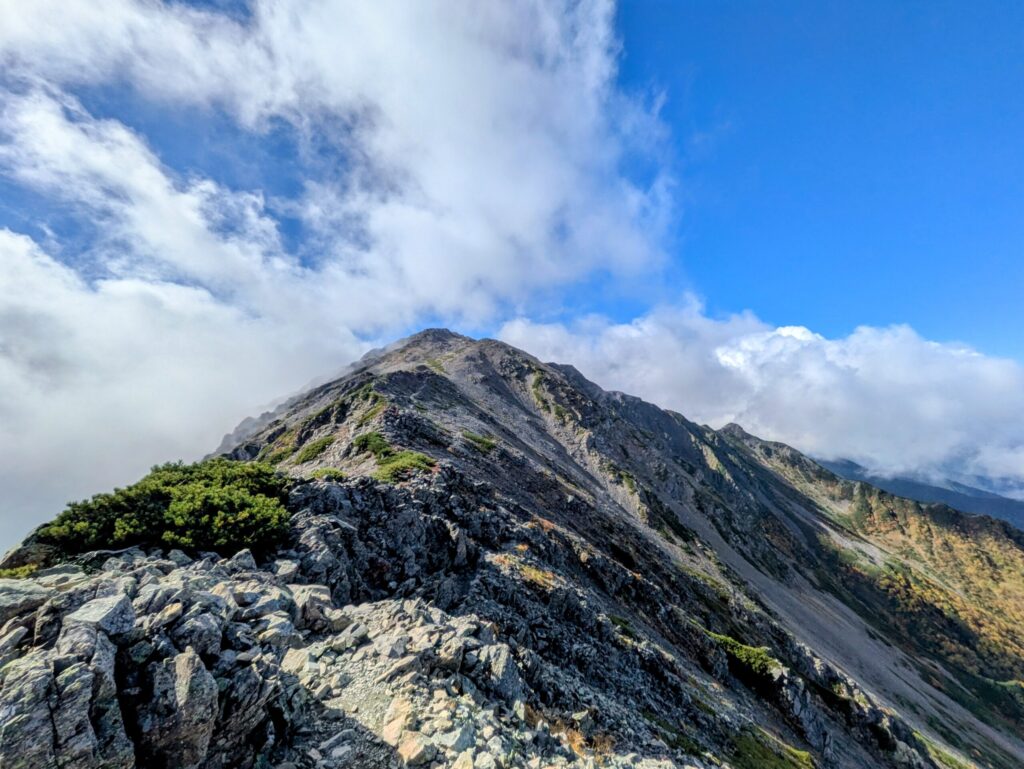
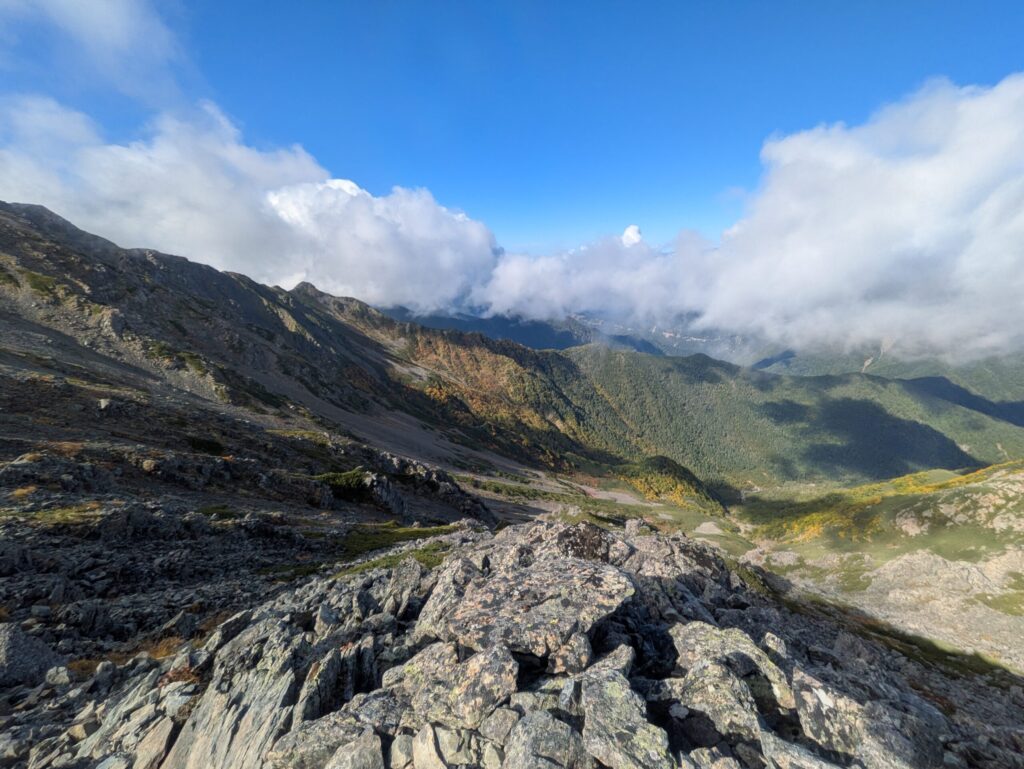
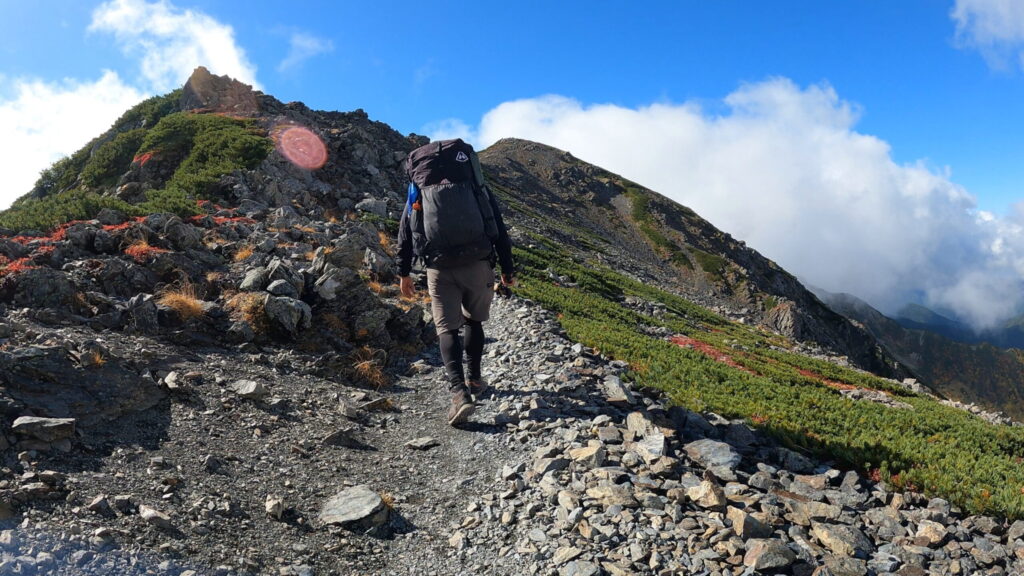
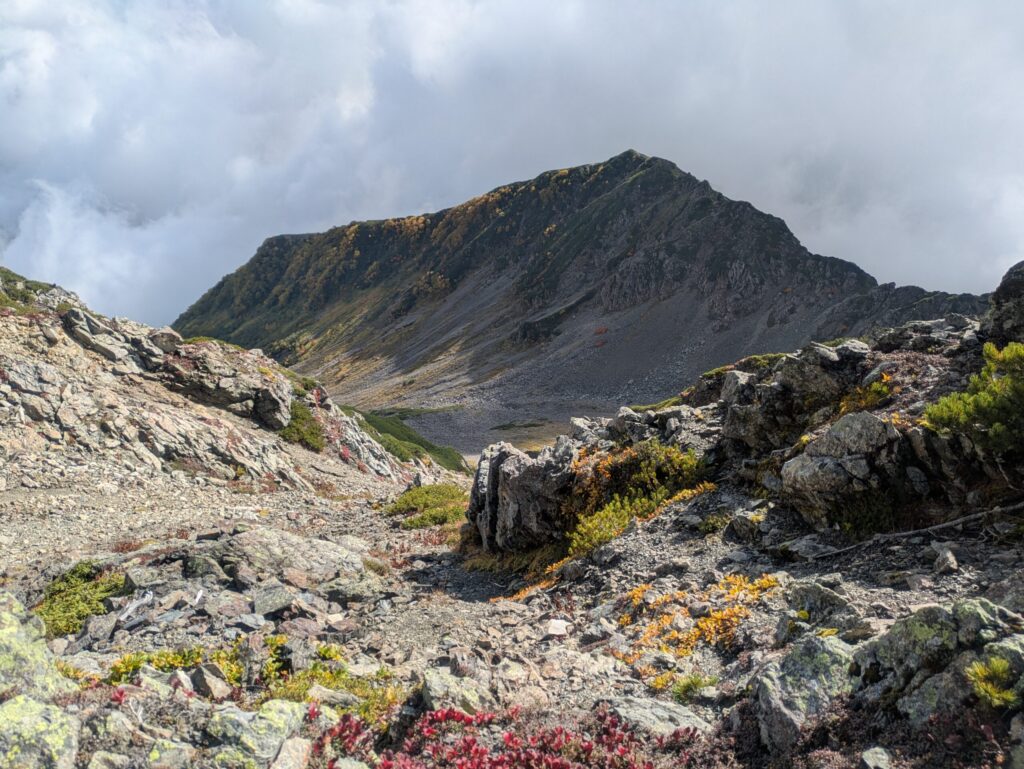
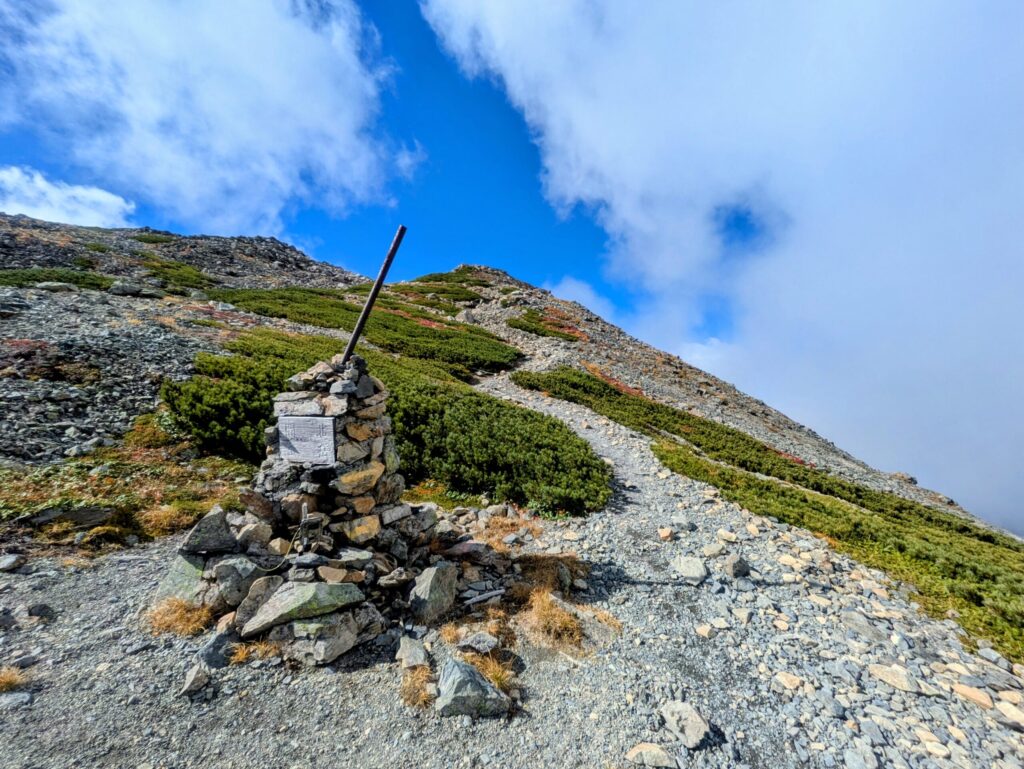
Along the way, I came across a memorial plaque set into the rock, inscribed with the words:
“In memory of the climber who fell here in 1969“
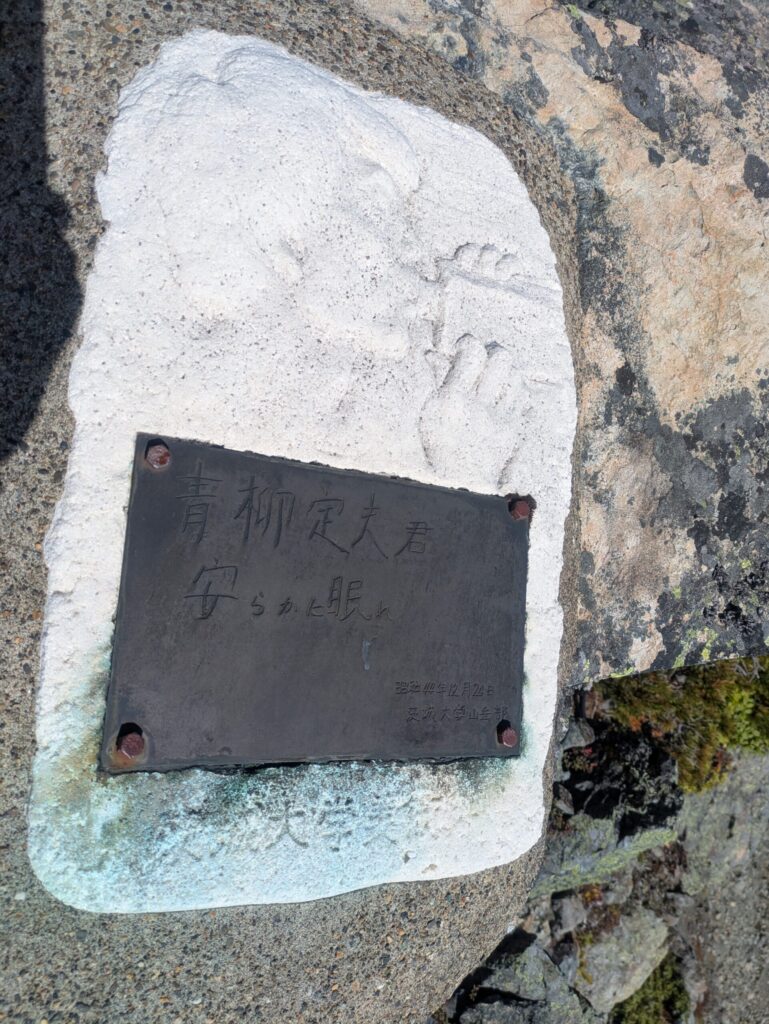
Realizing that someone had once lost their life here,
I found myself stopping instinctively, my steps growing quiet.
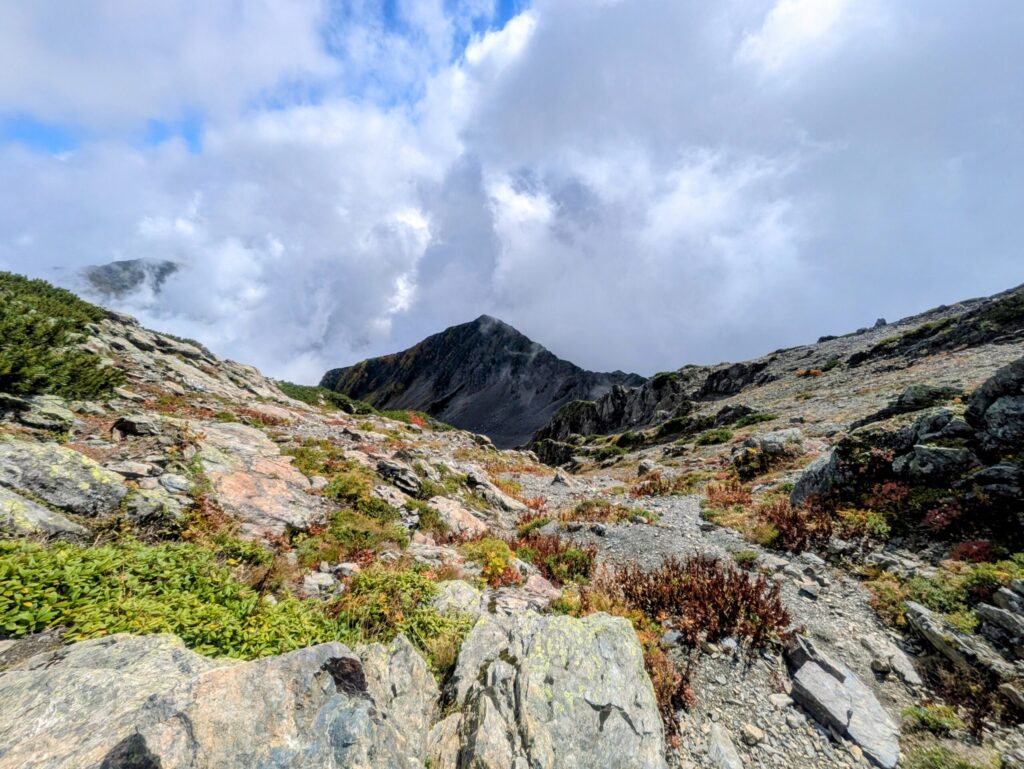
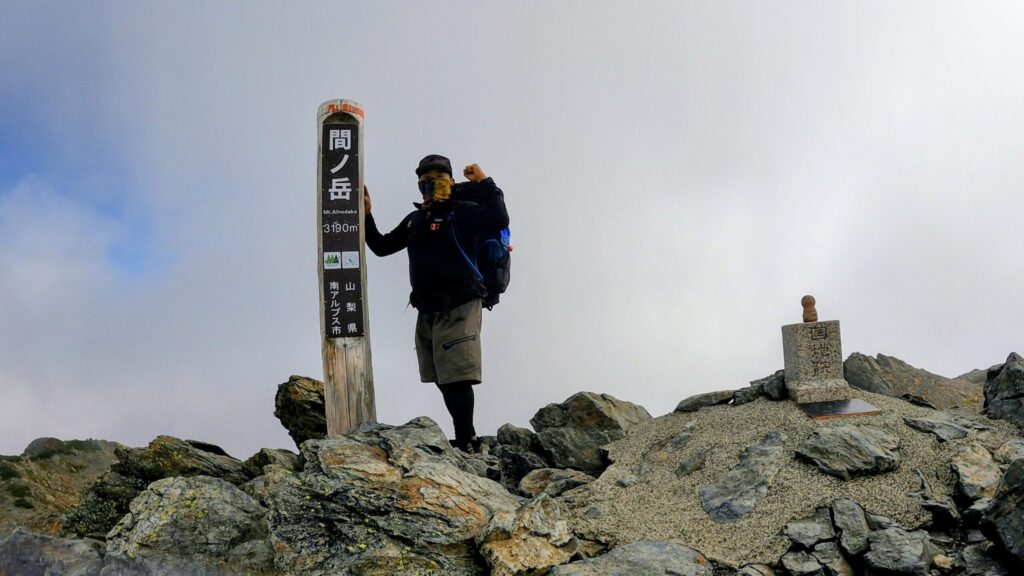
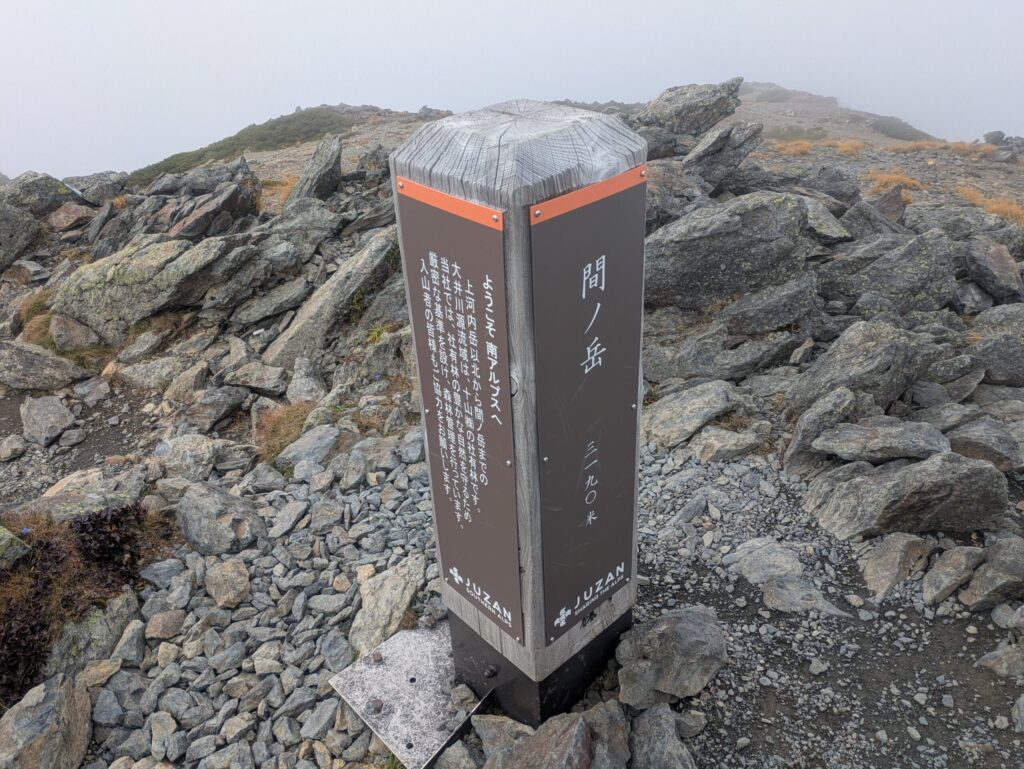
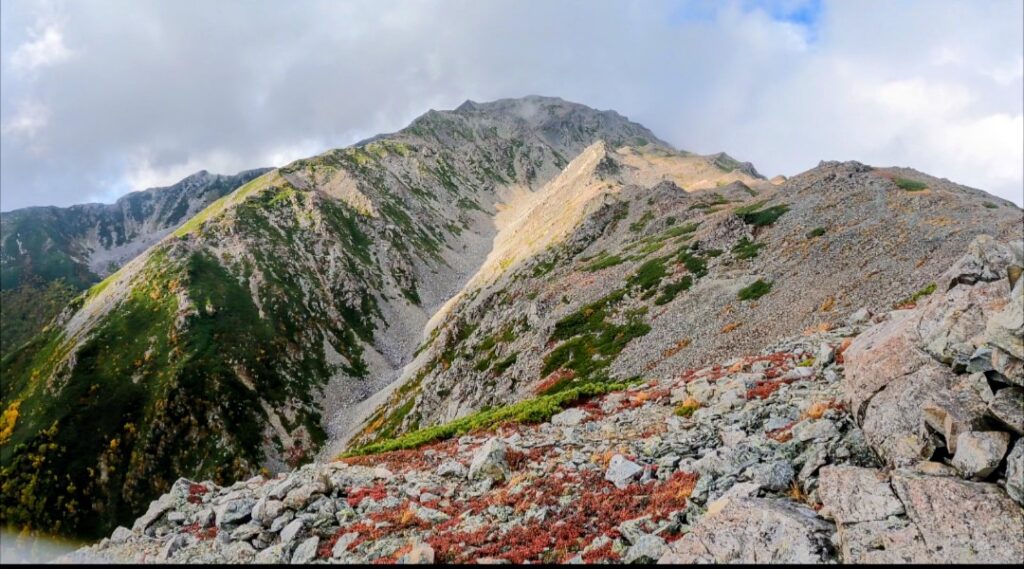
When I reached the summit of Mount Aino, the clouds had rolled in,
and there was little view to be had.
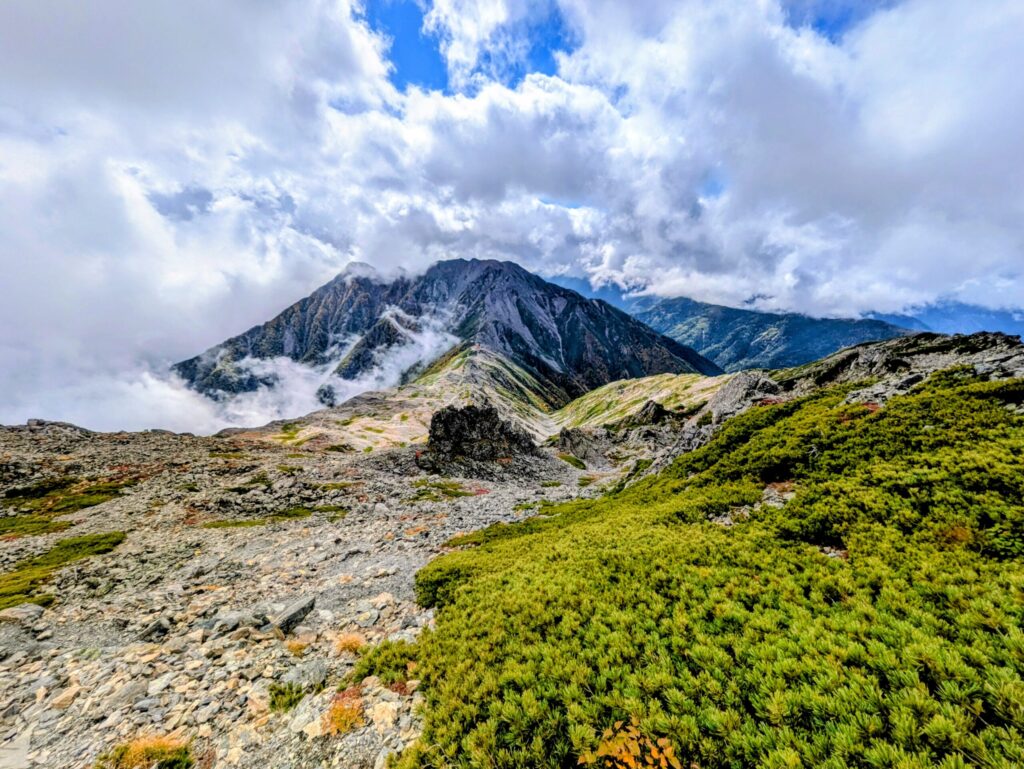
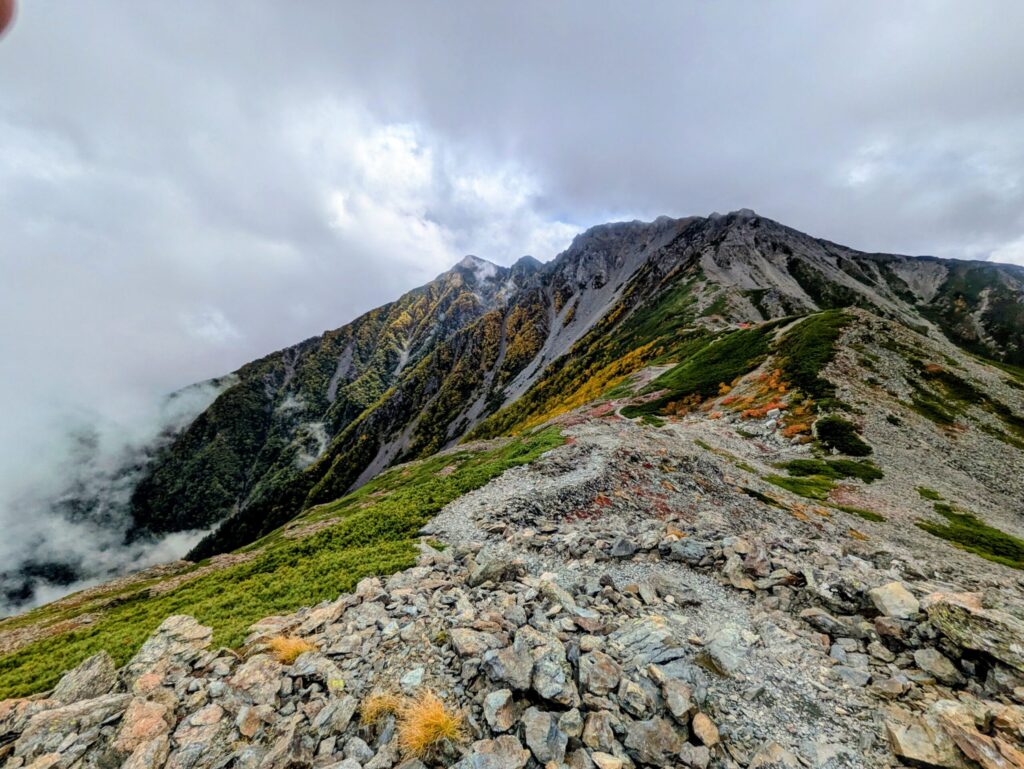
The distance from Kitadake Mountain Hut to Notori Hut was only about 4.5 km.
Even though I started at 6:00 a.m. and moved at a deliberately slow pace,
I still arrived just before 1:00 p.m.
It happened to be September 30th—
the very last day of the season for Notori Hut.
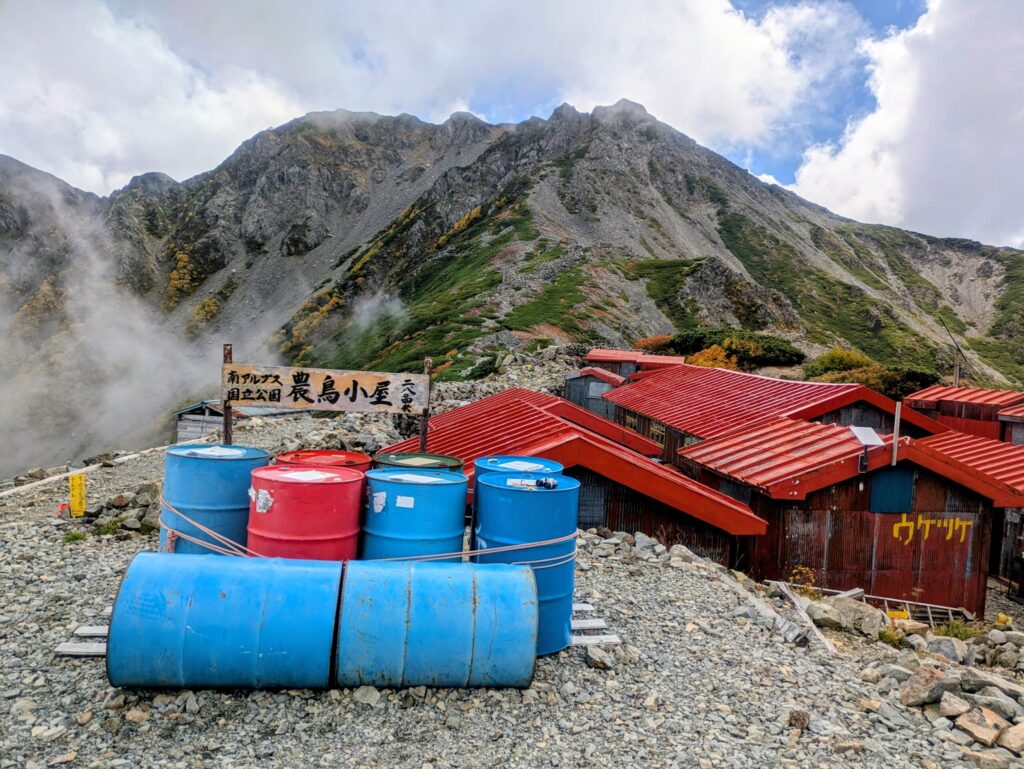
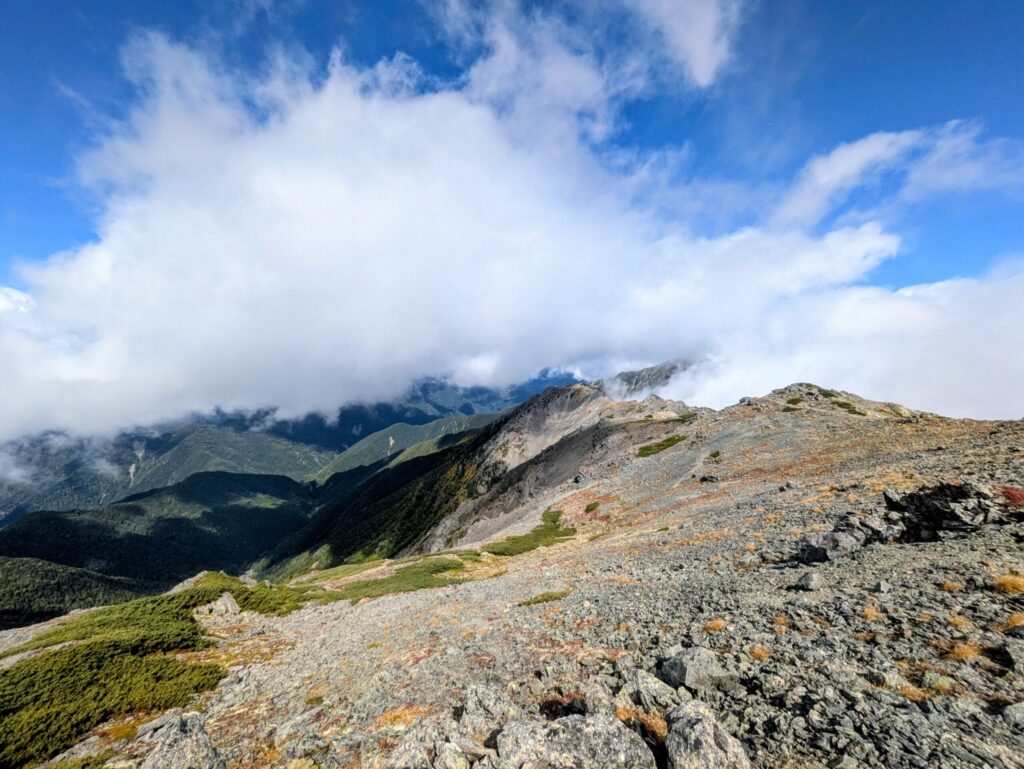
The fog grew thicker and thicker,
and the spectacular ridgeline views I had hoped for never appeared.
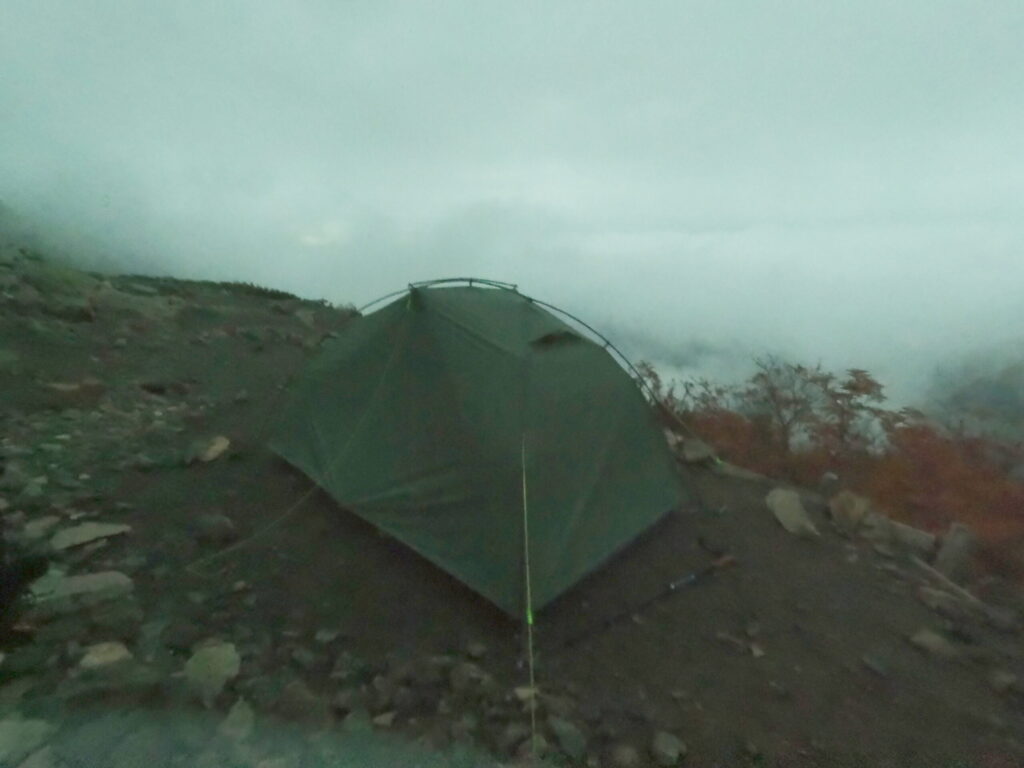
There were only three guests staying at the hut.
Shrouded in dense mist, the place felt almost otherworldly—
silent, still, and separated from the rest of the world.
Day 4 – Descent in the Rain
I woke at 4:30 a.m., but in the end I didn’t set out until 6:00.
By then, the rain had already begun to fall.
The wind was strong, and the trail started with a steep climb right away.
At first I wore a rain skirt, but it kept flapping violently in the wind,
so I switched to rain pants instead.
Moments like this really make me appreciate full-zip rain pants that can be put on easily from the outside, even with a large pack.
A heavy pack, a steep ascent, pounding rain, and strong winds—
at times, the combination felt almost like a form of torture.
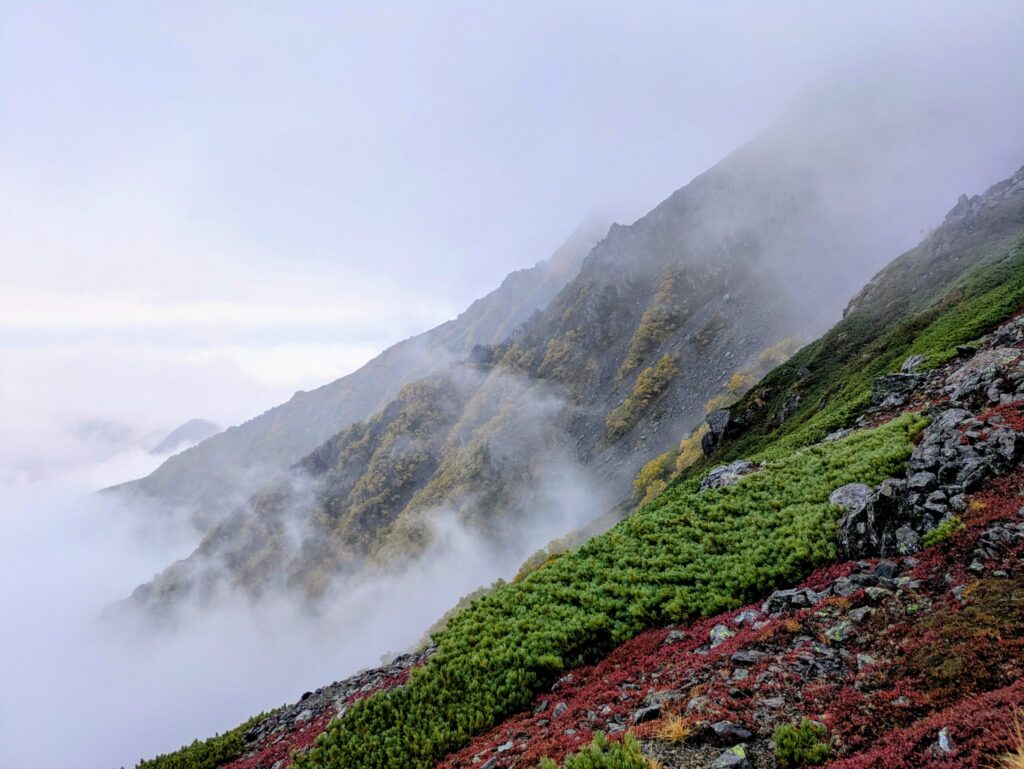
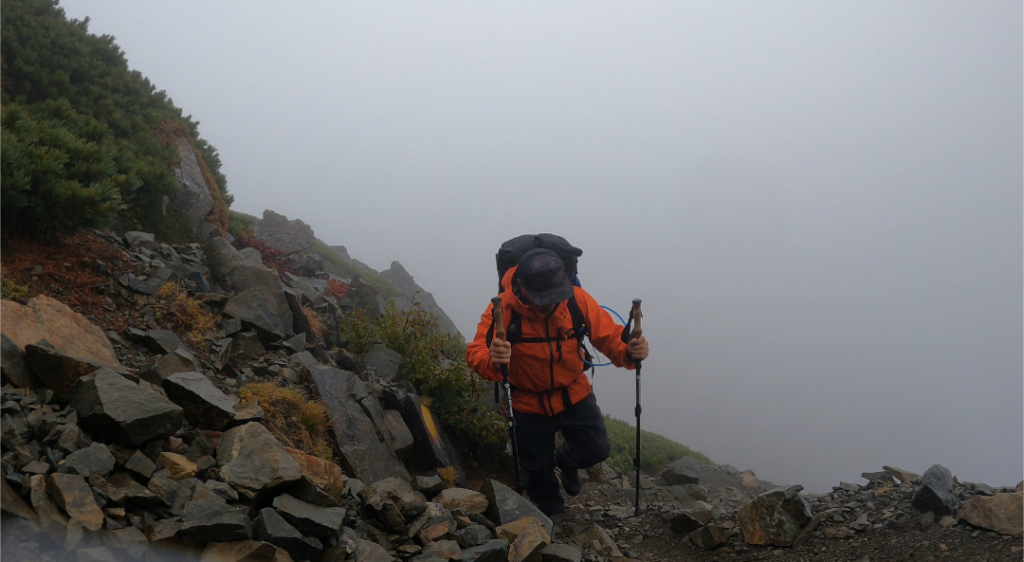
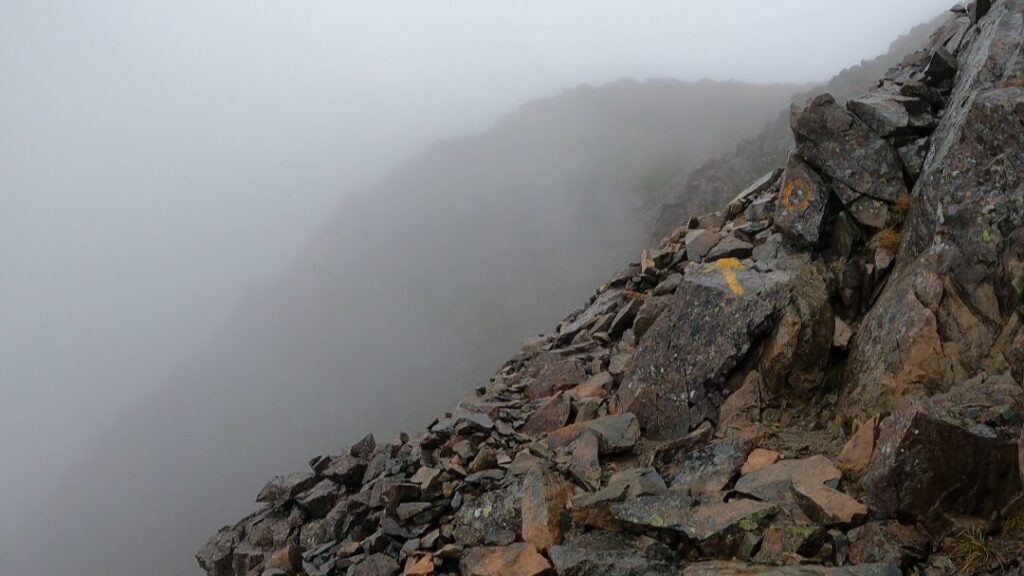
Once I reached the ridgeline, everything was swallowed in thick cloud.
Both Nishi-Notori and Notori summits offered no views at all.
I had heard this stretch was supposed to be spectacular,
so I made a quiet promise to myself:
I’ll come back and walk this route again someday—definitely.
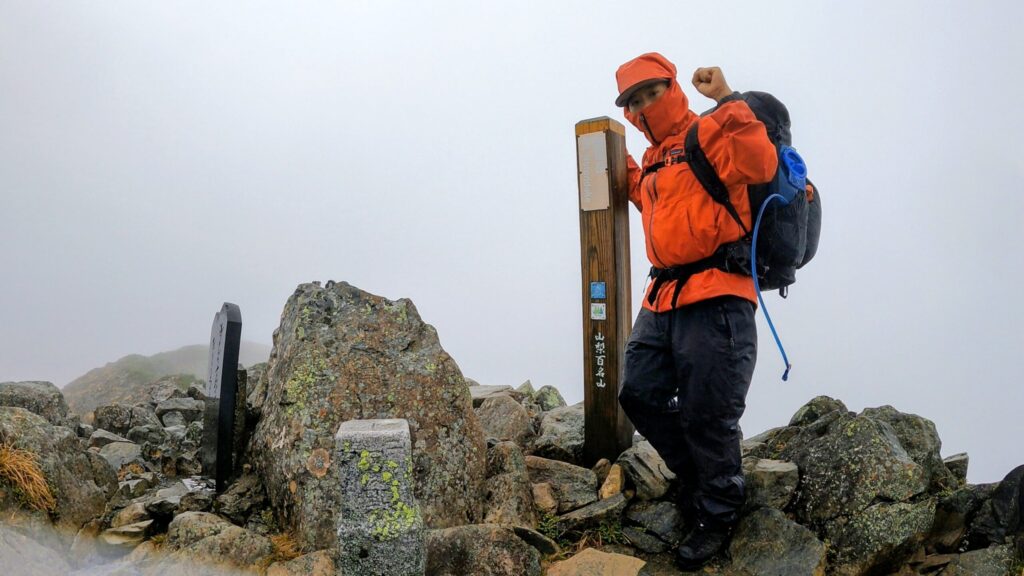
The descent to Narada involves a drop of about 2,200 meters.
The trail down to Daimonzawa Hut was steep, with many rope sections and rocky slopes—
all made slippery by the rain.
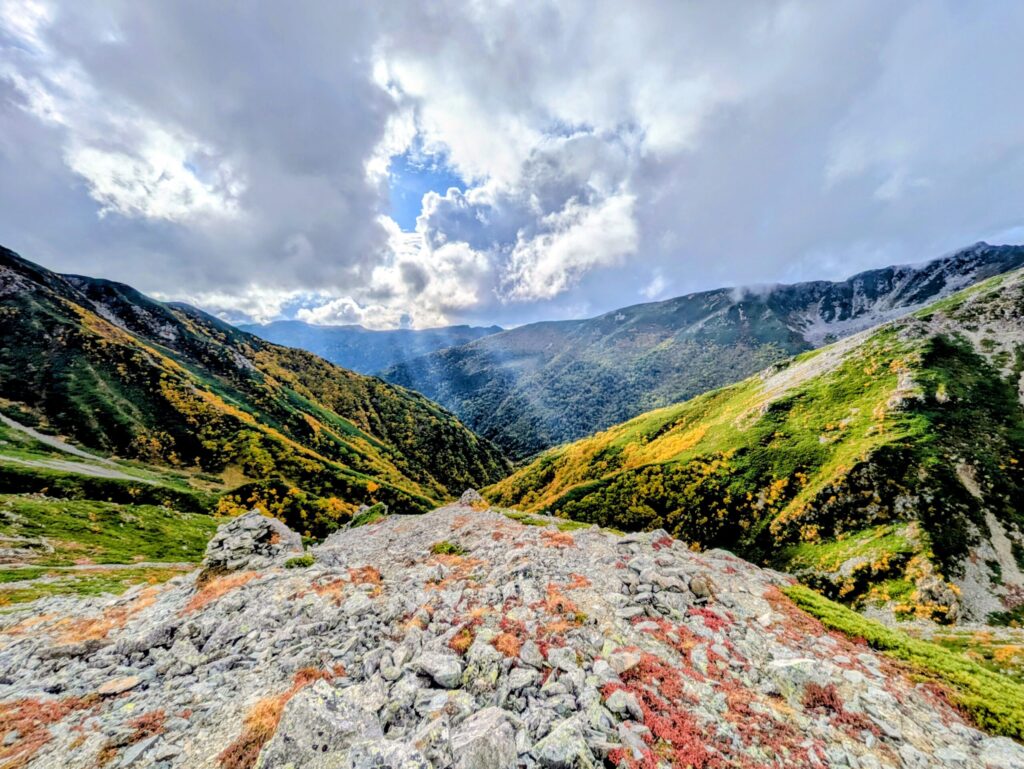
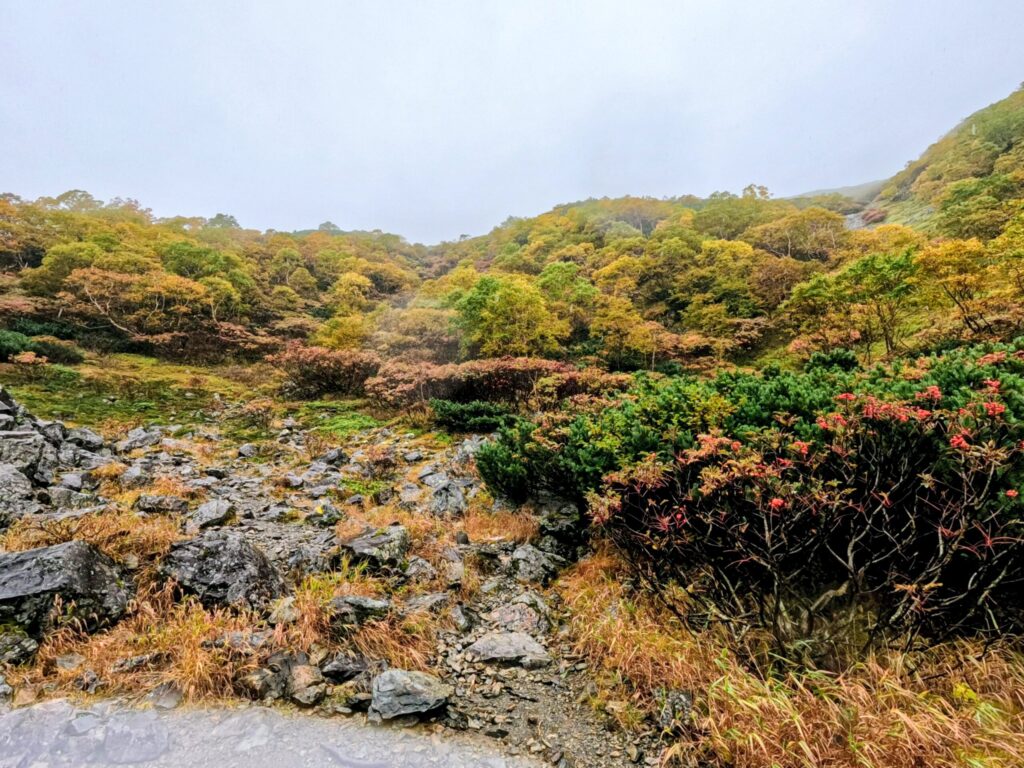
The autumn colors were reaching their peak,
and there were many beautiful stretches along the way,
but the dense fog kept visibility limited.
In Daimonzawa, a strong, abundant flow of water appeared,
revealing a stunning display of gorge scenery.
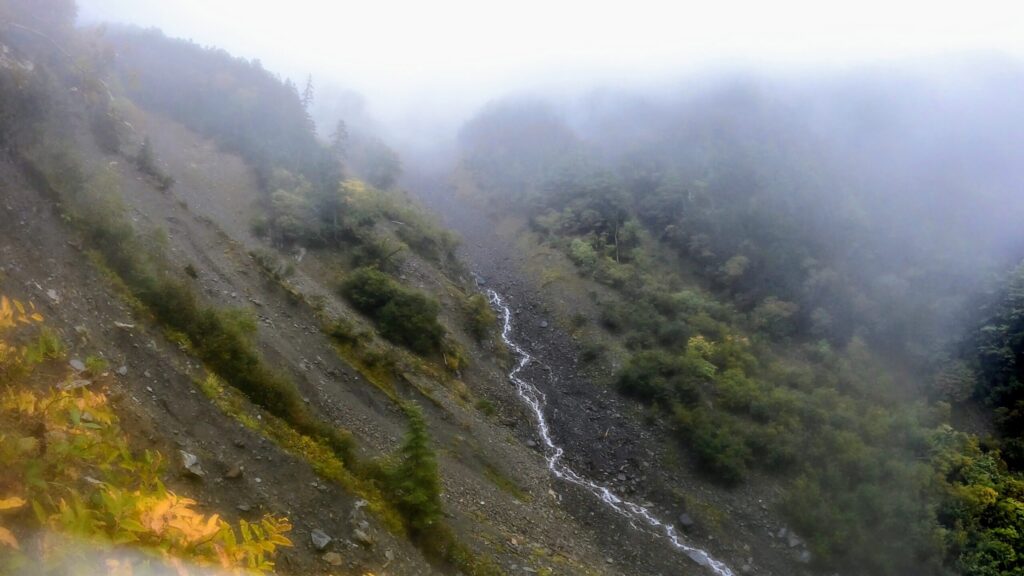
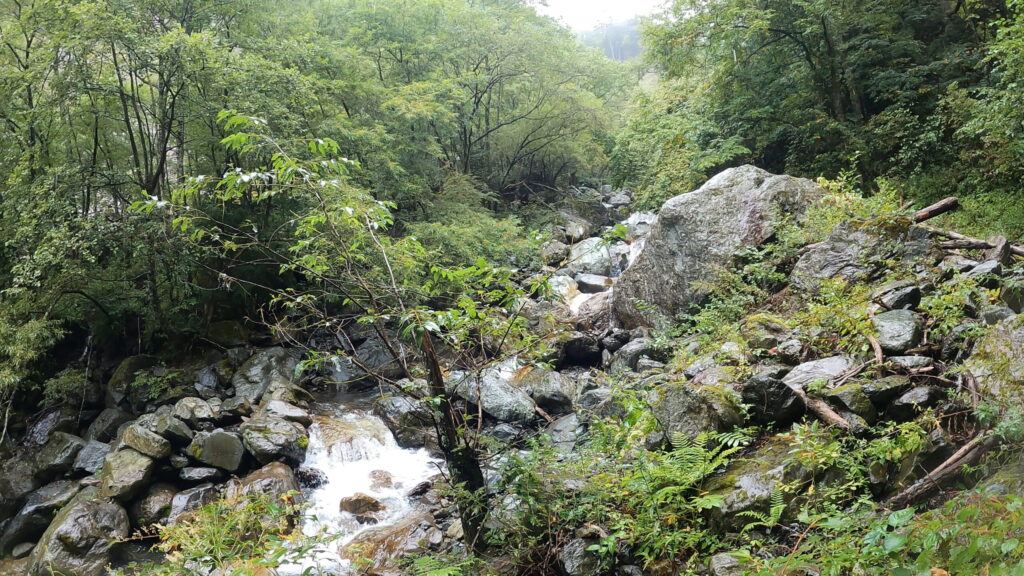
After that, the trail followed the stream, with several river crossings along the way.
At one point, I nearly lost the route.
This was the longest day of the entire journey—over 14 kilometers.
From morning until 4 p.m., I walked in constant rain,
and by the time I finally reached Narada, ten hours had passed.
At the very end, there was a suspension bridge whose name I never learned.
It swayed as I crossed, and I have to admit—it was frightening.
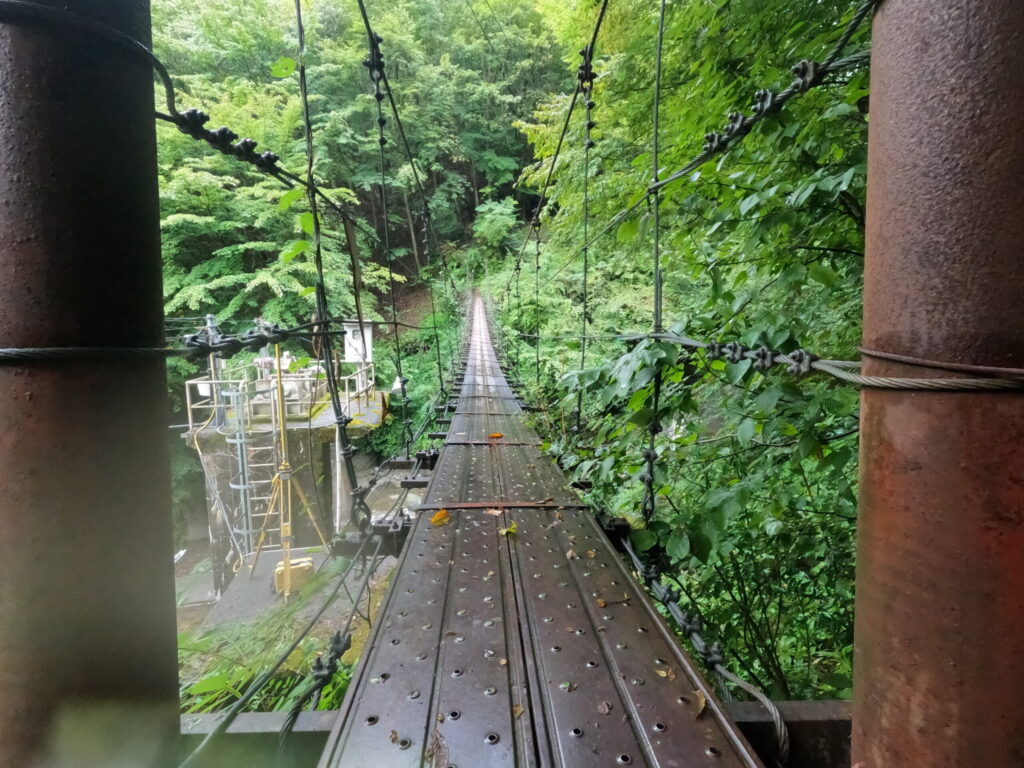
There were no cars left in the hikers’ parking lot,
and even the hot springs had already closed.
The stillness of the quiet village left a strangely vivid impression on me.
The Mountain Reflects Everything
The Shirane Sanzan traverse was a route whose difficulty couldn’t be measured by distance alone.
If you’re relying on the bus for the descent, a three-night itinerary is the safest choice.
But next time, I think I’ll leave my car in Narada and start again from Hirogawara.
Over the span of four days—sun, clouds, and rain—
I saw every face the mountains had to offer.
More than the clear-sky views, it was the quiet grayness,
the sound of rain and wind,
and the weight of the mist that lingered deeper in my memory.
In Japan’s mountains, the weather can shift at any moment.
For someone like me, who spent many years hiking the dry Sierra Nevada ranges of the U.S. West Coast,
this “baptism” felt less like hardship and more like a kind of blessing.
Someday, I want to return and meet these mountains again—
on a clear ridgeline under an open sky.
Mount Shasta, which I often visited during my years in North America,
is also known as a sacred mountain.
A local Native elder once told me:
“Above the tree line is the realm of the spirits.
It is not a place humans should enter lightly.”
There is something in that belief that resonates deeply
with the spirit of Japan’s own mountain traditions.
Western alpinism arrived in Japan after the Meiji era,
framing mountaineering as a challenge, a conquest,
and eventually as mass recreation.
But the ancient form of Japanese mountain travel
was a spiritual practice—
a discipline rooted in reverence for the mountains themselves.
There is undoubtedly a hint of ego
in the style of climbing once pursued by European aristocrats,
who challenged high peaks as symbols of national prestige.
I’m reminded of the film Seven Years in Tibet.
Mountains test us—
our awareness, our intentions.
And sometimes, they turn us away.
When I hiked the John Muir Trail,
each time I crossed a pass above 4,000 meters,
I felt as though some higher consciousness was watching over me.
The Sierra Nevada felt like a single, vast power spot.
I’ve only just begun walking Japan’s mountains,
but as I imagined, I can already feel the breath of the gods within them.
Mountaineering is a conversation—
between human consciousness and the vast awareness of nature.
It is a trial, yes,
but also perhaps a kind of prayer—
an act of accepting whatever the mountains choose to give.
Looking back, I’m reminded of something essential—
when we enter the mountains,
we should always enter with respect.

コメント