Introduction
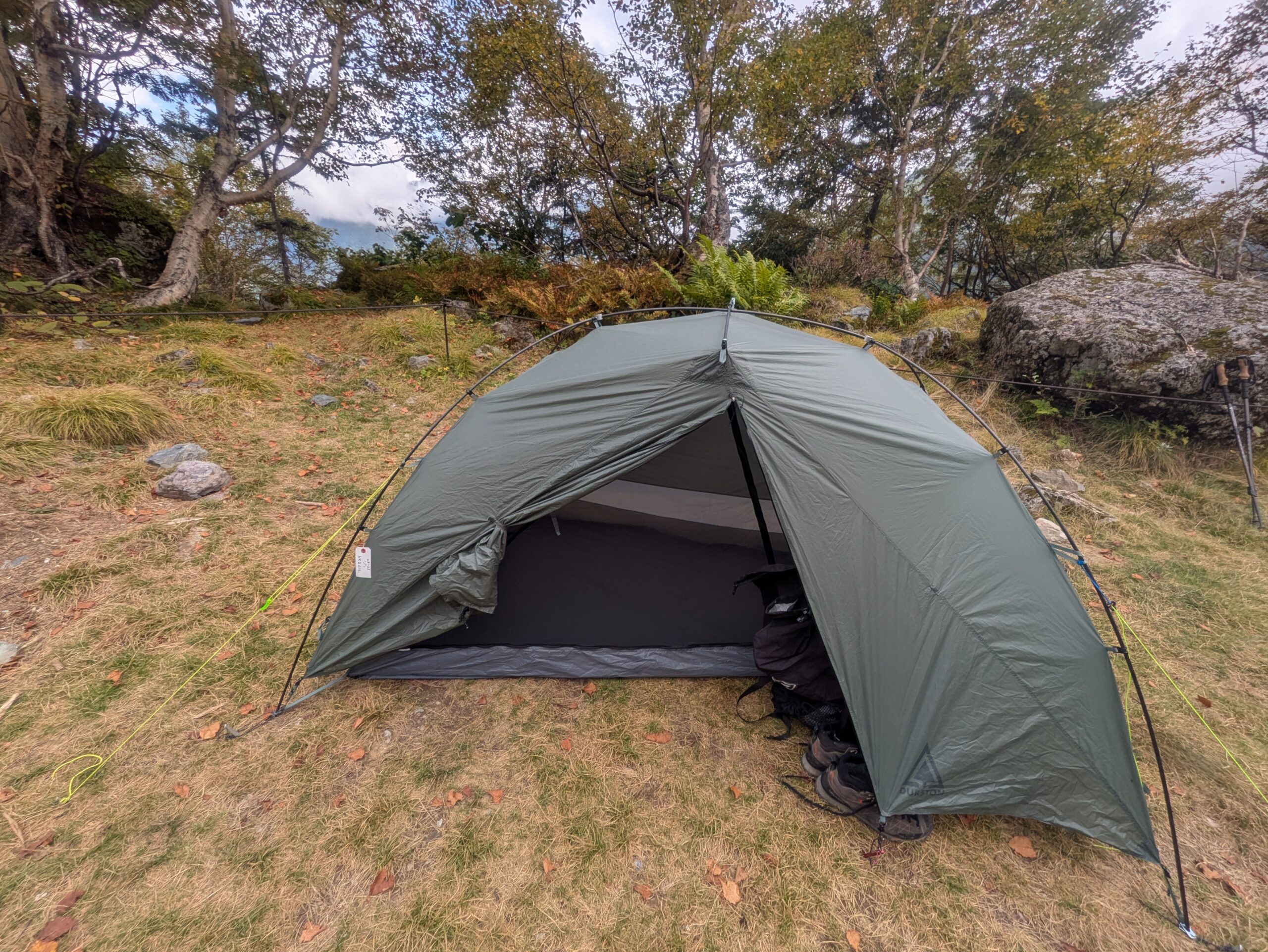
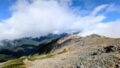
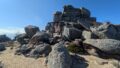
At the end of September 2025, I embarked on a 4-day, 3-night traverse of the Shirane Sanzan (Hirogawara – Shirane-Oike Hut – Mt. Kitadake – Kitadake Hut – Notori Hut – Narada) in the Southern Alps. This journey turned out to be a rigorous baptism of relentless rain and fierce ridge winds. The shelter I chose to accompany me through these challenging elements was the “X-Dome 1+” by Durston, which I had only recently purchased.
1. Neat Rectangular Footprint and Outstanding Pitching Speed
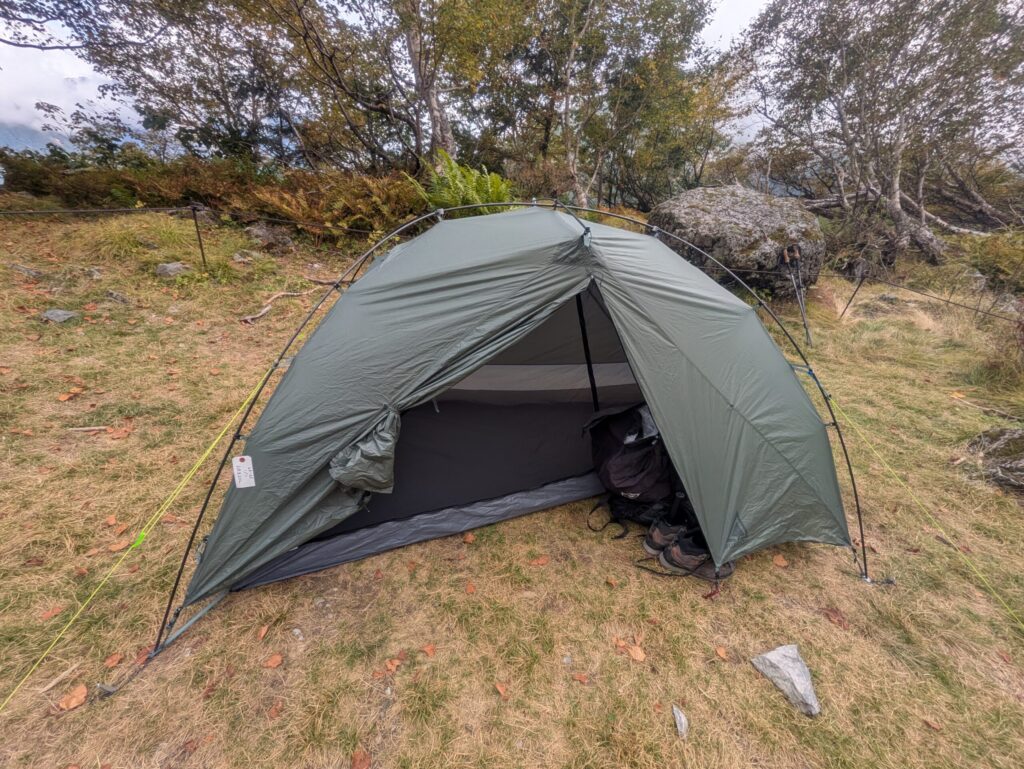
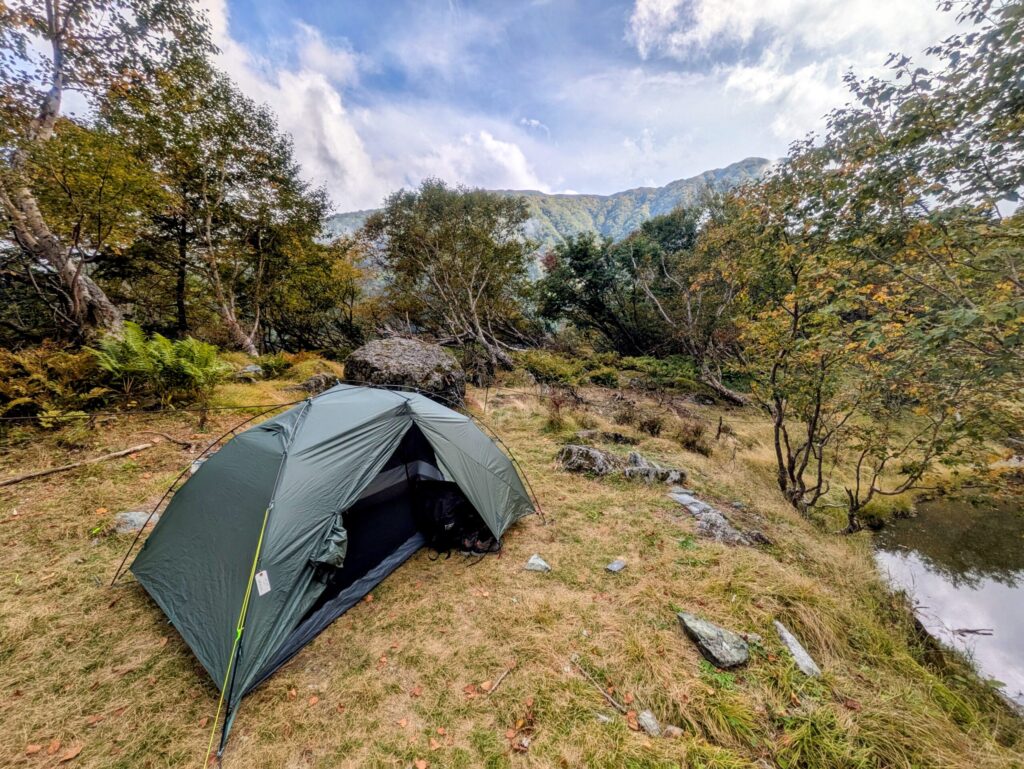
The most notable structural triumph of the X-Dome 1+ is that while it houses a uniquely shaped parallelogram inner tent, the rainfly itself maintains a clean, straightforward rectangular footprint.
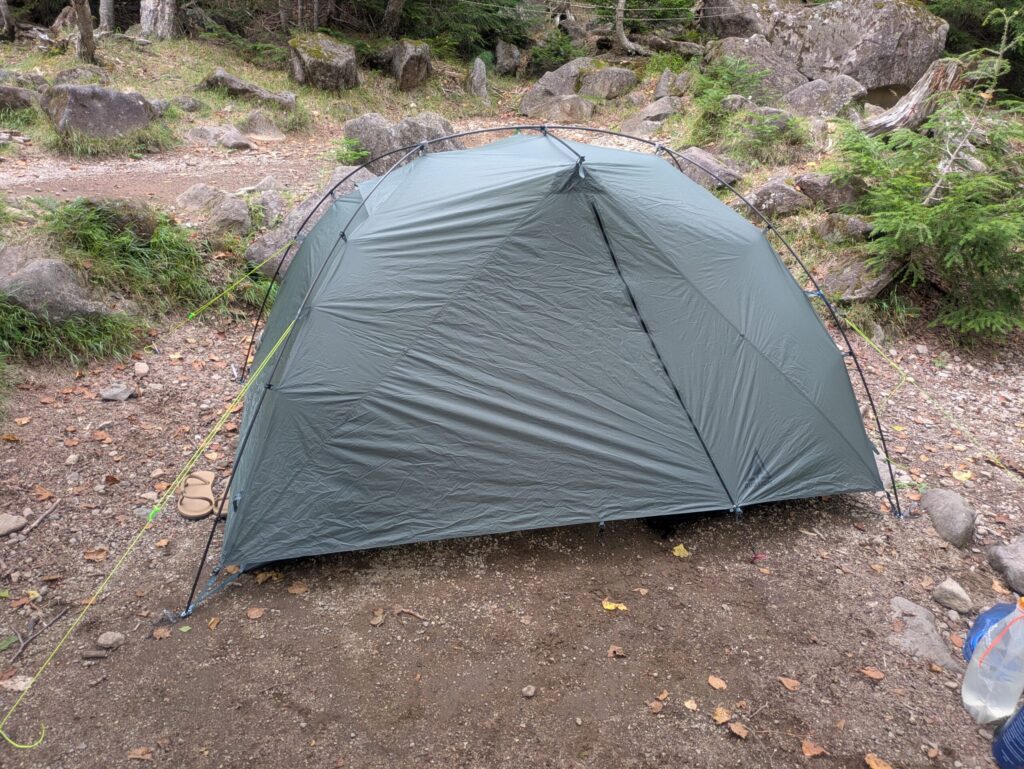
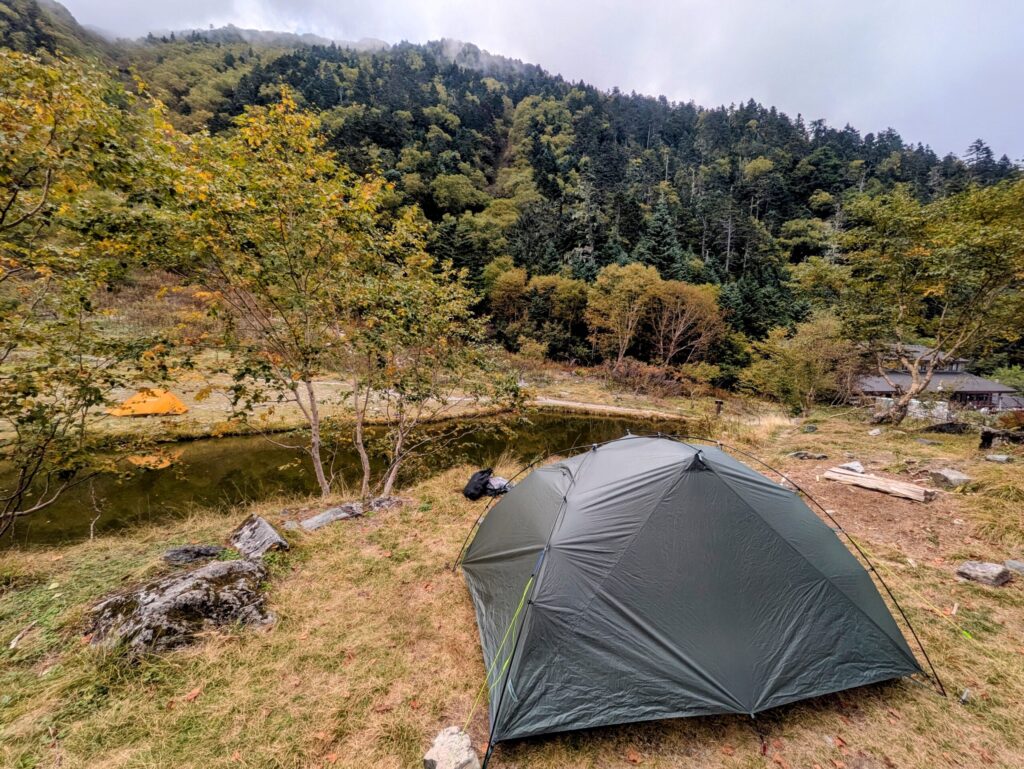
In terms of actual size on the ground, it takes up almost the exact same space as the Montbell Stellaridge 2, a definitive benchmark for Japanese mountaineering tents. Furthermore, because the vestibule function is completely contained beneath the contours of the fly sheet, there are no awkward bulges or sweeping extensions protruding outward. The ability to pitch and secure it as a neat rectangle meant I never struggled to find a suitable spot, even within the limited mountain hut campsites of the Southern Alps.
Additionally, the rainfly and inner tent can remain pre-connected, allowing for a synchronized “combined pitch”. This exponentially slashes the time required for both setup and breakdown. During my stay at the Shirane-Oike Hut, where rain poured from the first afternoon into the second day, this capability allowed me to secure a dry interior space instantly without exposing the inner tent to a single drop of water. Even if packed separately, you can easily erect the outer fly first and hang the inner body out of the rain—a monumental advantage in Japan’s notoriously wet mountain environments.
2. Expansive Vestibule and Exceptional Livability via the Offset Floor
The inner tent features a distinct tapered layout, measuring 50 inches wide at the head end and narrowing down to 27 inches at the foot end. This deliberate offset orientation generates an exceptionally deep and usable vestibule space (9.2 sq ft / 0.85㎡) on one side of the tent.
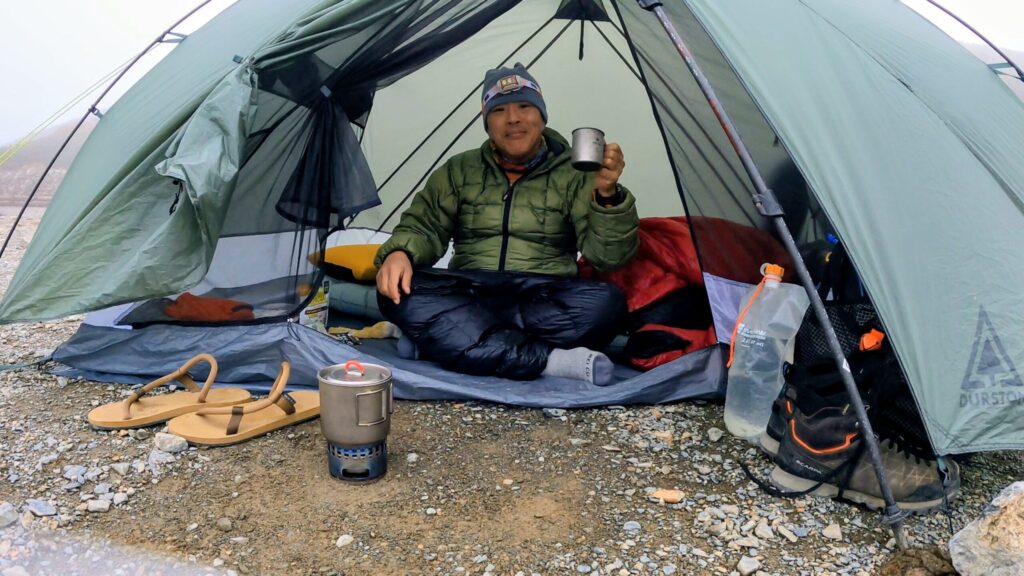
The sheer volume of this vestibule is outstanding. It easily accommodates a massive expedition pack and muddy boots , while leaving more than enough safe clearance to carefully operate a stove and cook dinner from inside the tent during foul weather. Another incredibly tactile luxury is the use of magnetic toggles to secure the fly door panels when opened. Avoiding the tedious two-handed manipulation required by traditional loops and toggles, the ability to snap the door open with one hand is a massive convenience when your fingers are cold and soaked.
The interior itself feels palatial. Tailored to comfortably accommodate taller Western backpackers, it boasts a usable length of 85 inches straight or up to 90 inches along the diagonal. For someone of my height (165 cm), the space was excessively generous. Combined with the near-vertical sidewalls, any sense of claustrophobia was entirely obliterated, making it spacious enough to keep even taller hikers perfectly comfortable.
3. Weathering the Gales of Kitadake via Trekking Pole Reinforcement
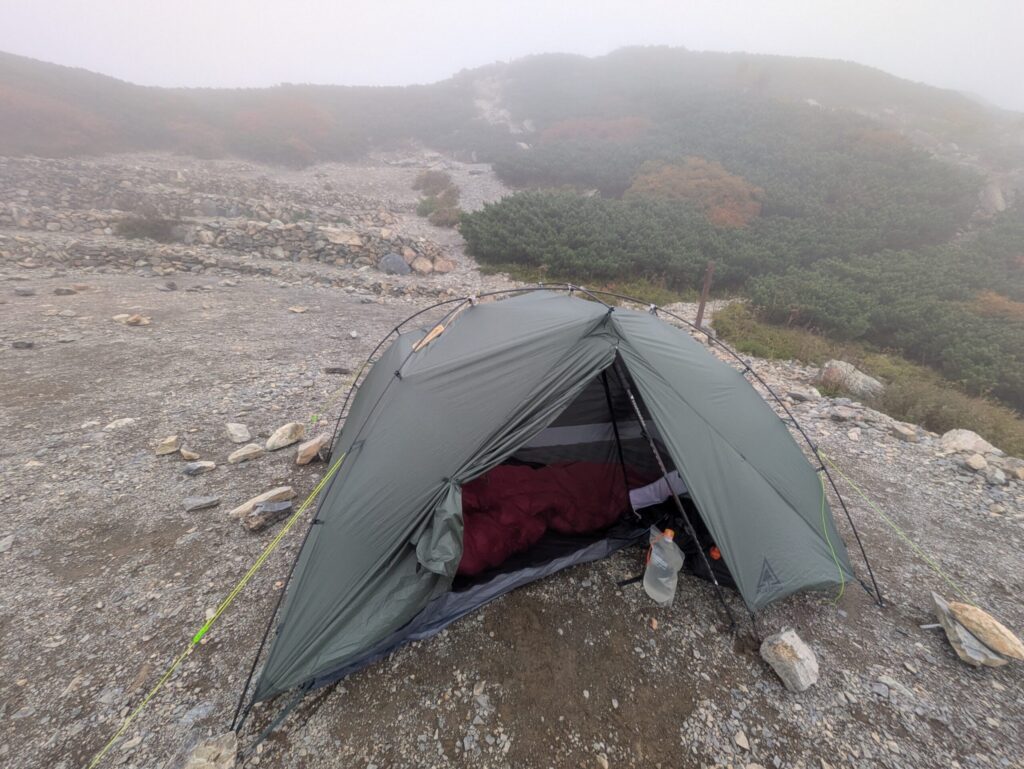
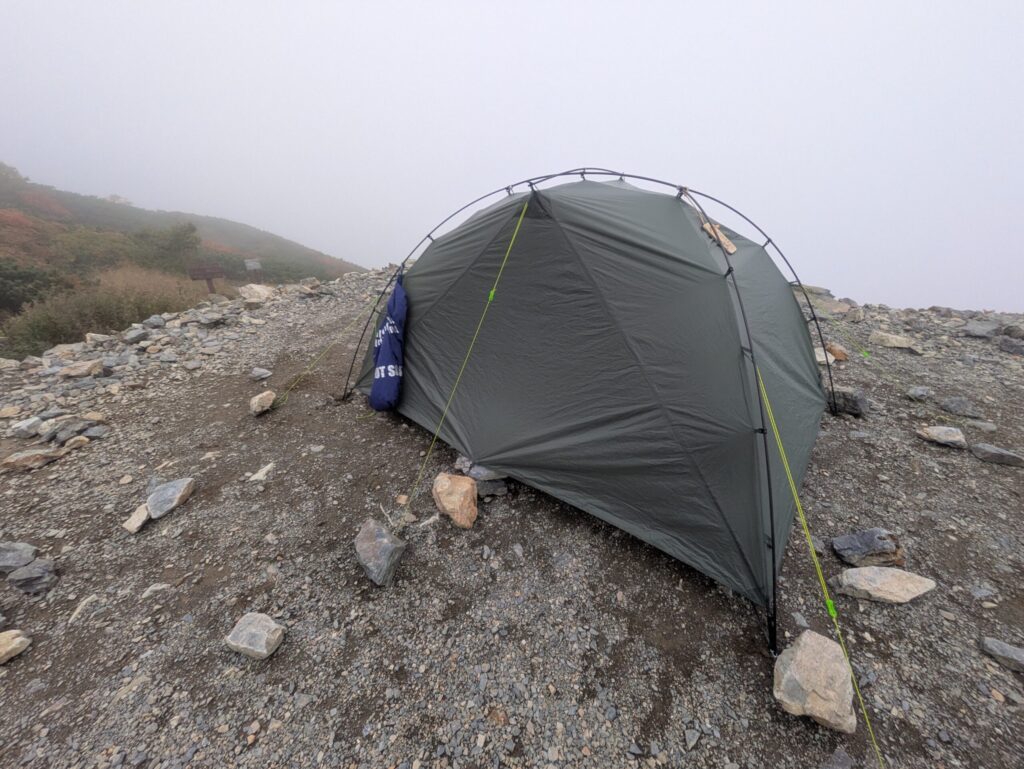
On the second night, while camped at the exposed ridge of the Kitadake Mountain Hut, the tent was subjected to ferocious alpine gales. This provided the perfect arena to test the X-Dome’s proprietary storm-resistance mechanisms.
This tent features a clever gimmick where you can integrate a single trekking pole externally across the crossbar section of the standard Easton carbon pole set to form a reinforcing arch. After fully utilizing all surrounding guylines and adding this trekking pole reinforcement, the frame’s rigidity seemed to improve, allowing me to feel a high sense of stability against the midnight gusts. The shelter stood unyielding against the buffeting, proving the brilliant engineering behind its practical stormworthiness.
4. Vulnerabilities Revealed: Durability Concerns of the UL Frontier and Sincere Brand Support
However, perhaps as a compromise for this innovative design and minimal weight, a clear lingering anxiety regarding its long-term durability remained.
The biggest problem occurred on the final day of the traverse during setup at the Notori Hut. While assembling the frame, the aluminum ferrule (insert joint) on the upper crossbar section slipped completely out of its glue bond, rendering the pieces unable to lock together properly. At that time, I managed to save the pitch by sliding the emergency repair sleeve I had with me over the compromised joint.
I had experienced another issue just a month prior during its debut trip at Kuroyuri Hut in the Yatsugatake Mountains. The inner door’s delicate zipper slider became caught on my sleeping bag fabric. Upon pulling it with a bit of force, the slider cleanly snapped and sheared right off the track.
From these two consecutive hardware issues, I felt that despite the excellent design and specifications, the inherent “delicacy of materials and parts” typical of UL tents—where everything is stripped down to its extreme thinness to drop the total weight under 1,000g—cannot be denied. My impression was that we cannot hold high expectations for its durability against rough handling in severe environments, though it will certainly be necessary to test it in other conditions as well.
Stellar Post-Trail Customer Support
However, the manufacturer’s handling of this situation upon my return was nothing short of exemplary.
After arriving home, I emailed the company to report the pole damage. I received an immediate reply from their customer support team. They explained that this adhesive issue was a prominent manufacturing defect they had already identified in the initial batch and had aggressively worked to resolve with Easton. To my surprise, they immediately offered to ship the newly improved version of the pole set all the way to Japan completely free of charge.
While the breakdown itself highlighted the inherent fragility of ultralight gear, the company’s rapid, honest, and dedicated response left me with a profound sense of trust in this premium brand.
5. Final Verdict: Comparison with Domestic Tents and Future Strategy
The Durston X-Dome 1+ is undeniably a masterclass in modern shelter design, yielding the volumetric space of a 2-person tent and a massive vestibule while keeping the weight to an astonishingly scant 985 grams (carbon pole specification). Its unique design is both intuitive and highly functional.
That being said, online video reviews from overseas have demonstrated instances of this frame buckling or breaking when subjected to extreme, unshielded gale testing in open areas. When looking at long-term deployments on highly exposed, severe Japanese alpine ridges like Mt. Kitadake and Mt. Notoridake—where violent weather is a constant gamble—traditional, over-engineered domestic tents like the Arai Tent Airise series still offer an incomparable blanket of psychological security and raw physical resilience.
- Under Anticipated Strong Winds: Carrying an emergency repair sleeve and duct tape is essential. It is absolutely necessary to always handle components gently and carefully (especially when opening/closing zippers or inserting poles), with a mindful awareness that this is a piece of UL gear.
- Choosing the Optimal Field: The sweet spot where this tent truly shines would be sub-alpine solo backpacking trips or bikepacking. Because it is completely freestanding and independent of mandatory stakes, its ability to achieve a clean pitch on pavement edges or hard ground is a huge asset. That being said, as long as you pitch it with care, it should be perfectly fine under most conditions.
It is an exceptional piece of functional beauty, provided you possess the technical mindfulness required to handle and care for its ultralight constraints.

コメント