A Two-Day Journey from Mizugaki Mountain Lodge
On October 23rd, the autumn sunlight was soft, and hints of the coming winter were already drifting through the forest.
I began my hike from Mizugaki Mountain Lodge in Yamanashi, spending the first night at Fujimidaira.
On the following day, the 24th, I set out toward my main destination—Mt. Kinpu.
It was still a little early for peak autumn colors, but in their absence, the silence of the trail and the crisp wind along the granite ridge felt even more vivid.
Hiking record
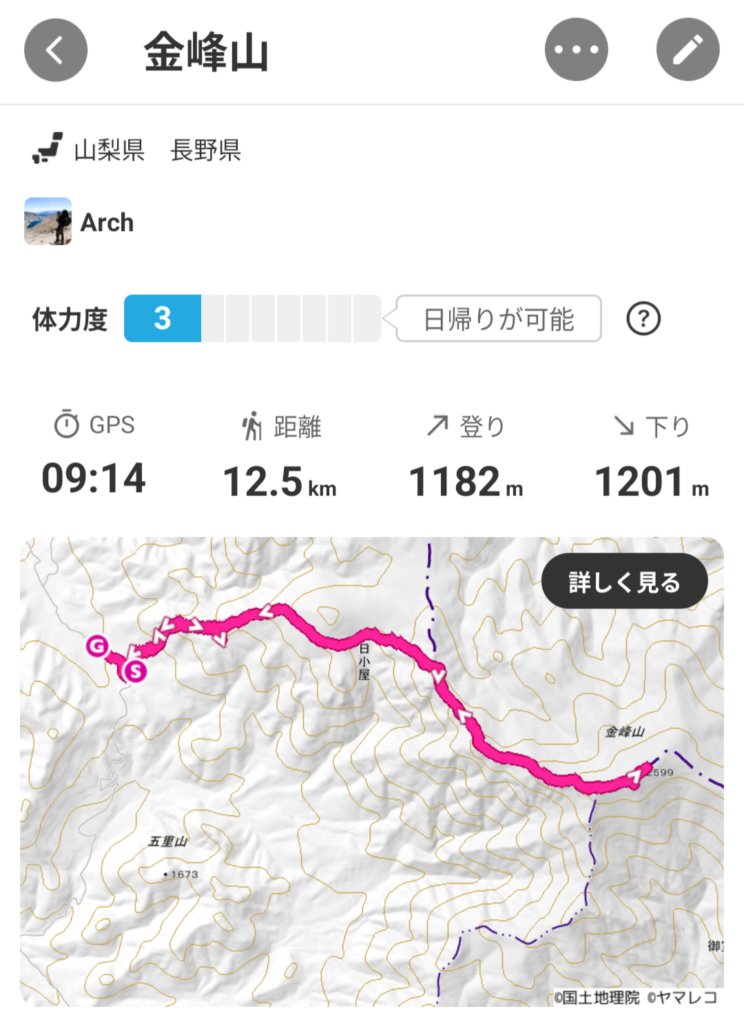
Dates: October 23–24, 2025
Route:
- Day 1: Mizugaki Mountain Lodge → Fujimidaira (overnight)
- Day 2 (Oct. 24): Fujimidaira → Dainichi Rock → Mt. Kinpu (summit) → Return via the same route
Weather:
Afternoon: Rain
Morning of the 24th: Clear skies
Route and Impressions
Mizugaki Mountain Lodge → Fujimidaira (October 23)
When I set off from Mizugaki Mountain Lodge, the morning cold pierced my skin.
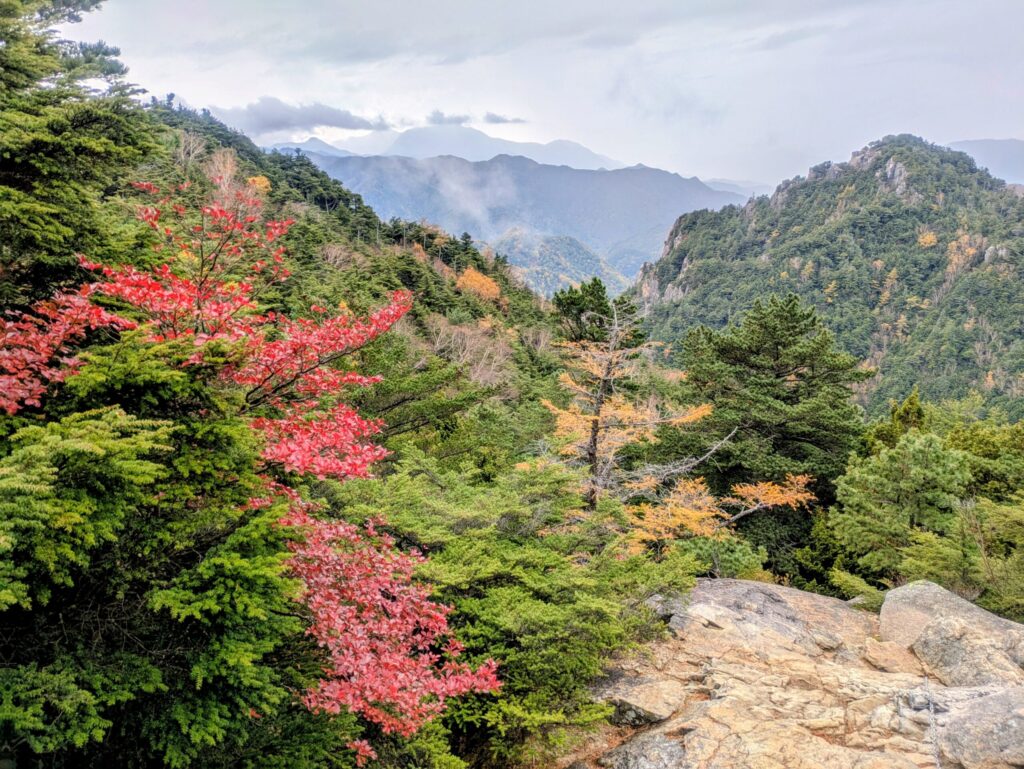
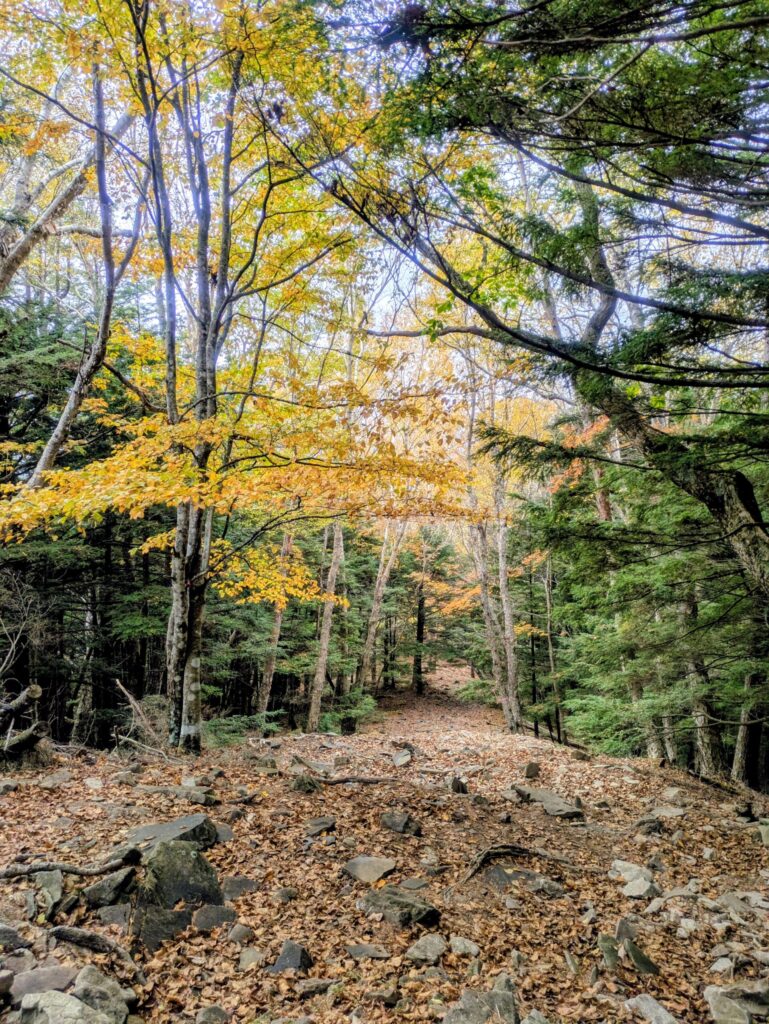
I followed a moss-covered trail through the forest, encouraged by occasional glimpses of blue sky between the trees as I made my way toward Fujimidaira.
It was my first time returning to Fujimidaira Hut since climbing Mt. Mizugaki back in May.
Even at a relaxed pace, the walk from Mizugaki Mountain Lodge to Fujimidaira Hut takes only about forty minutes.
When I arrived at my campsite, the hut was temporarily closed—perhaps because it was the off-season.
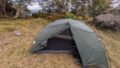
Scanning the tent area, I saw only about five tents pitched among the trees.
In the quiet forest, leaves already tinged with mid-autumn colors drifted softly to the ground at my feet.
That afternoon, I took a short hike to nearby Takamiiwa and then returned to camp, spending the rest of the day in peaceful solitude.
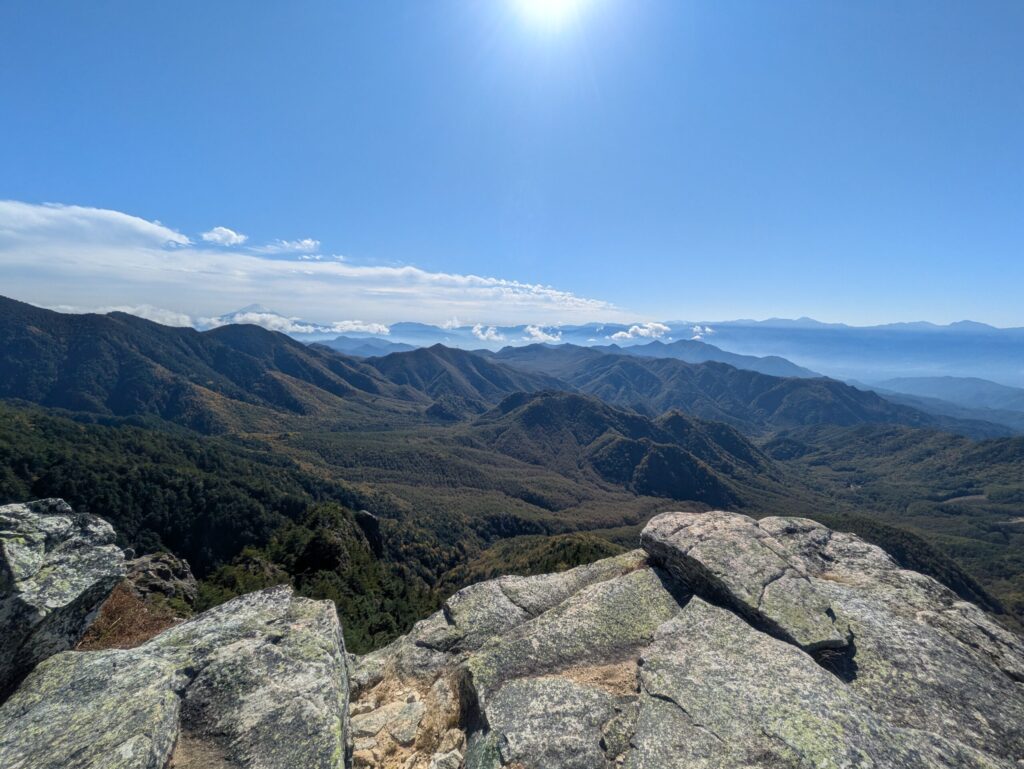
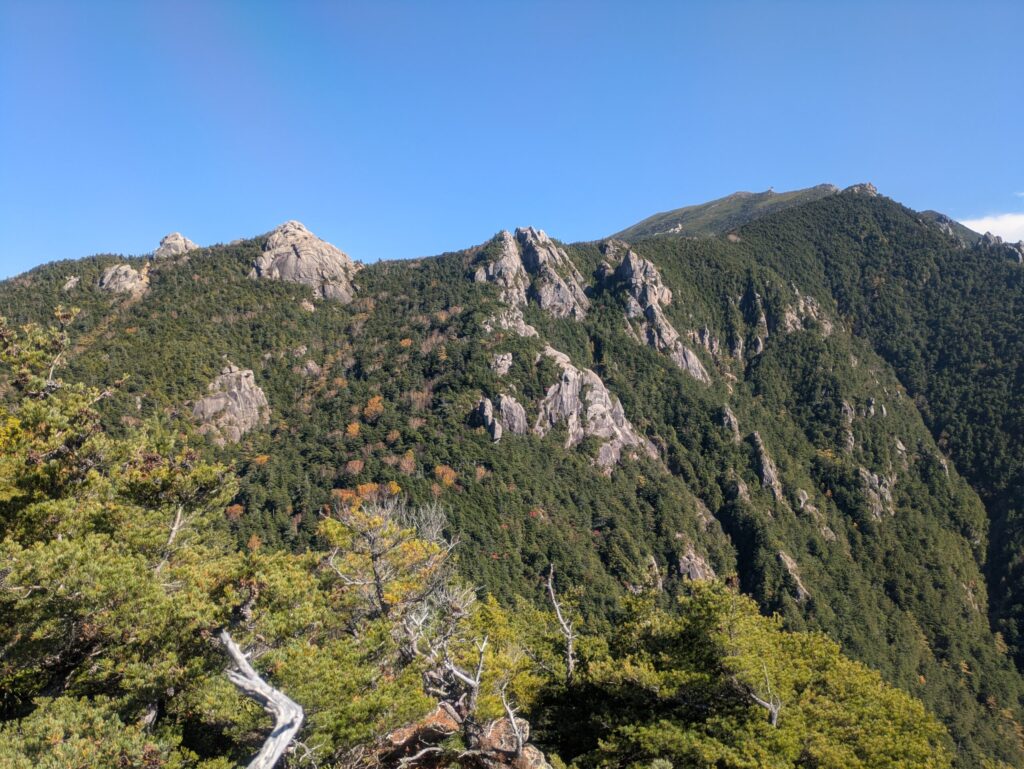
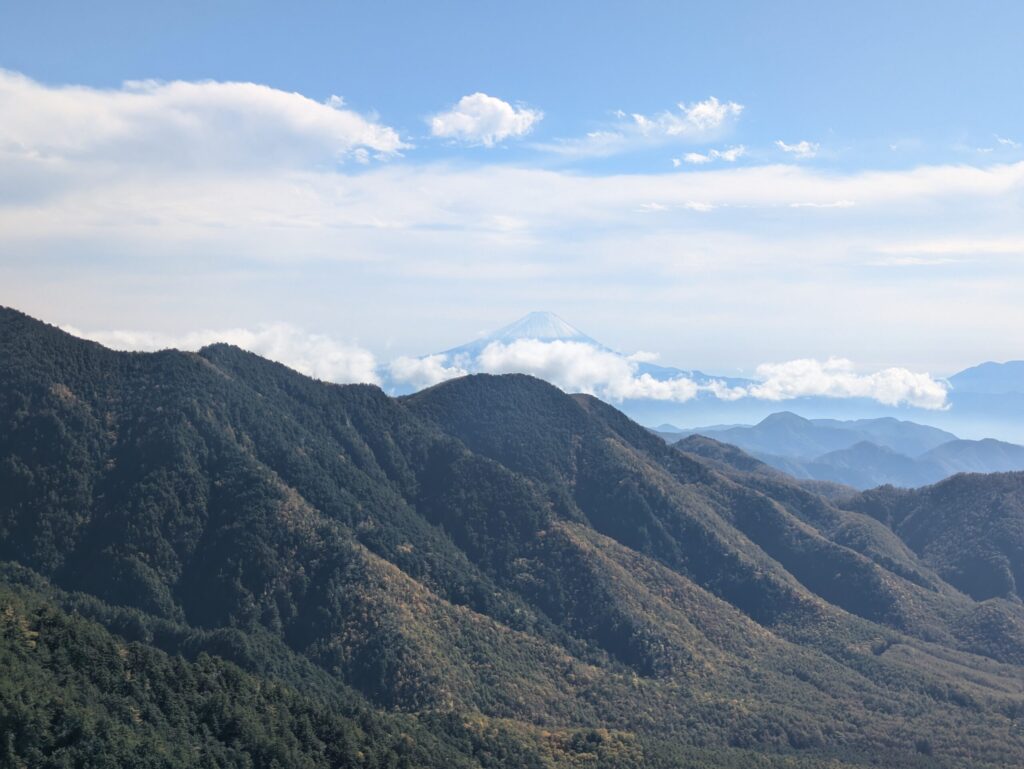
I set up my base camp at Fujimidaira and spent the night there.
Because it was so quiet and uncrowded, the campsite felt peaceful—almost serene.
But deep in the Fujimidaira forest, the calls of monkeys and deer echoed through the night.
They cried out at regular intervals, waking me each time.
Fujimidaira → Dainichi Rock → Mt. Kinpu Summit (October 24)
The morning was clear, just as I had hoped.
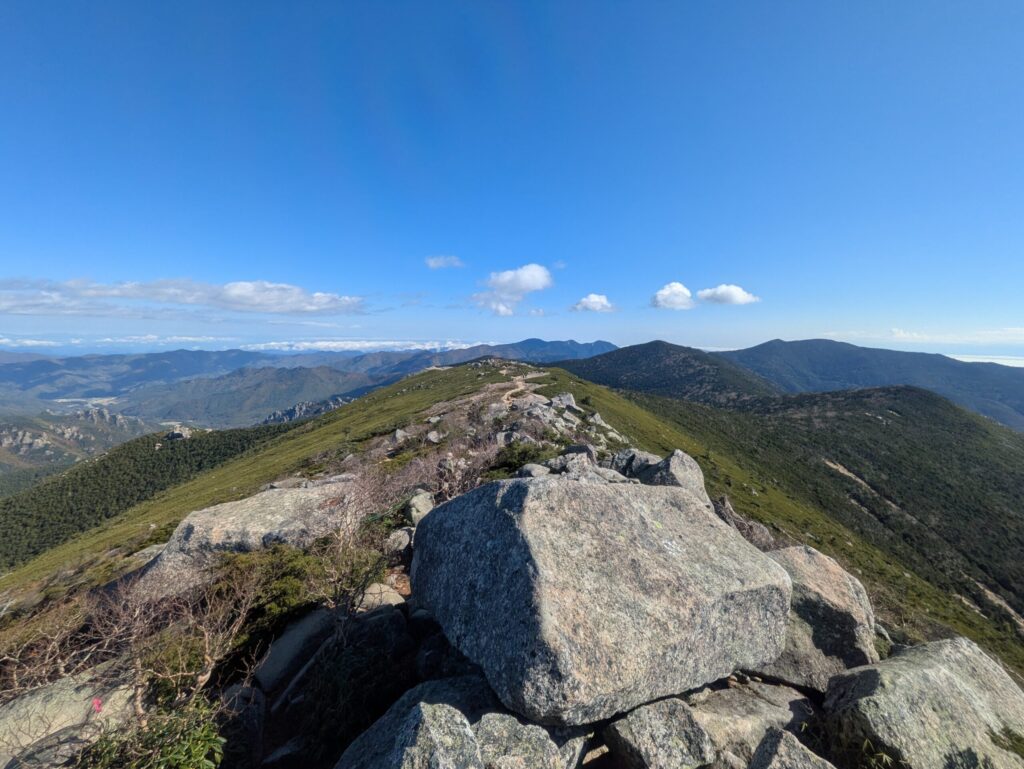
Leaving Fujimidaira, I walked through the forest and soon stepped onto the rocky ridgeline trail.
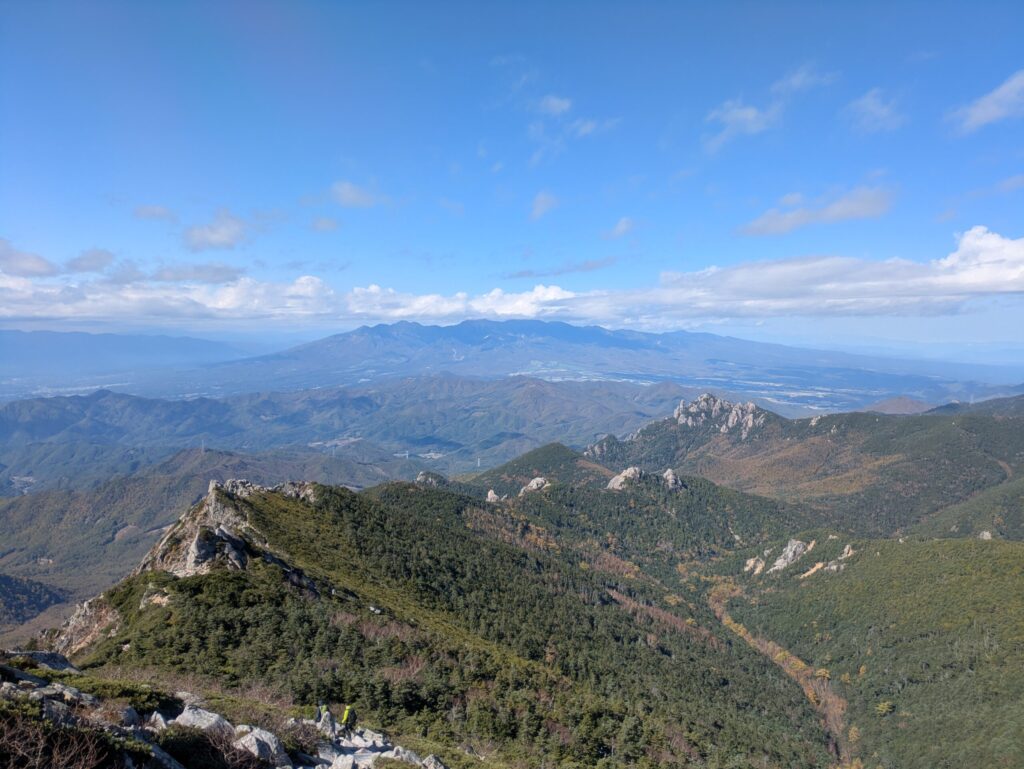
Around Dainichi Rock, towering granite walls rose on both sides, instinctively making me straighten my back as I passed through them.
The chain section, as the trail notes had mentioned, was easy—mild enough that I could climb without using the chains at all.
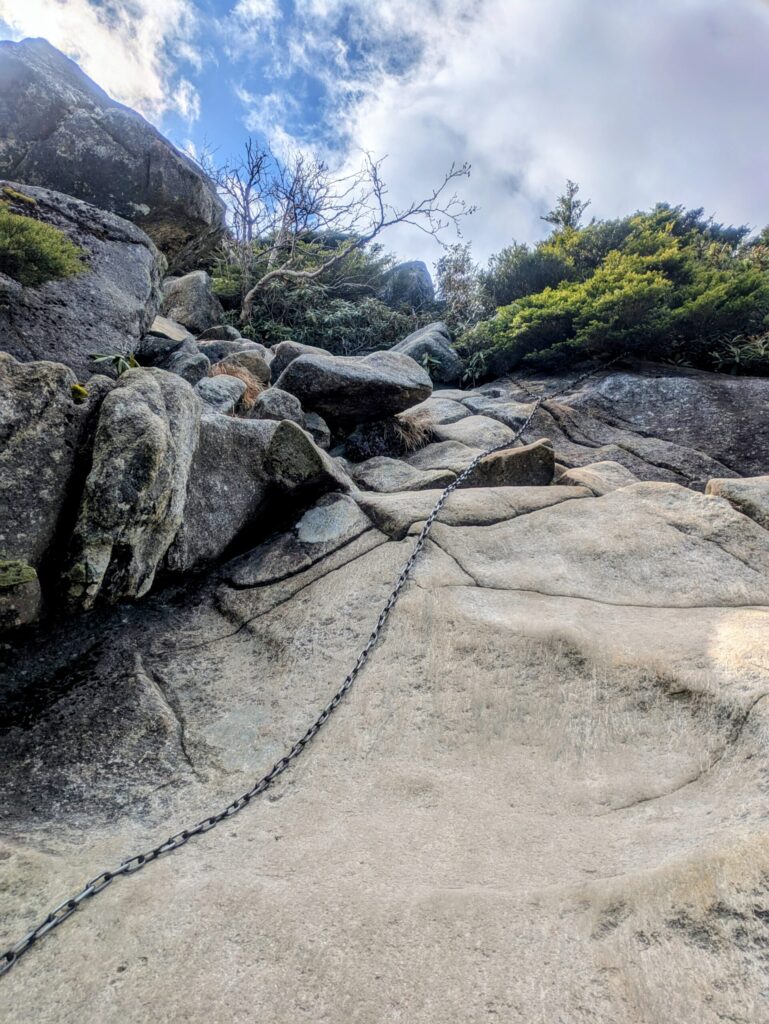
On the map, the distance from Fujimidaira to Mt. Kinpu doesn’t look very long, but there are several spots where you need to use three-point contact.
Since I was carrying only a daypack today, the climb felt easy and comfortable.
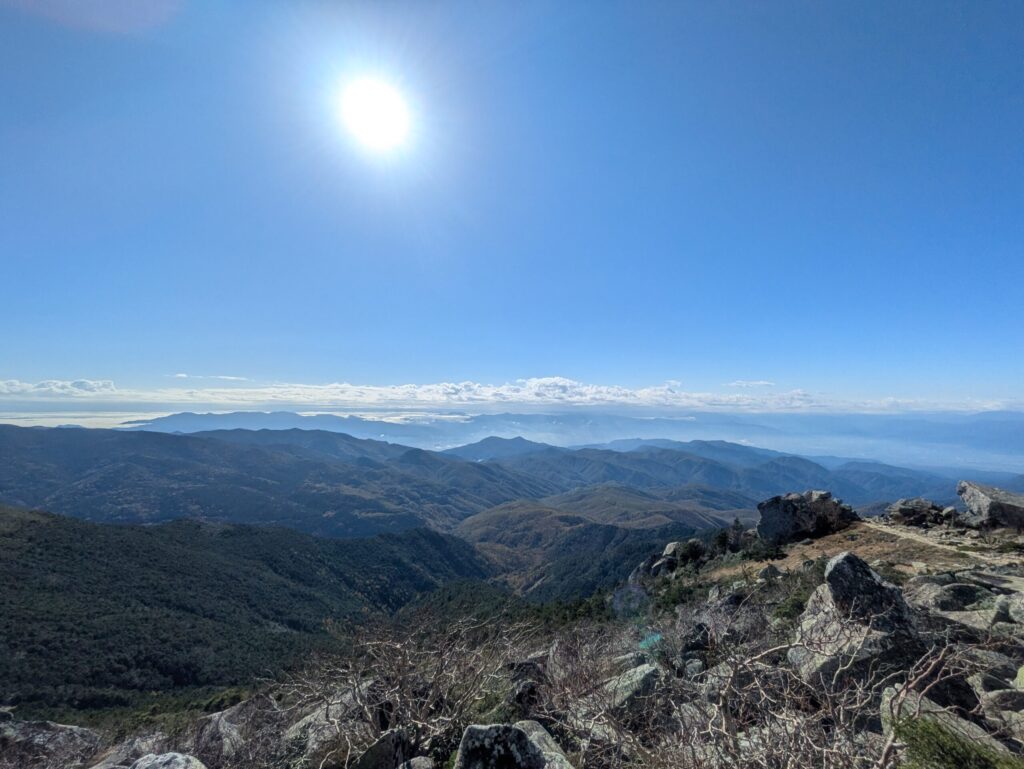
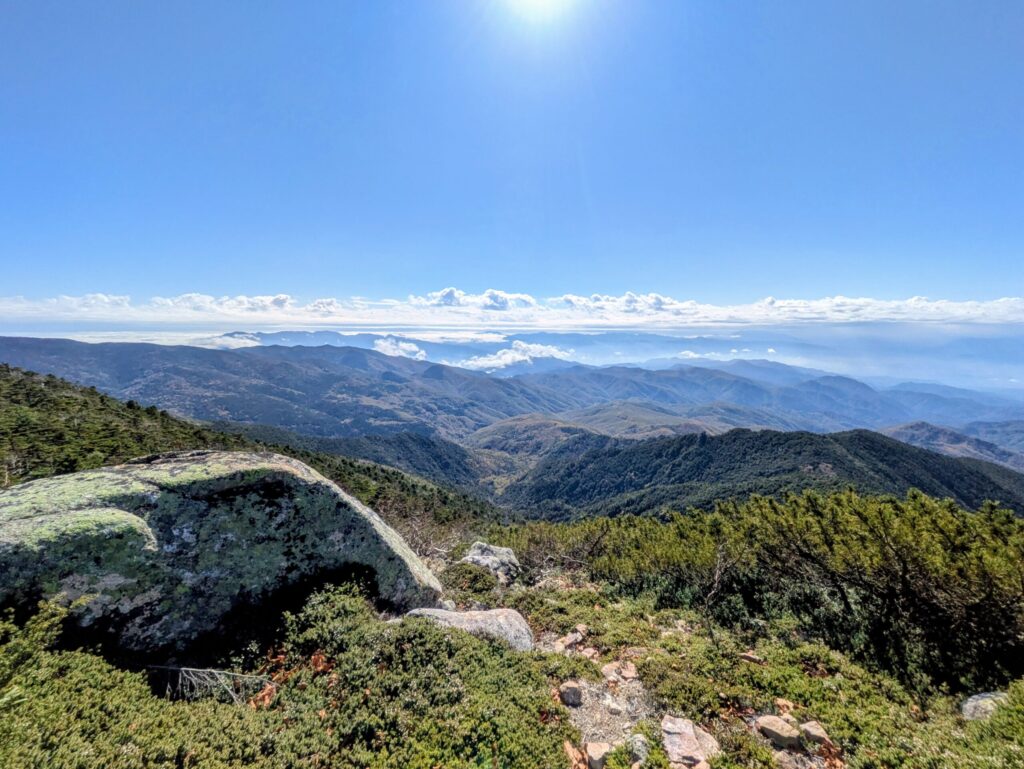
Once the ridgeline opened up, the sky—initially cloudy—gradually began to clear, revealing a wide, unobstructed view around me.
The mountains of the Southern Alps and the Yatsugatake range were visible in the distance, but on this day, Mt. Fuji alone remained hidden.
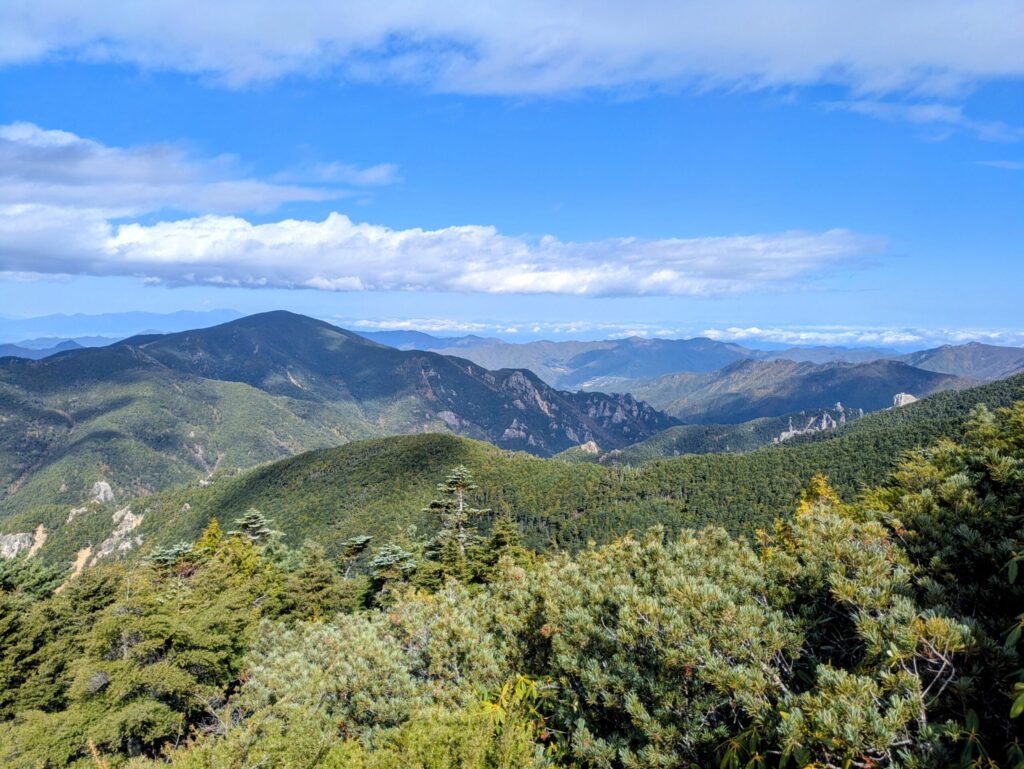
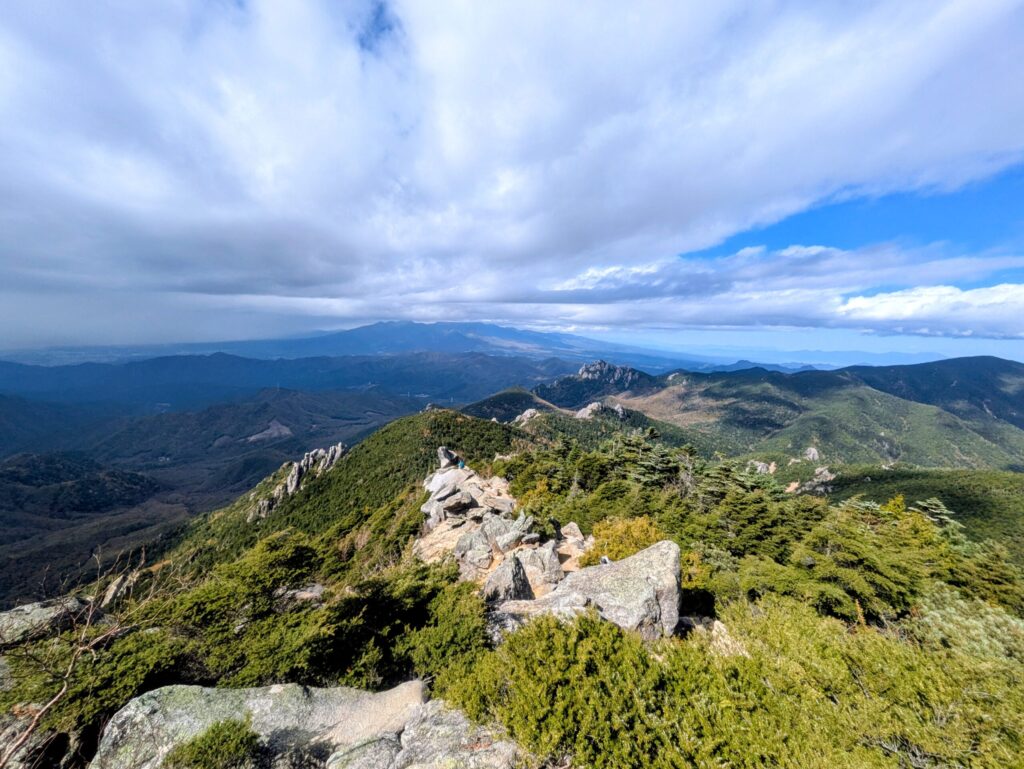
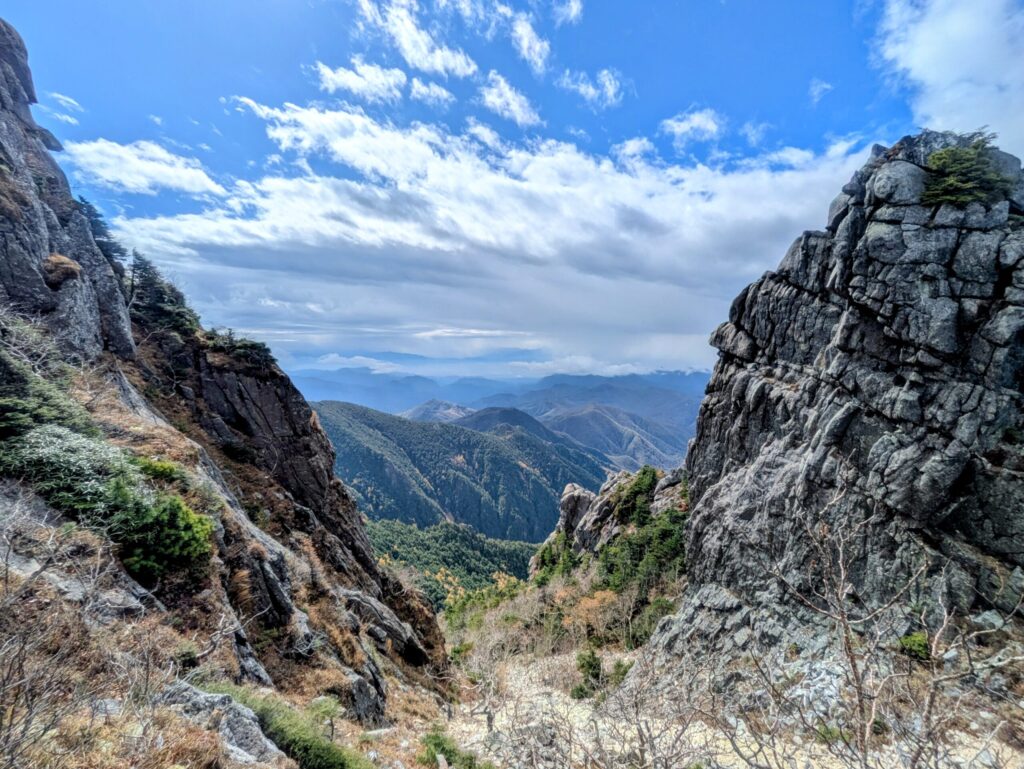
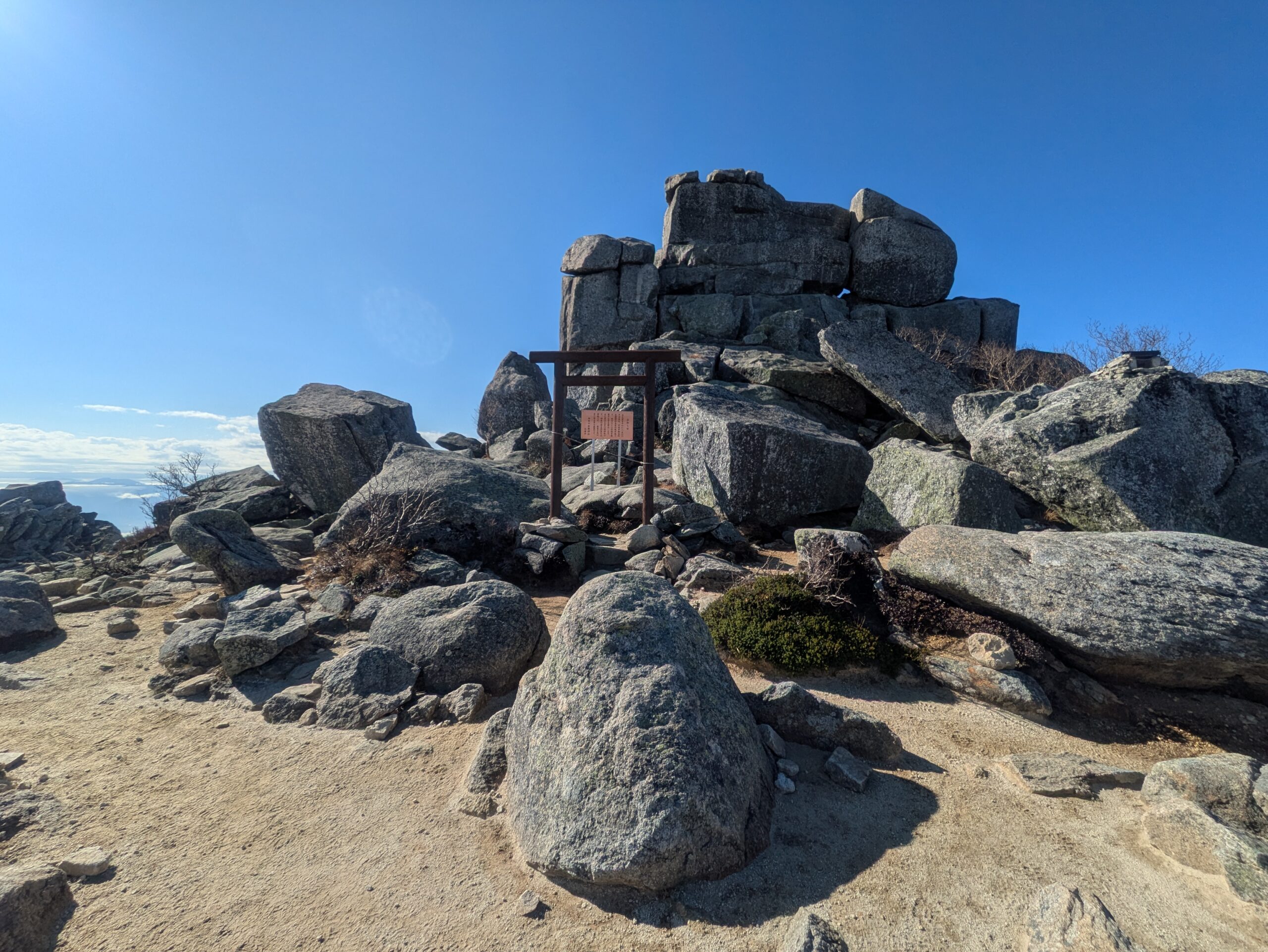
Soon, Gojōiwa came into view.
The moment it appeared on the horizon, I stopped and took a deep breath.
The sound of the wind striking the massive rock and echoing back made it feel almost alive.
When I finally stood on the summit, I could feel the strength held within the stillness—
a full 360-degree panorama spreading out in every direction.
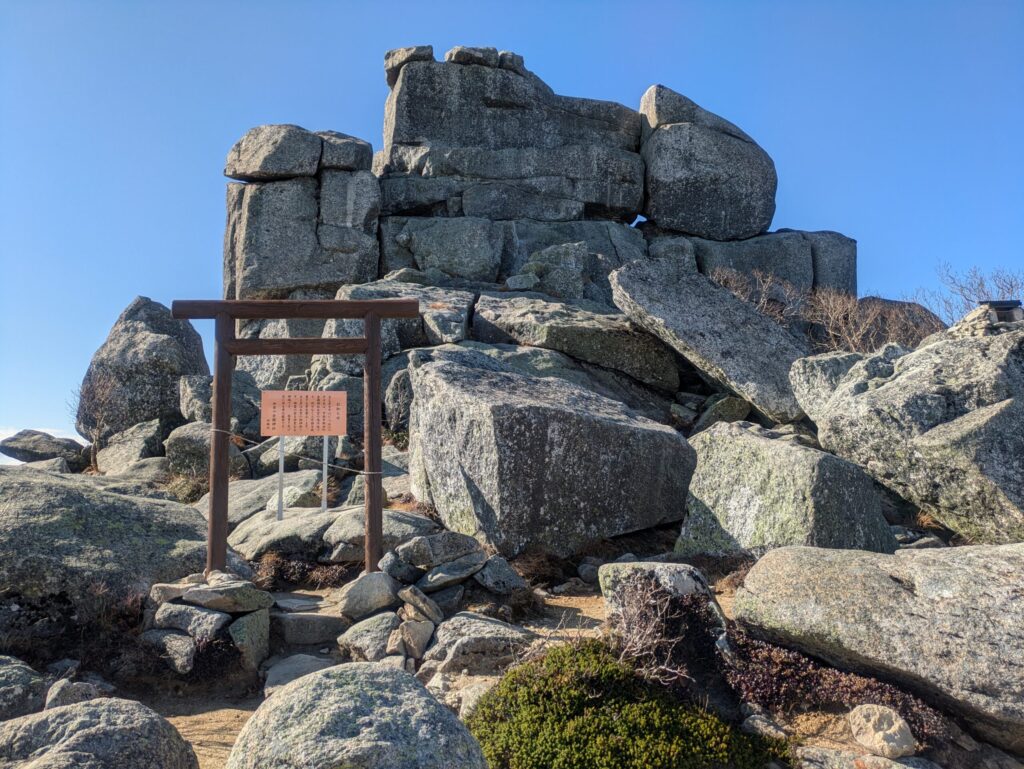
The towering Gojōiwa on the summit is not merely a rock.
It has long been revered as the sacred object of worship—the goshintai—of the main shrine of Kanazakura Shrine.
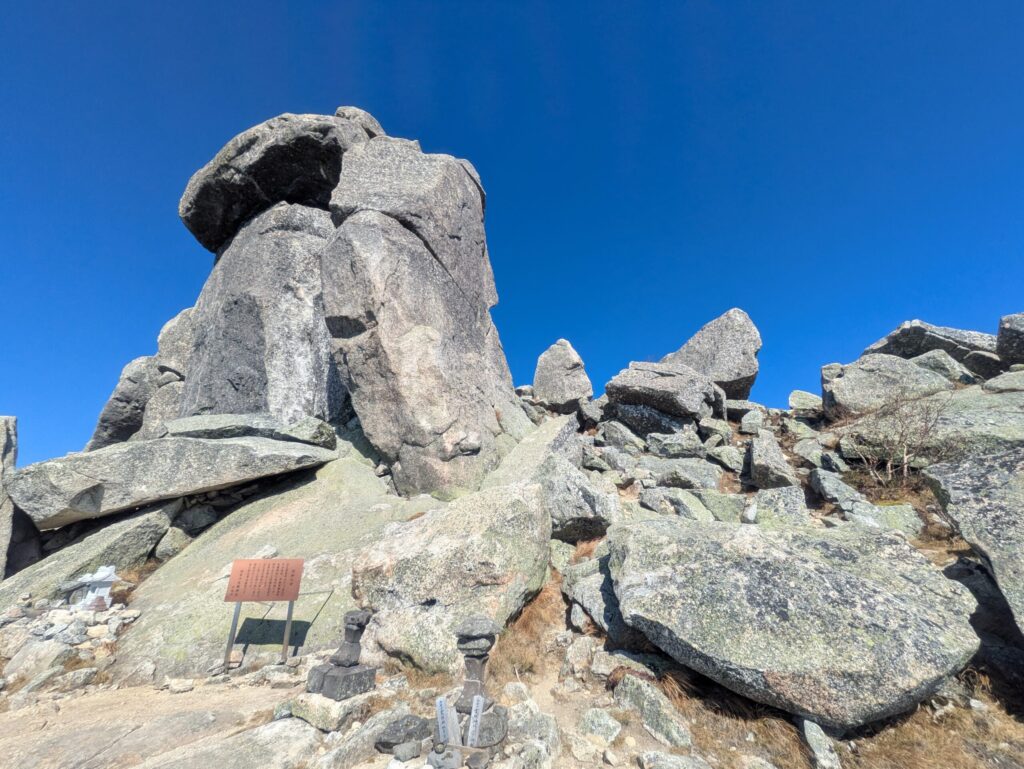
Gojōiwa is not only a rock that has been worshipped since ancient times.
It was once believed that the water springing from this very place flowed down into the rivers of Kai, Musashi, and Shinano—
the source of life for the surrounding provinces.
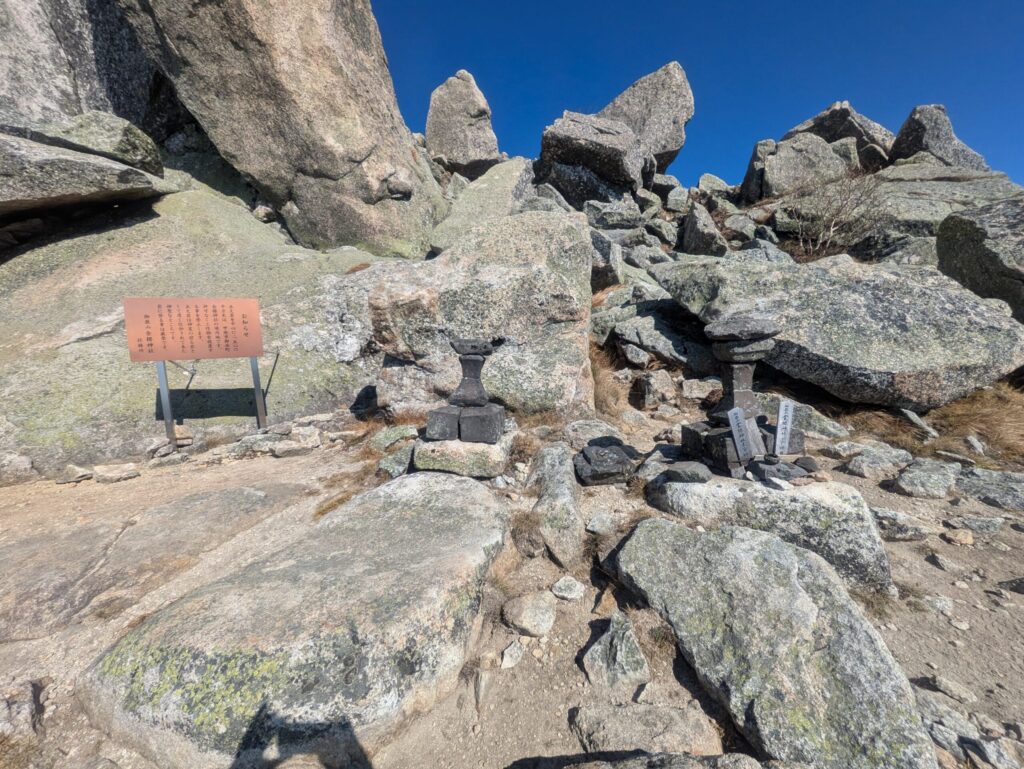
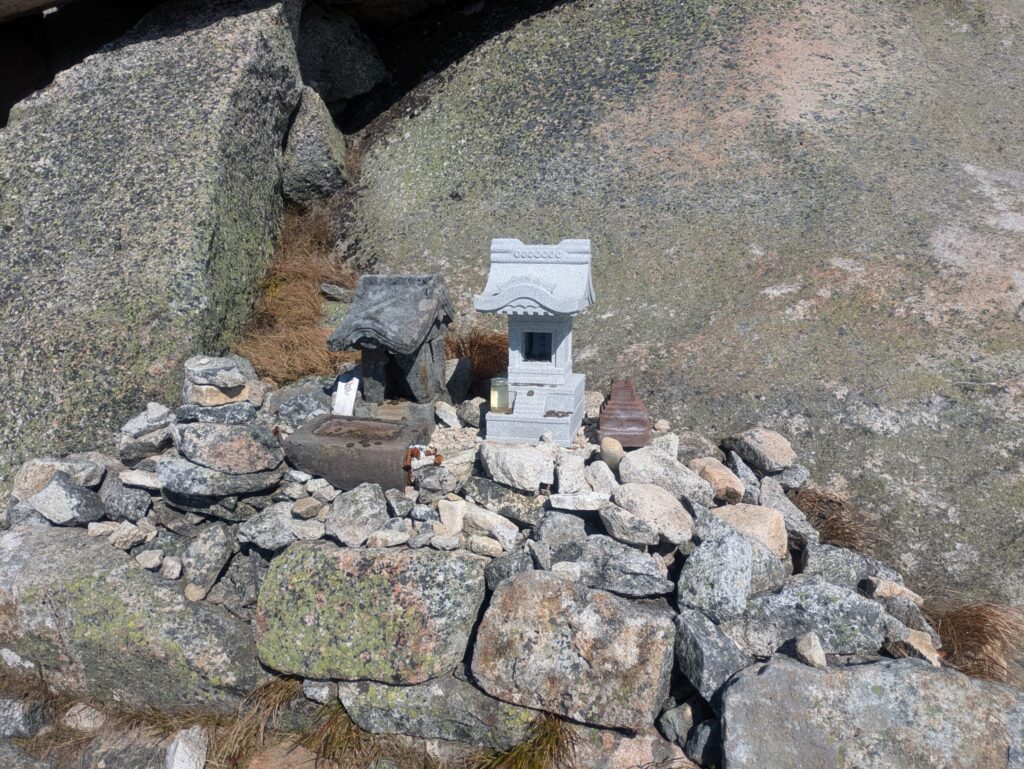
I felt as if the sound of the wind had subtly changed.
A cold wind swept across the ridgeline, struck the massive rock, rebounded, and only a fragment of it passed gently through my body.
In that brief moment, the boundary between past, present, and future seemed to blur—
just for an instant.
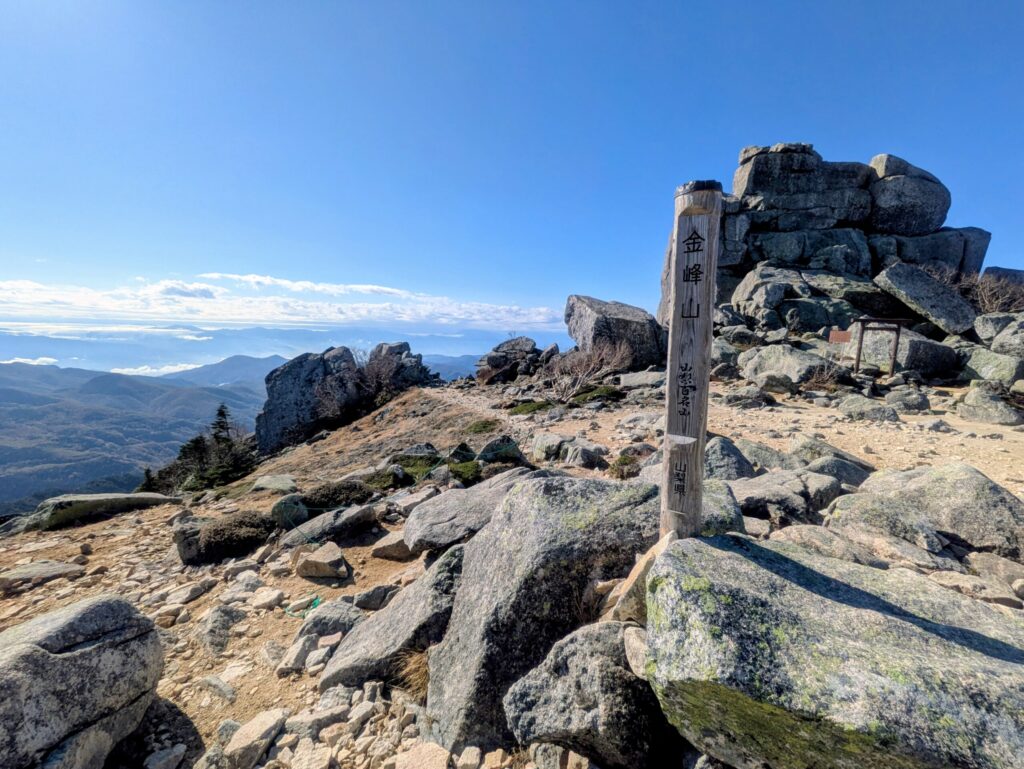
I looked out across the landscape surrounding the summit.
From the summit, it’s said that earthen horse figurines and crystal orbs—objects tied to ancient water worship—have been found.
Perhaps, since ancient times, this place served as a switch for water and life itself, directly connected to someone’s prayers and daily existence.
Looking again at Gojōiwa with that in mind, I realized that a “sacred object” isn’t something distant or mythological.
It may simply be a symbol of the unseen cycles that quietly sustain our everyday lives.
A core that remains unmoved, no matter how the world around it shifts—
like a rock that refuses to waver.
Climbing a mountain is a journey toward an external peak, yes—
but at the same time, it is a return to stand once more before the “Gojōiwa within,”
to feel what kind of wind is blowing there.
Descent and Lingering Impressions
The ridgeline I had climbed earlier was just as stunning on the way back.
But shortly after noon, the moment I stepped back into the forest zone, rain began to fall.
I felt fortunate—the downpour started only after I had already finished the scenic, open sections.
Once again, I was reminded how quickly the weather can change in the Japanese mountains.
The hikers I passed who were still heading upward at that hour looked uneasy, sensing the shift in the air.
On the way down, despite the weight of my pack, I felt strangely light inside.
Perhaps I had absorbed something from the summit—
a kind of energy, like that of a sacred place.
Reflection and Afterthoughts
If I were to describe Mt. Kinpu in a single phrase,
I would say it is “a place where wind and stone speak.”
Compared to Mt. Mizugaki, it carries a different kind of energy—
a vibrant sense of movement along its dramatic granite ridgeline,
and a quiet weight of time that lingers when you stand alone among the rocks.
Later, as I looked back through the photos after descending,
I found myself wondering:
“Perhaps I, too, have something like Gojōiwa within me.”
Above the tree line, standing on the summit,
I could unmistakably feel a vortex-like vibration—
a kind of power spot energy.
No surprise, given how deeply this mountain is rooted in Japan’s ancient mountain worship.
As I walked this mountain, I found myself reflecting on the “peaks” within me as well.
To “cross the rock before you” is, in a sense,
to cross the inner rock that stands in your way.
I would love to return again someday—
perhaps when the mountain is dressed in winter snow.


コメント